
Home / Antique Chargers & Platters
Antique Chargers & Platters
From Dutch Delft to French faience from Nevers, Moustiers and Rouen, our collection of antique chargers and platters gathers pieces from the 17th to the early 19th century, selected for pattern, colour and rarity. Choose an 18th-century Langnau slipware dish, an early 19th-century Moroccan mokhfia from Fez, or a rare 17th-century tondino from Nevers.
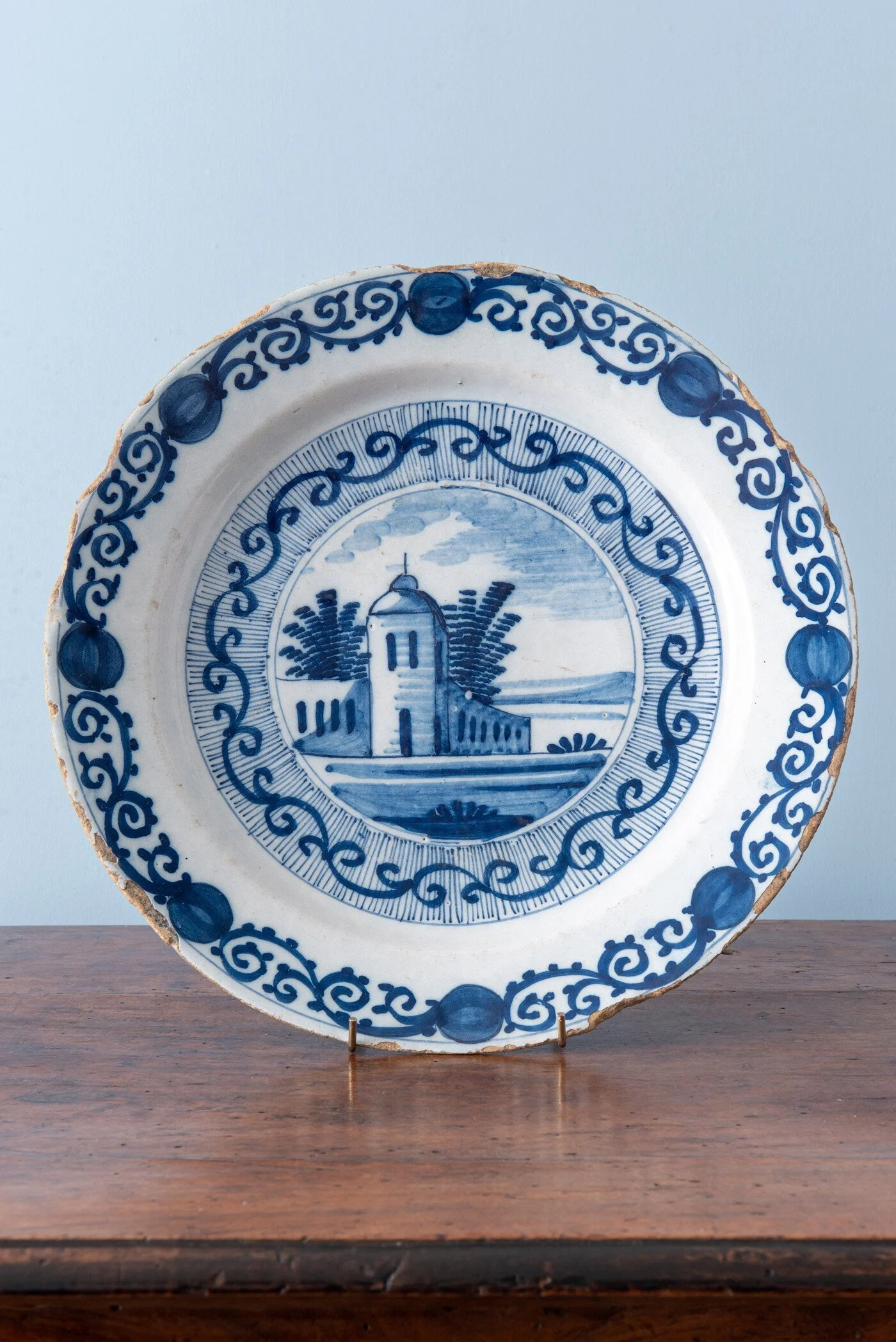
A pair of 18th-century Dutch Delft dishes, decorated in blue and white with a building in a landscape, surrounded by lush trees, enclosed within a round reserve and framed by a frieze of scrolls and strapwork on a radiating striped ground. The lip is adorned with further scrolls and foliage, alternating with circles. This abundant sense of pattern is set in contrast with the figurative nature of the scene, its characterful architectural details, lush trees and clouds evoking a lively pastoral view.
A rare and captivating pair of Delft dishes.
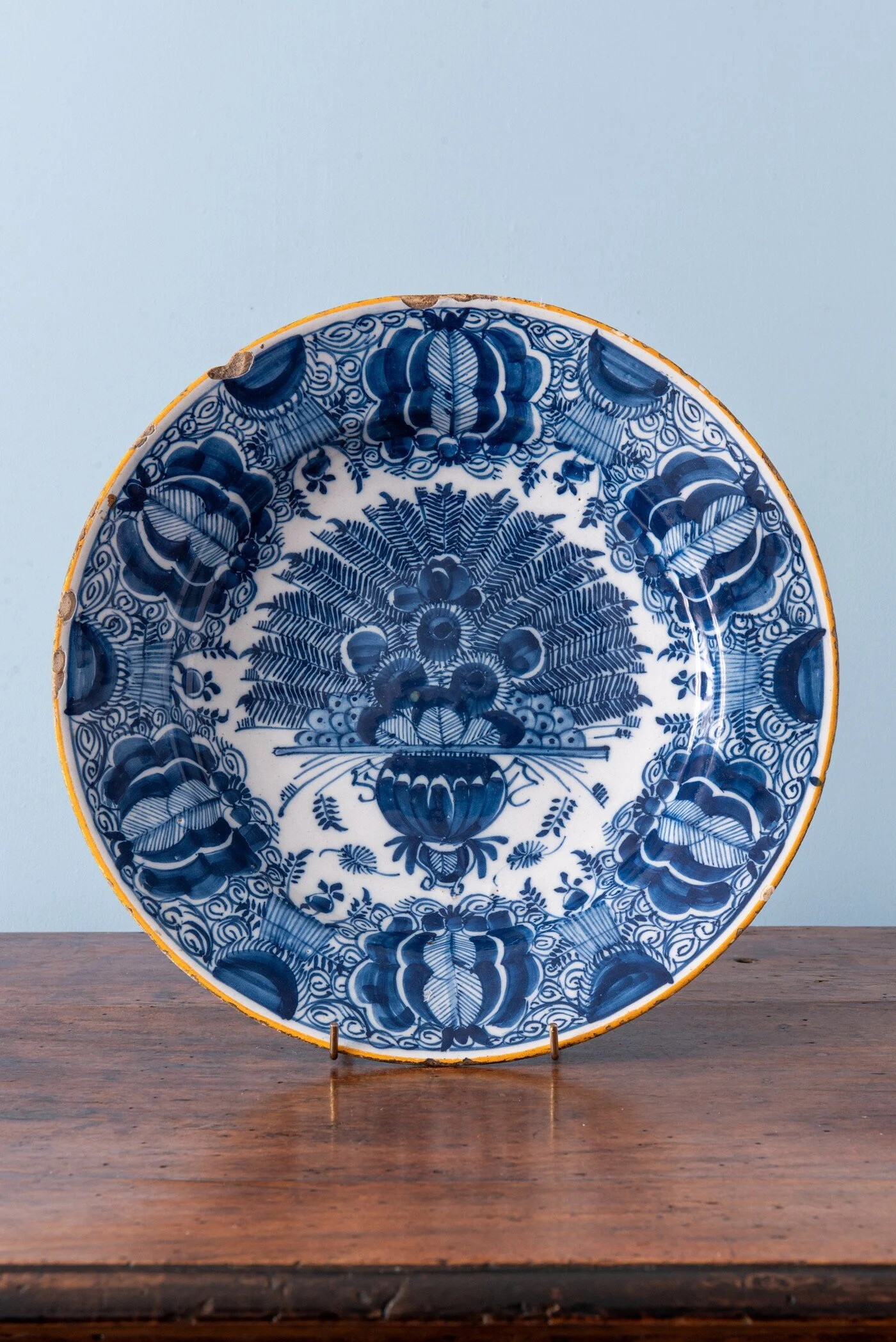
A rare 18th-century Dutch Delft dish, decorated with a luxurious peacock pattern in blue and white, featuring a cup overflowing with feathers, flowers, and foliage. The lip is adorned with an ornate frieze of scrolls and similar motifs, while a yellow line elegantly accents the edge. Marked to the underside for the De Klaauw factory.
A sought-after Delft dish with a rich, intricate design.
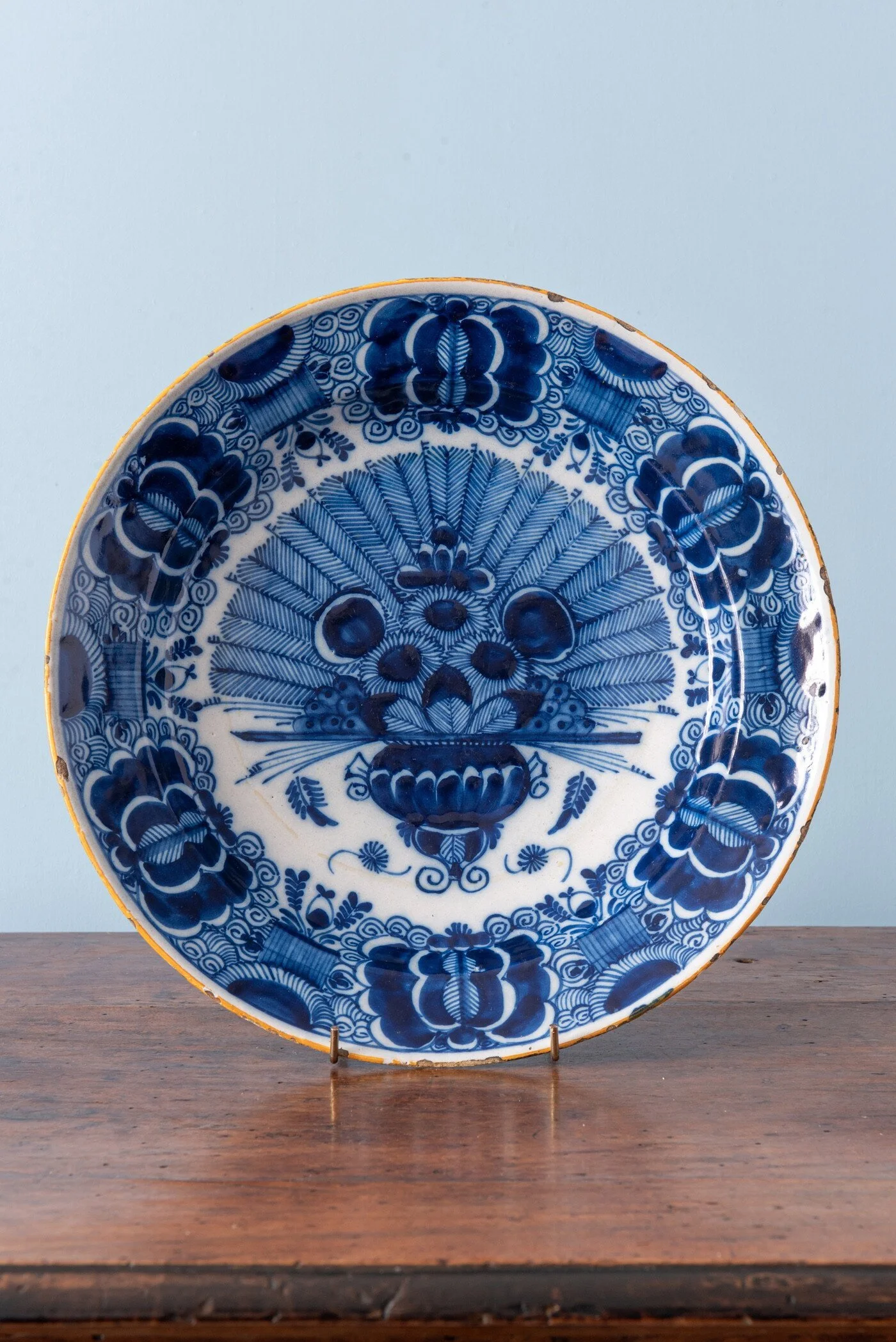
A rare 18th-century Dutch Delft dish, decorated with a luxurious peacock pattern in blue and white, featuring a cup overflowing with feathers, flowers, and foliage. The lip is adorned with an ornate frieze of scrolls and similar motifs, while a yellow line elegantly accents the edge. Marked to the underside for the De Klaauw factory.
A sought-after Delft dish with a rich, intricate design, unrestored and in very good condition.
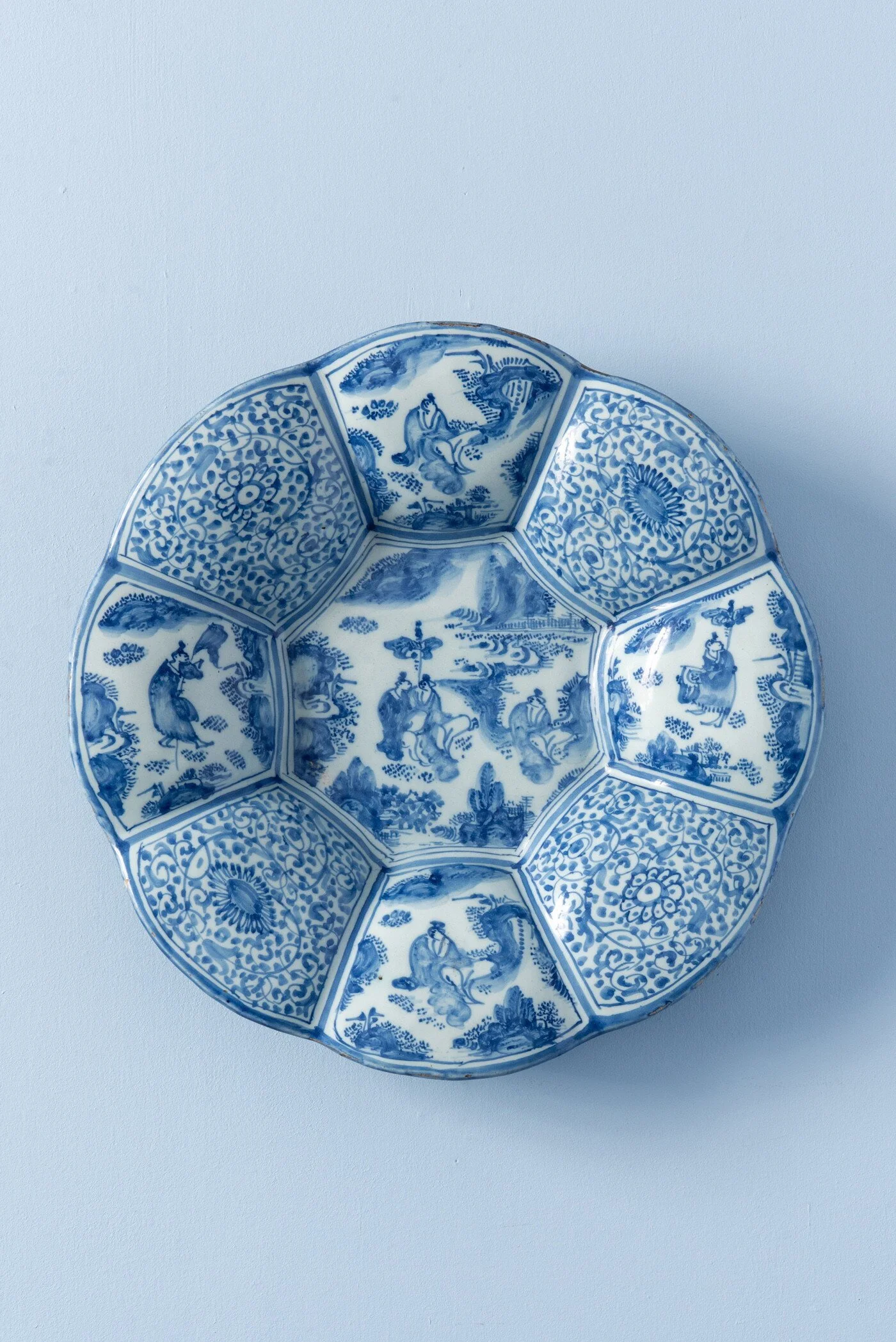
A late 17th-century Dutch Delft dish, c. 1680-1720, of octagonal lobed form, raised on a piedouche. Decorated in blue and white with a glossy glaze of bluish tonality, it features Chinoiserie Kraak-style scenes painted within shaped reserves, depicting figures in lakeside landscapes with bridges, trees and foliage.
These figurative scenes alternate with millefleur reserves, filled with scattered small flowers arranged around a larger central bloom, creating a richly animated surface. The reverse is decorated with fluid geometric motifs of circles and x-marks.
A well-preserved Delft dish, with a graceful shape and captivating decor, equally elegant displayed on a wall or presented on a tabletop.
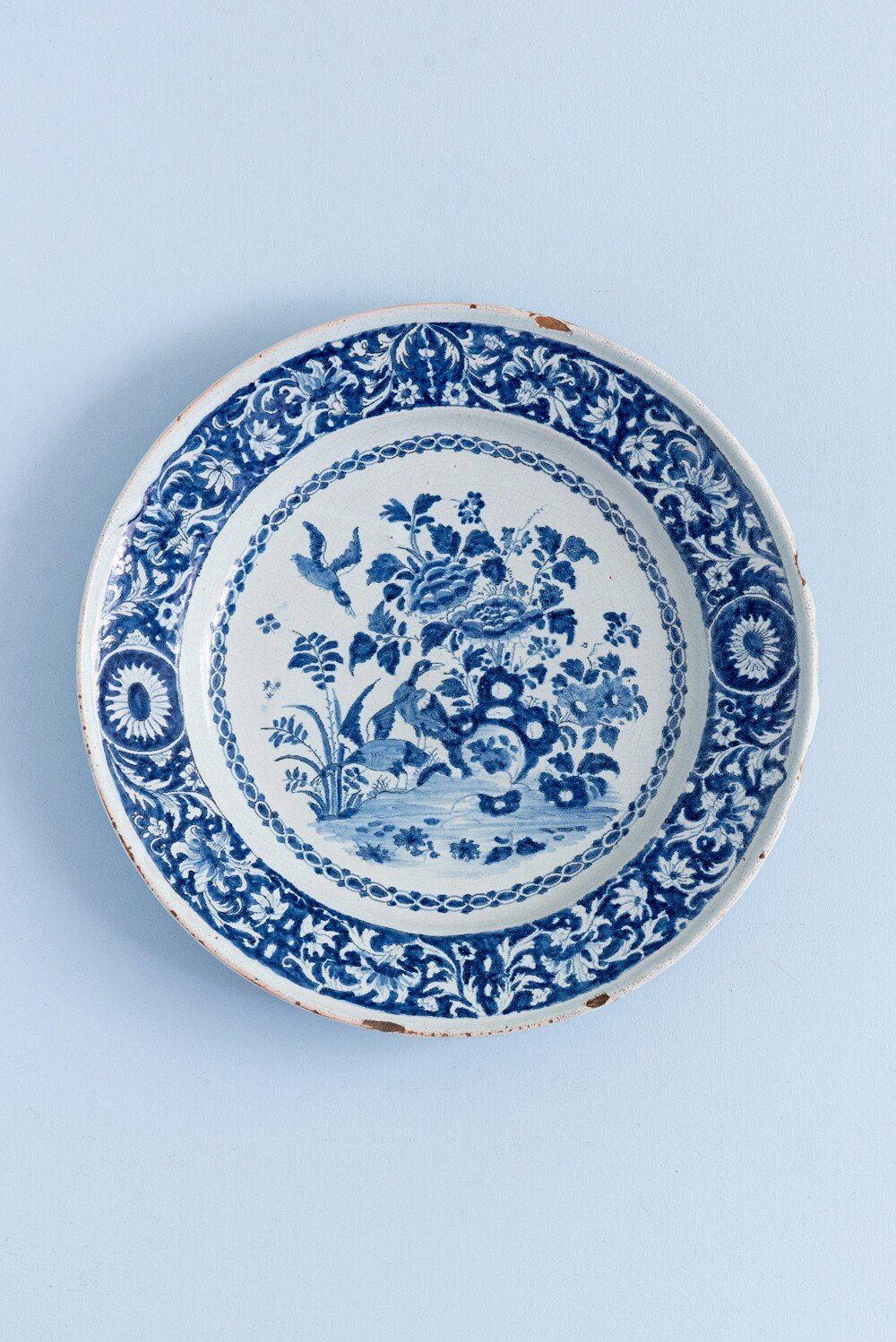
A large early 18th century French faience dish from Nevers, beautifully decorated in blue and white. The central motif features a Chinoiserie scene of birds among lush bushes, oversized flowers, and foliage. The lip is adorned with floral and foliage ornaments in the French style, adding refinement to the piece.
With its impressive size, this rare dish also features a hole on the underside for easy wall hanging, making it a striking piece for display. With elegant patterns and timeless blue-and-white decor, it is a lasting addition to any wall or shelf.

This early 18th-century French faience platter from Nevers is decorated in blue and white with a characterful scene of a medieval town, surrounded by trees and birds in a medallion. It features several friezes, with bushes, stripes and criss-cross patterns. With a timeless colour combination and beautiful textures, this generously sized platter is an exquisite decorative piece that can easily be hung on a wall thanks to holes in the foot.
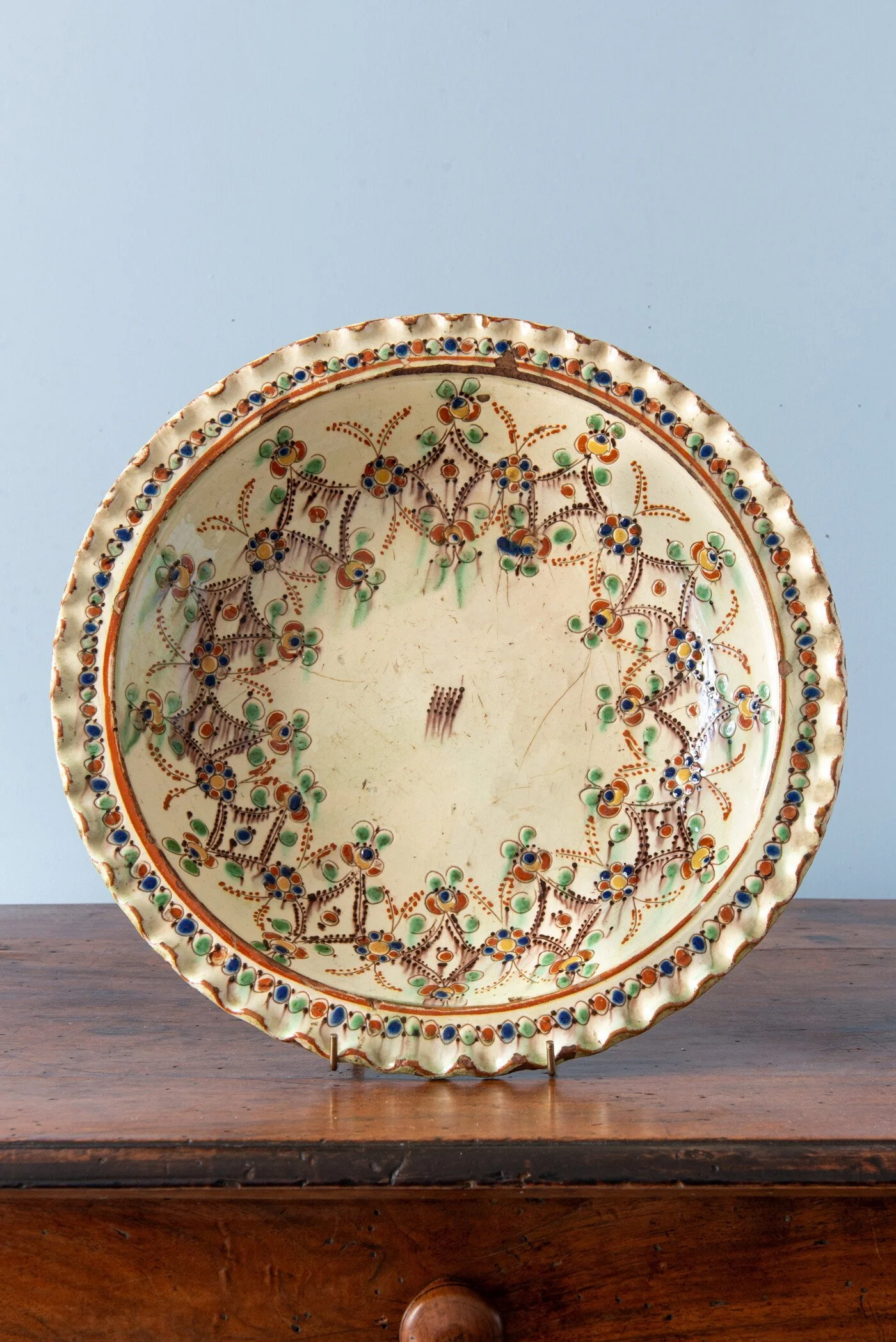
An 18th-century Swiss slipware dish from the canton of Bern, likely from Langnau, of shallow form with a flat lip and bold scalloped edge. Decorated with a characteristic off-white lead glaze, incised with a vibrant garland of florals and dots arranged around intertwined diamond shapes, in a palette of red, green, blue, yellow and brown. The lip features a frieze of circles, while the underside is finished in a terracotta glaze.
A rare example of Swiss folk slipware, with bold form and striking decorative presence.
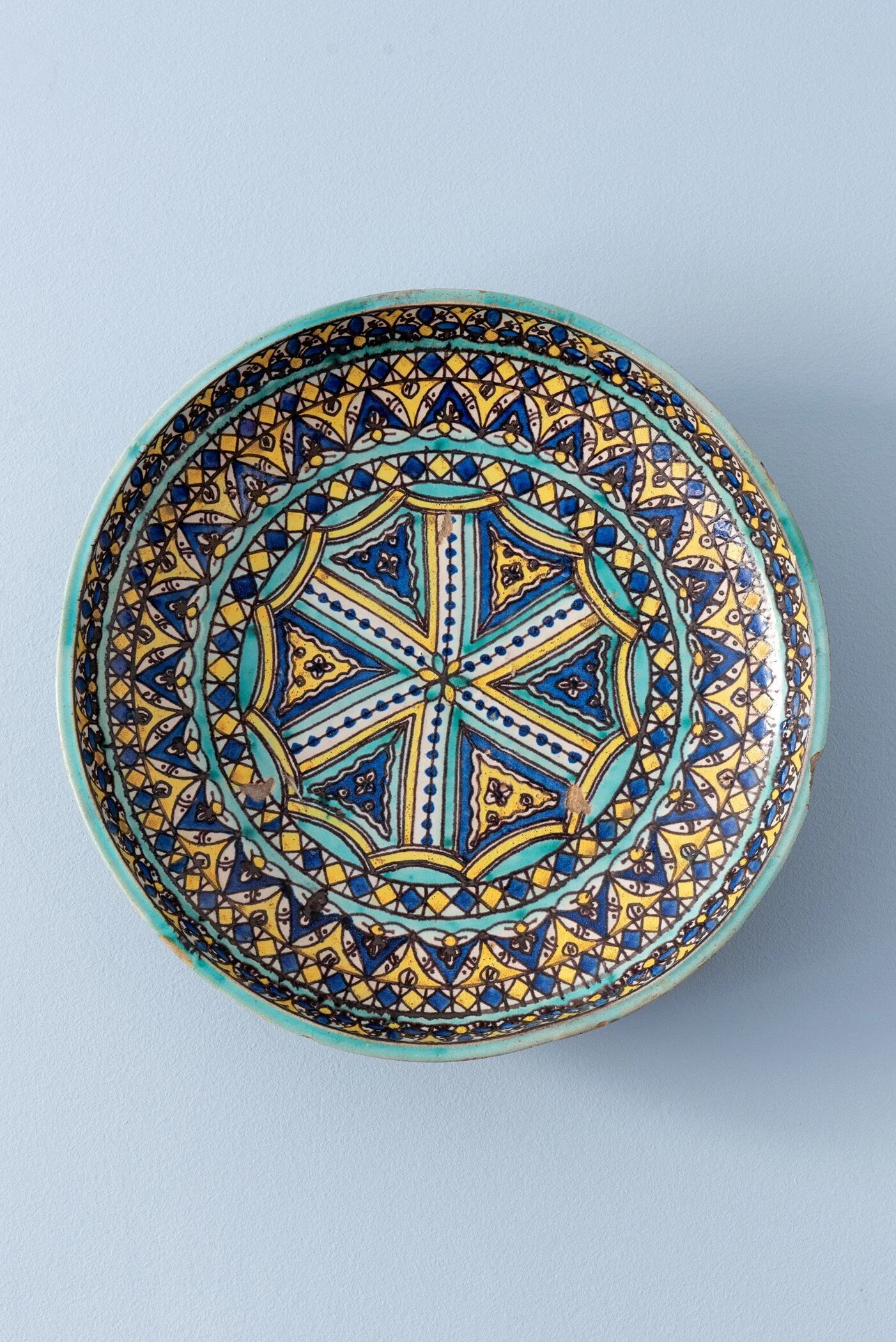
A late 19th-century Moroccan glazed earthenware dish from Fez, decorated in vibrant blue, yellow and turquoise on a cream engobe. The central rosette is surrounded by bands of floral and diamond patterns continuing to the raised border, finished by a turquoise line. The dish is raised on a piédouche and features a suspension hole to the reverse for wall display.
A captivating example of Fez pottery, with deep colour and a vibrant array of patterns.
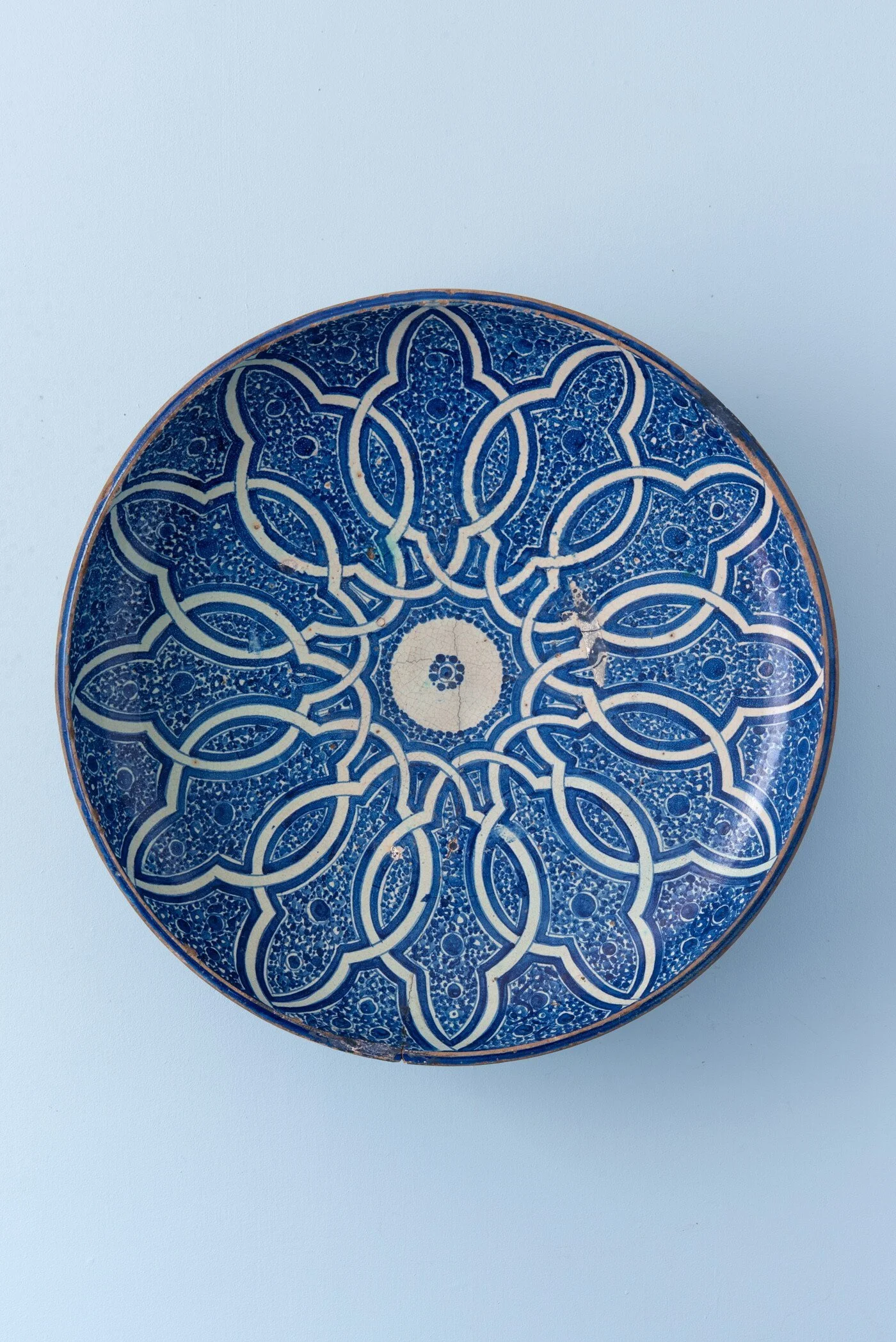
A 19th-century Moroccan earthenware ghotar dish from Fez, traditionally used to present meat or vegetable dishes. Decorated in cobalt blue on an off-white engobe, with a striking geometric rosette alternating with intricate scattered floral dots in reserves, each punctuated with larger circular shapes. Of impressive scale and shallow form, raised on a piedouche. Three suspension holes allow for easy wall display.
An impressive dish with vivid pattern.
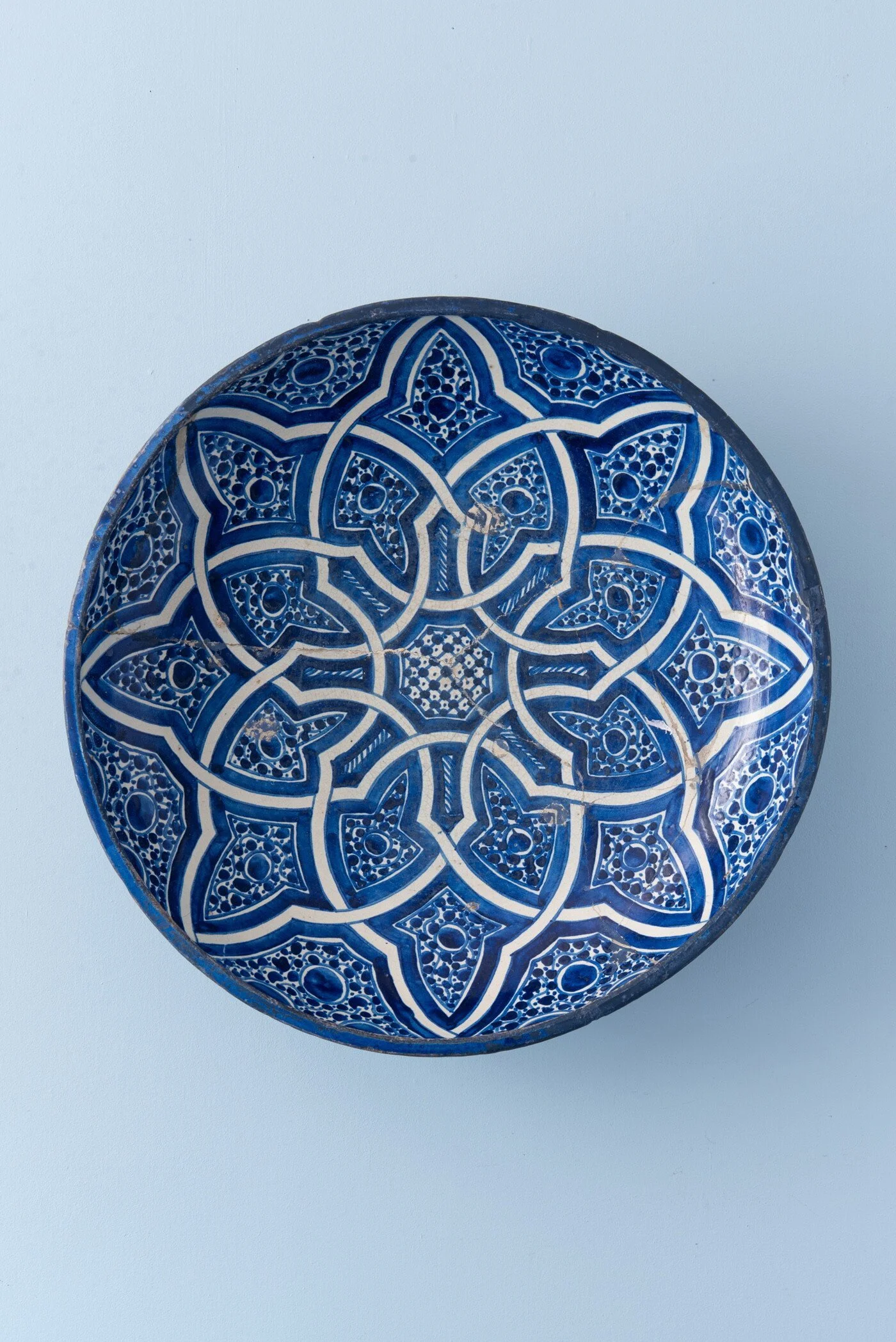
A 19th-century Moroccan earthenware ghotar dish from Fez, traditionally used to present meat or vegetable dishes. Decorated in cobalt blue on an off-white engobe, with a striking geometric rosette alternating with intricate scattered florals in reserves, each punctuated with larger circular shapes, while the central reserve features a grid of dots surrounded by diagonal stripes. Of large, shallow form, raised on a piedouche. Two suspension holes allow for easy wall display.
A textured dish with vivid pattern.
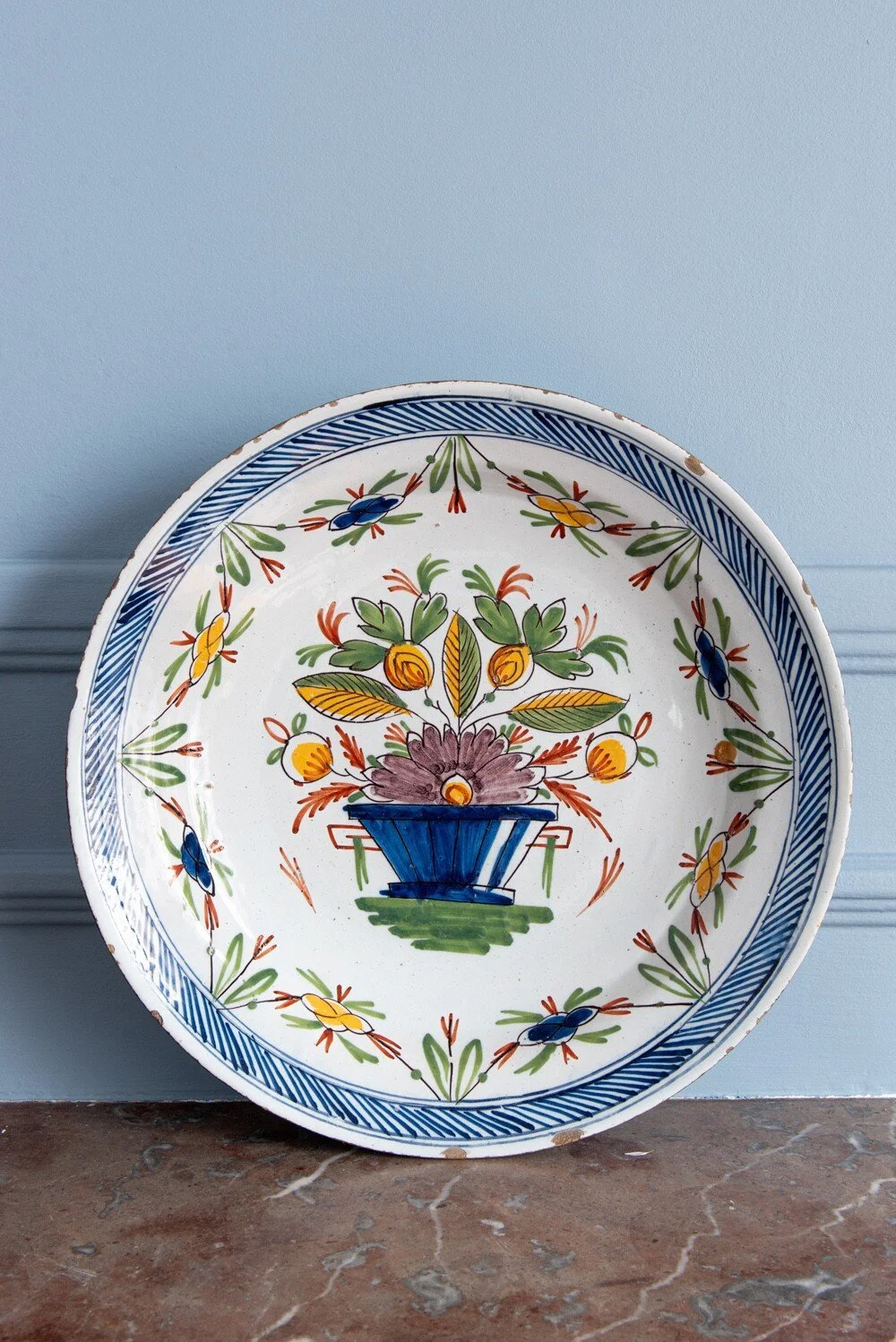
This 18th-century Dutch Delft dish features a large, shallow shape decorated with a vibrant polychrome basket overflowing with flowers. The lip features friezes of florals and stripes, creating a richly patterned effect. A joyous dish, with energetic brushwork combined with vivid colours.
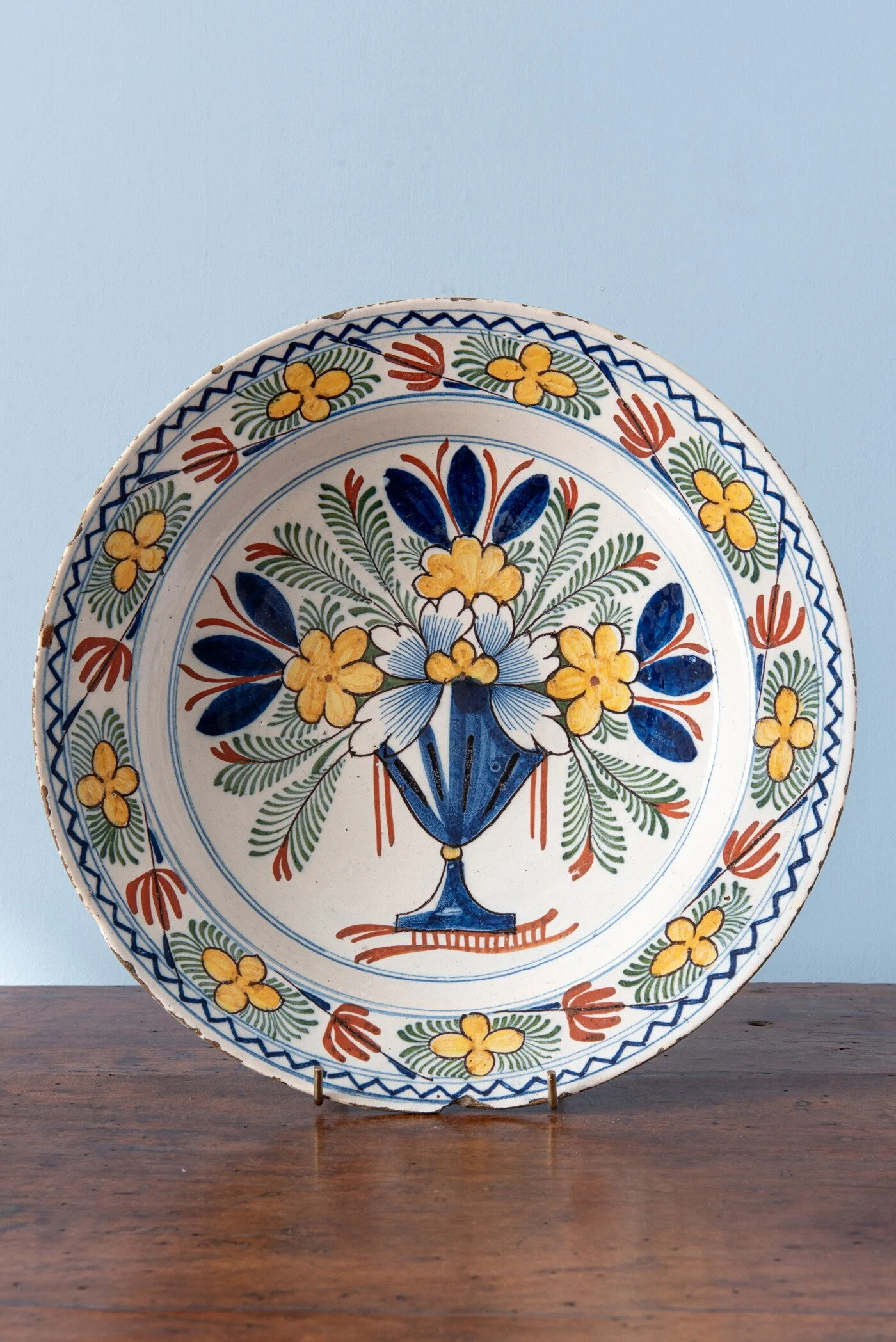
An 18th-century Dutch Delft dish decorated with an elegant baluster vase filled with flowers and foliage, in a vibrant palette of blue, yellow, green and red. The wide lip is adorned with a frieze of flowers, foliage and zigzag patterns.
Manganese outlines and fine fern-like foliage give structure to the painterly blue and yellow brushwork, lending the dish a vibrant sense of pattern and colour. An elegant, decorative piece, featuring a hole to the underside for easy wall hanging.
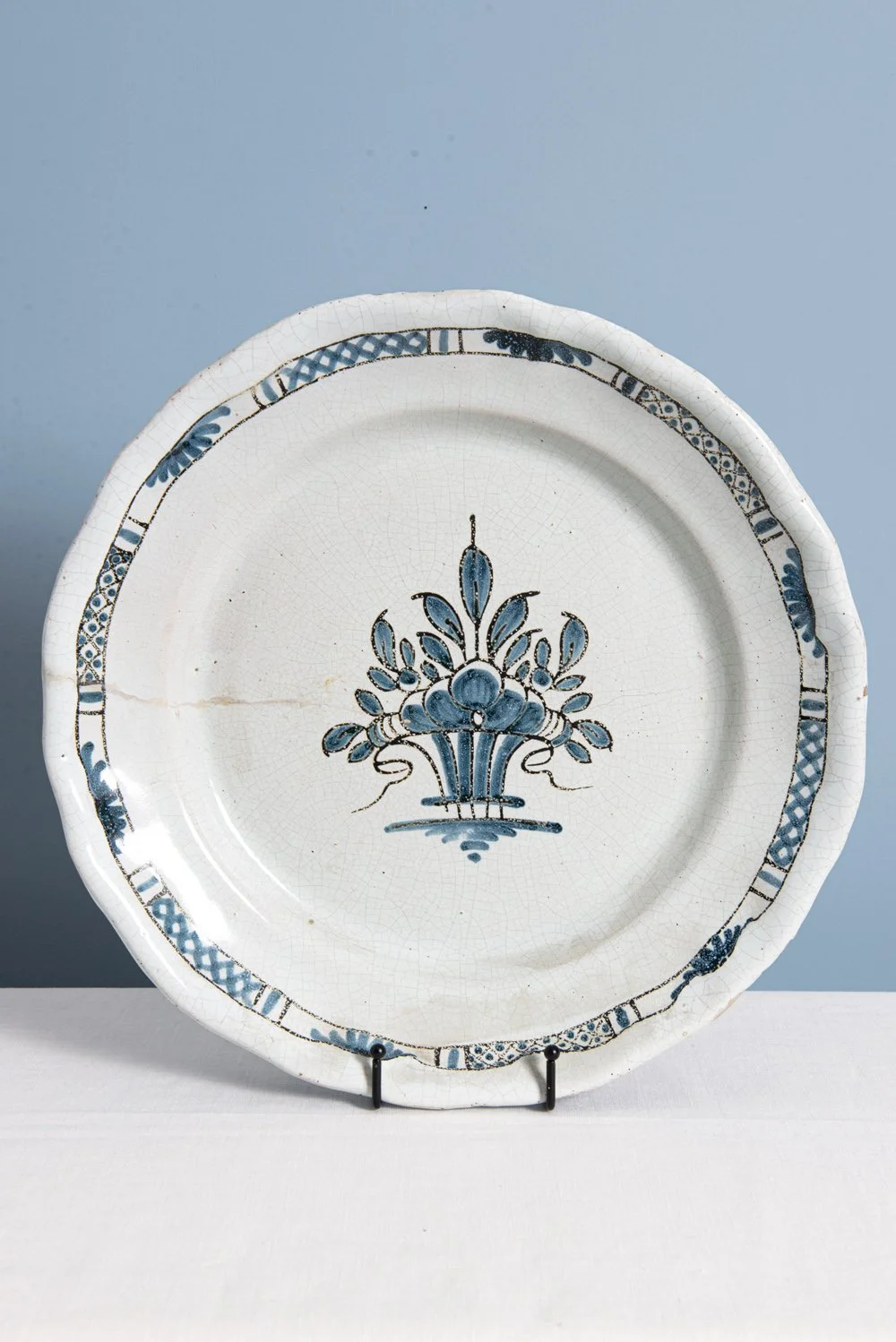
A large 19th-century French faience platter from Rouen. It is decorated with a basket of flowers in a camaieu of blue and white. The lip features a frieze of criss-cross patterns alongside strokes inside a black line. The underside is covered with a ‘cul' noir’, a darker glaze applied to enhance solidity. A beautifully rustic piece with a vibrant decor, its large size makes it a great addition to a shelf or hung on the wall.
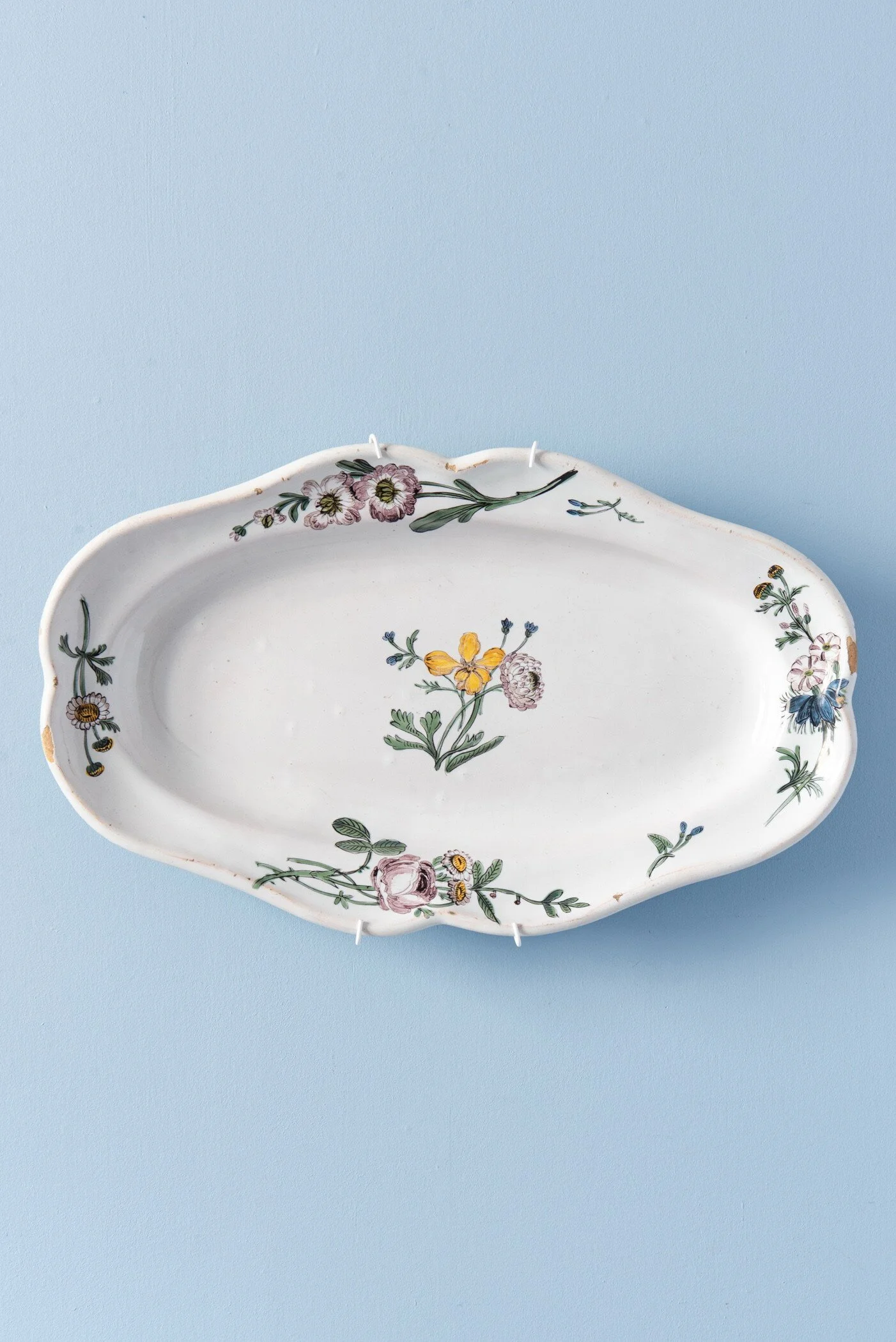
A French faience dish of graceful oval form from the Manufacture Fauchier, Marseille, circa 1760, with a delicately shaped edge. The centre and lip are decorated with sprays of flowers, including a rose, daisies, anemones and bindweed among foliage on elongated stems, in a elegant palette of manganese, red, yellow, green and vibrant blue. The distinctive manganese rose, painted with light florals on long stems, was a decorative invention of Joseph II Fauchier, whose influence spread from the factories of the South of France to Brittany.
A rare and elegant dish, with accomplished floral decoration in the Marseille tradition.

An elegant 18th-century French faience charger from Sinceny, of oval form with a delicately shaped edge. The centre is decorated with a lively arrangement of polychrome flowers and foliage, while a frieze of stylised floral motifs encircles the lip. Painted in a vibrant palette of blue, green, yellow and red, characteristic of the Sinceny style. A refined and decorative piece with timeless charm.

This 18th-century French faience dish from Strasbourg is decorated in blue and white with a lush spray of scrolls and foliage in the centre. The edge is elegantly shaped and the lip showcases a frieze of further scrolls and foliage. With a timeless colour palette and graceful patterns, this textured dish makes a beautiful decorative accent, whether displayed on a wall or tabletop.

An 18th-century Dutch Delft dish, decorated with a basket of fruits and foliage to the centre, in blue, yellow, green and manganese. The lip is adorned with a frieze of scrolls and sprays of flowers. Bold, dynamic brushwork is paired with vibrant colour, adding to the sense of abundance of the fruits. The underside is finished in a darker, ivory glaze.
A rare and bright dish, unrestored and in very good condition.