
Home / Modern Classics
Modern Classics
Glazed stoneware lamps, modernist paintings and art deco oak furniture. Our selection of modern classics gathers early 20th- to midcentury ceramics, artworks and furniture, chosen for their textured materiality, abstract geometry and primary colours.
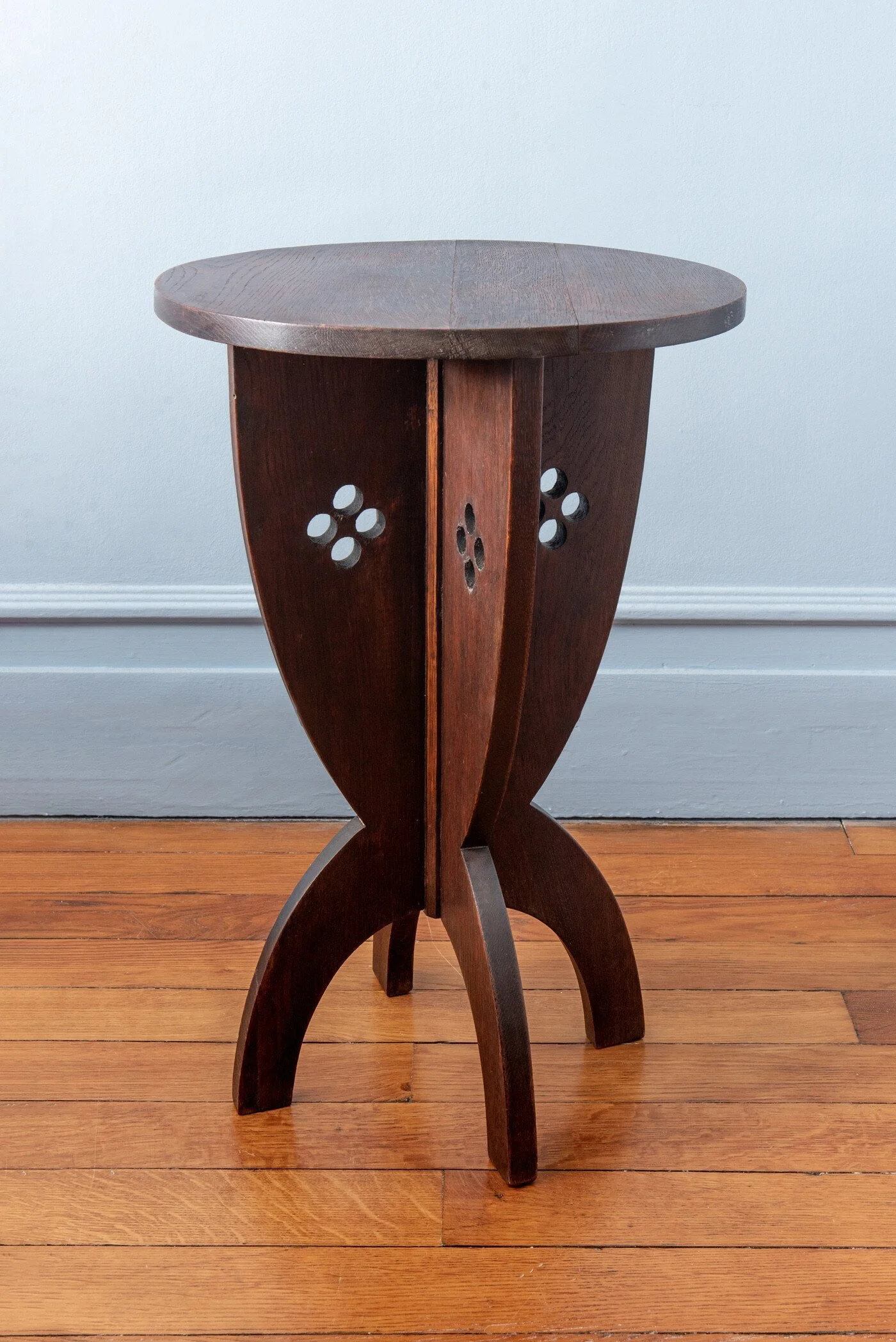
A French Arts & Crafts Modernist oak pedestal table, c. 1920-30. The circular tabletop is supported by a pedestal of four panels, each pierced with a quatrefoil motif, raised on splayed legs.
The table sits at the intersection of several design movements, giving it a captivating historical design interest. Its bold geometric, almost abstract, structure gestures towards early Modernism and Art Deco, while the pierced quatrefoil decoration draws from the Neo-Gothic vocabulary of the Arts and Crafts movement. The honest, structural quality of the construction suggests confident provincial craftsmanship.
The stained oak displays bold, visible veining and an even patina throughout, adding decorative warmth. With a generous tabletop and ideal height for use, an early modern side table with rare form and distinctive craftsmanship.
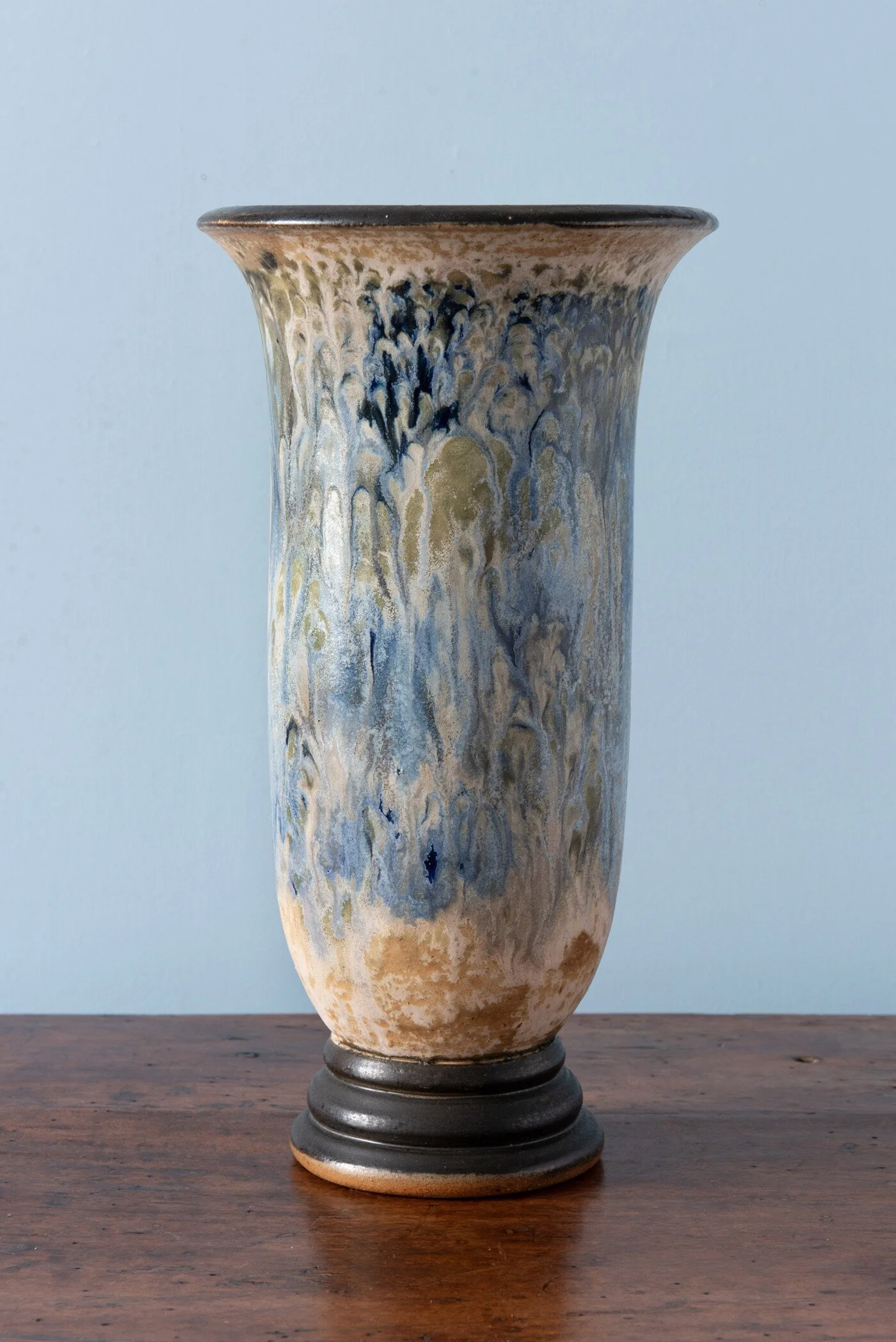
An early 20th-century glazed stoneware vase by Belgian ceramicist Roger Guérin (1896–1954). Of tall flared trumpet form with a stepped base, the elegant shape is characteristic of the Art Deco period.
The surface is decorated with blue and green glaze drips on an earthy ground, with contrasting black glaze to the base and inner lip — a muted but distinctive palette that highlights the verticality of the form.
A rare and sculptural Art Deco vase, in excellent condition, marked underneath.
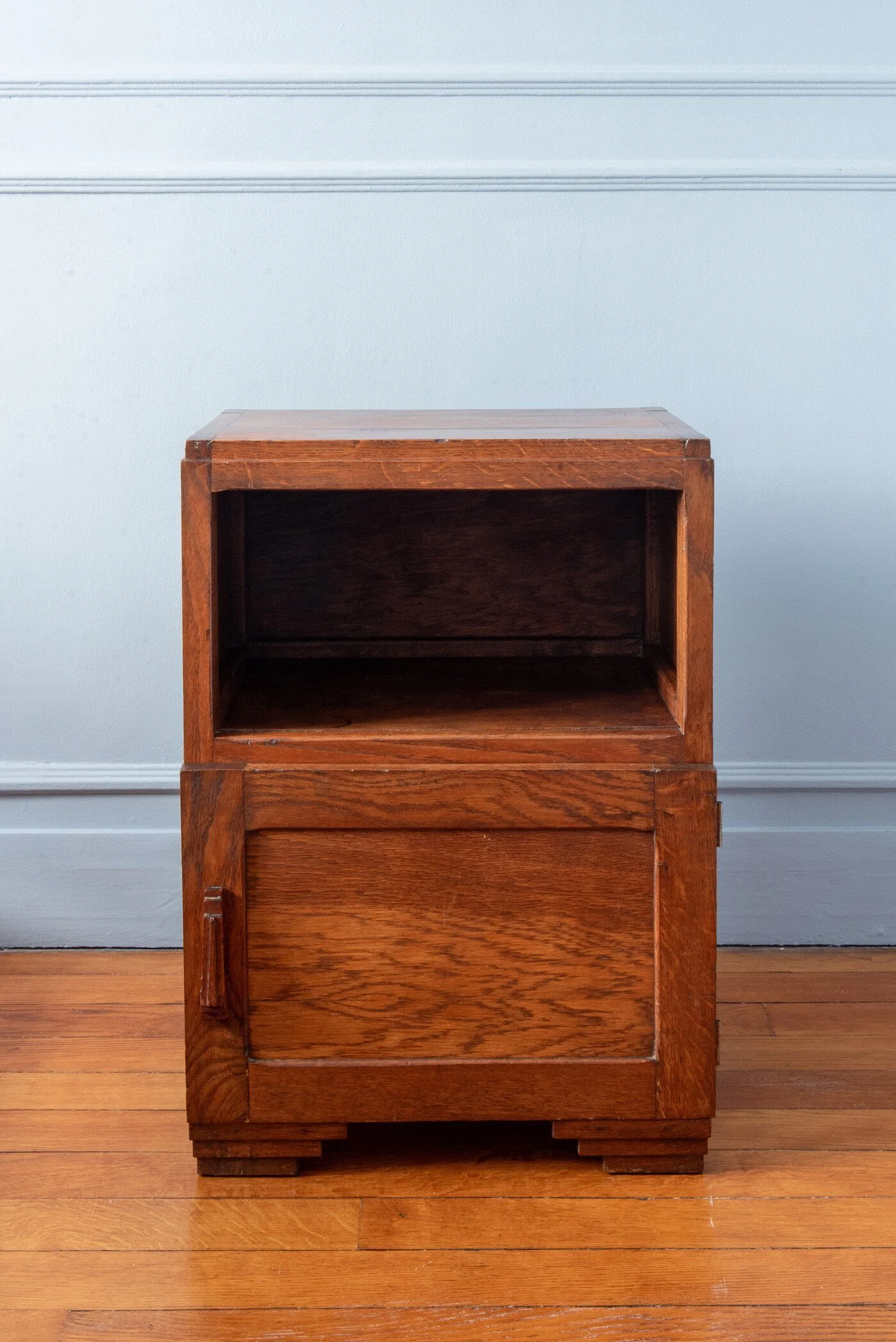
A French Art Deco bedside table in solid oak, c. 1930, offering both display and concealed storage, with an open shelf above a single cupboard door. Its form is defined by bold vertical uprights framing the facade. The top is subtly set back from the structure, introducing a refined tiered detailing effect that is echoed throughout the stepped feet and the slender geometric handle.
The warm mid-toned oak, with its pronounced natural grain, lends an organic richness to a shape that is otherwise beautifully restrained and architectural. A well-proportioned and considered bedside table, with geometric details characteristic of the Art Deco period, softened by solid oak, well-suited to a bedroom or to another room in need of an elegant storage solution.
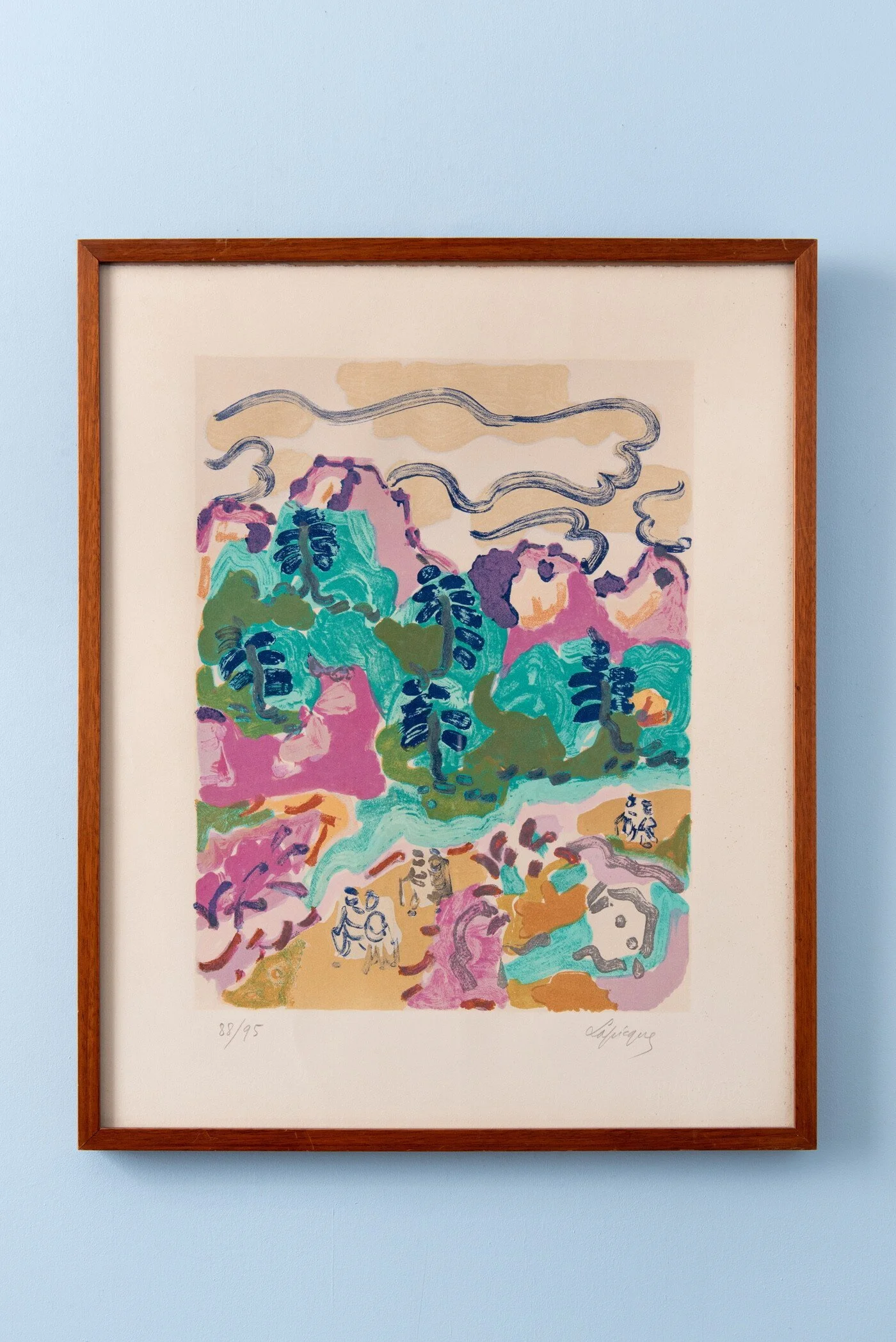
A midcentury lithograph on paper by French painter and printmaker Charles Lapicque (1898-1988), depicting figures walking down a path through a lush forest beneath a cloudy sky. A contrasting palette of pink, blue, green and sand creates a bright atmosphere, patches of colour alternating with expressive brushwork to a joyous, pattern-like effect that lends the scene a sense of abstraction. Characterful details add lightness throughout, from the figures walking in pairs to the lush rendering of the forest and the squiggly shape of the clouds. Numbered 88/95 lower left and signed 'Lapicque' lower right. Glazed in a stained wood frame.
A characterful lithograph with bright colour and painterly shapes.
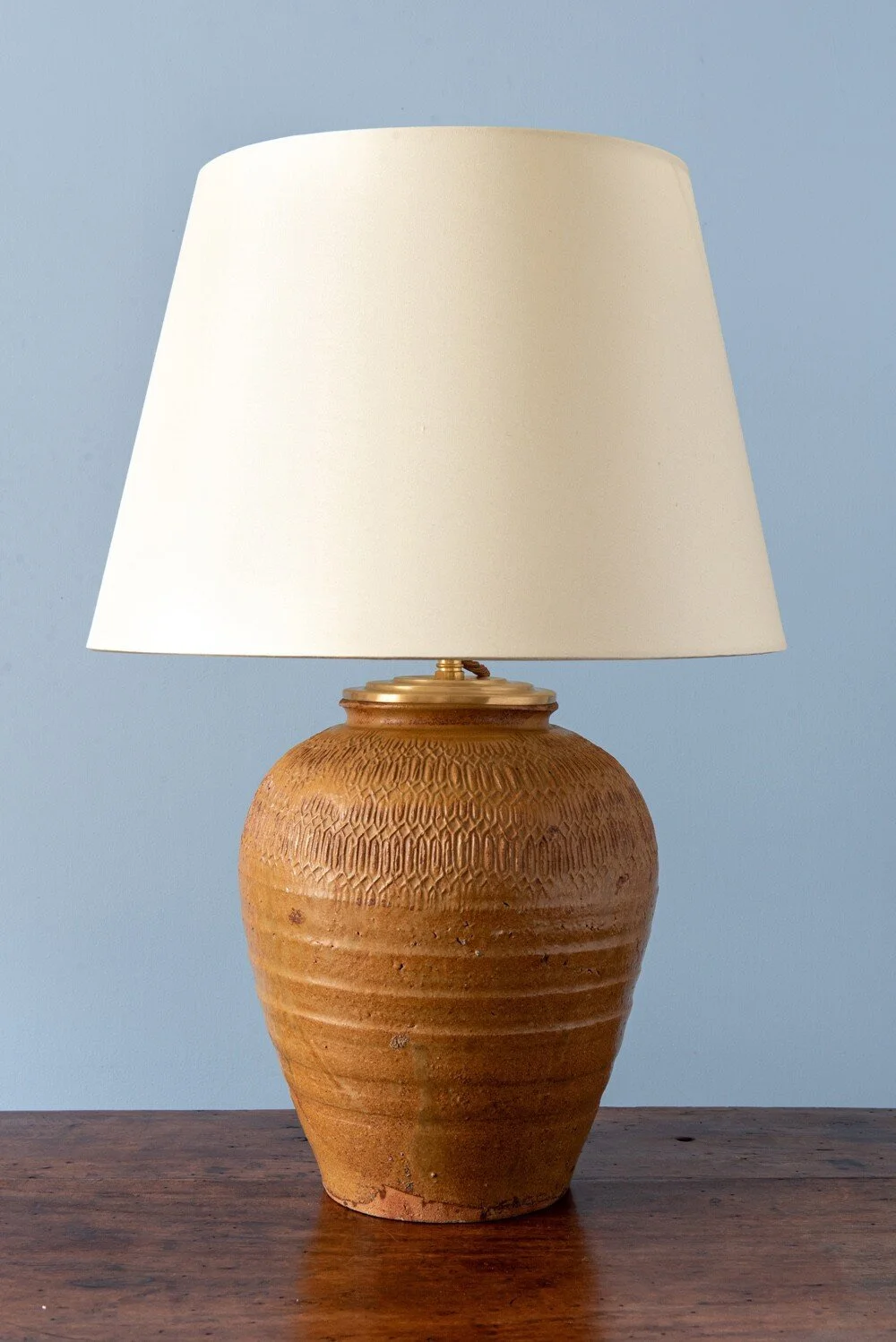
A distinctive midcentury stoneware vase, converted to a table lamp. Its refined urn form showcases a warm golden brown glaze, rich in tonal variations and textures. The upper section is decorated with precise rows of carved diamond motifs, adding rhythm to the vessel’s generous silhouette. A sculptural studio pottery lamp that brings character and elegance.
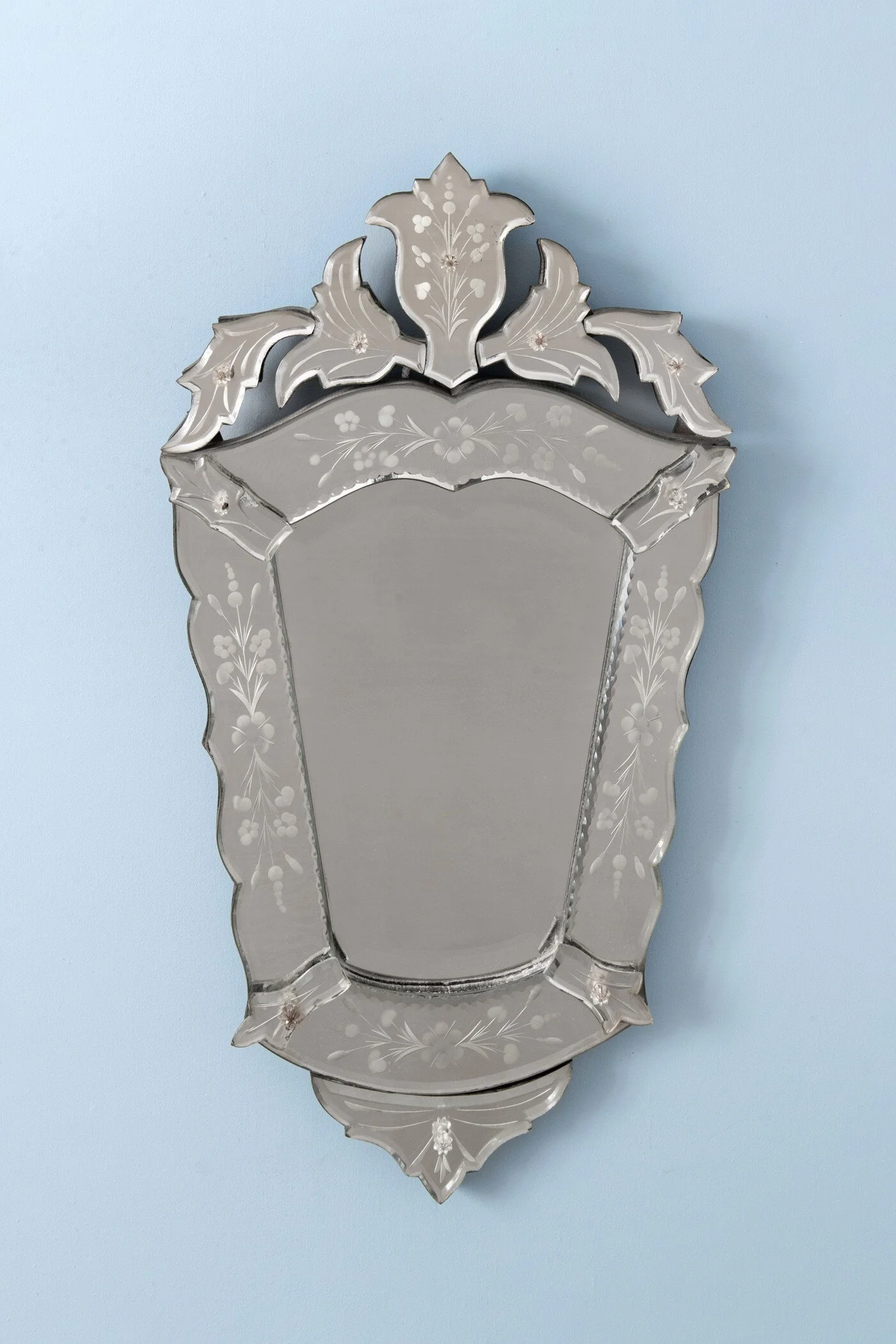
An early 20th-century Venetian mirror of tapered shape. The bevelled mirror plate is surrounded by a shaped mirrored frame, finished with four foliate elements to the corners and topped by an openwork crest of five foliate scrolls, ending with a shaped finial at the bottom. It is decorated throughout with etched flowers and foliage, as well as fluted glass beads, and finished with an ebonised backing.
A highly decorative mirror, its striking shape combined with delicate florals.

A striking French midcentury brass column lamp, featuring a square base adorned with stylised leaves, a fluted shaft with undulating lines, and a short capital decorated with acanthus motifs. The architectural form is adorned by a variety of reinterpreted classical patterns.
The rich, polished brass surface lends the piece a warm, glamorous presence, while its generous scale and bold silhouette make it a decorative focal point. An elegant statement piece, of classical form with a distinctive midcentury twist.
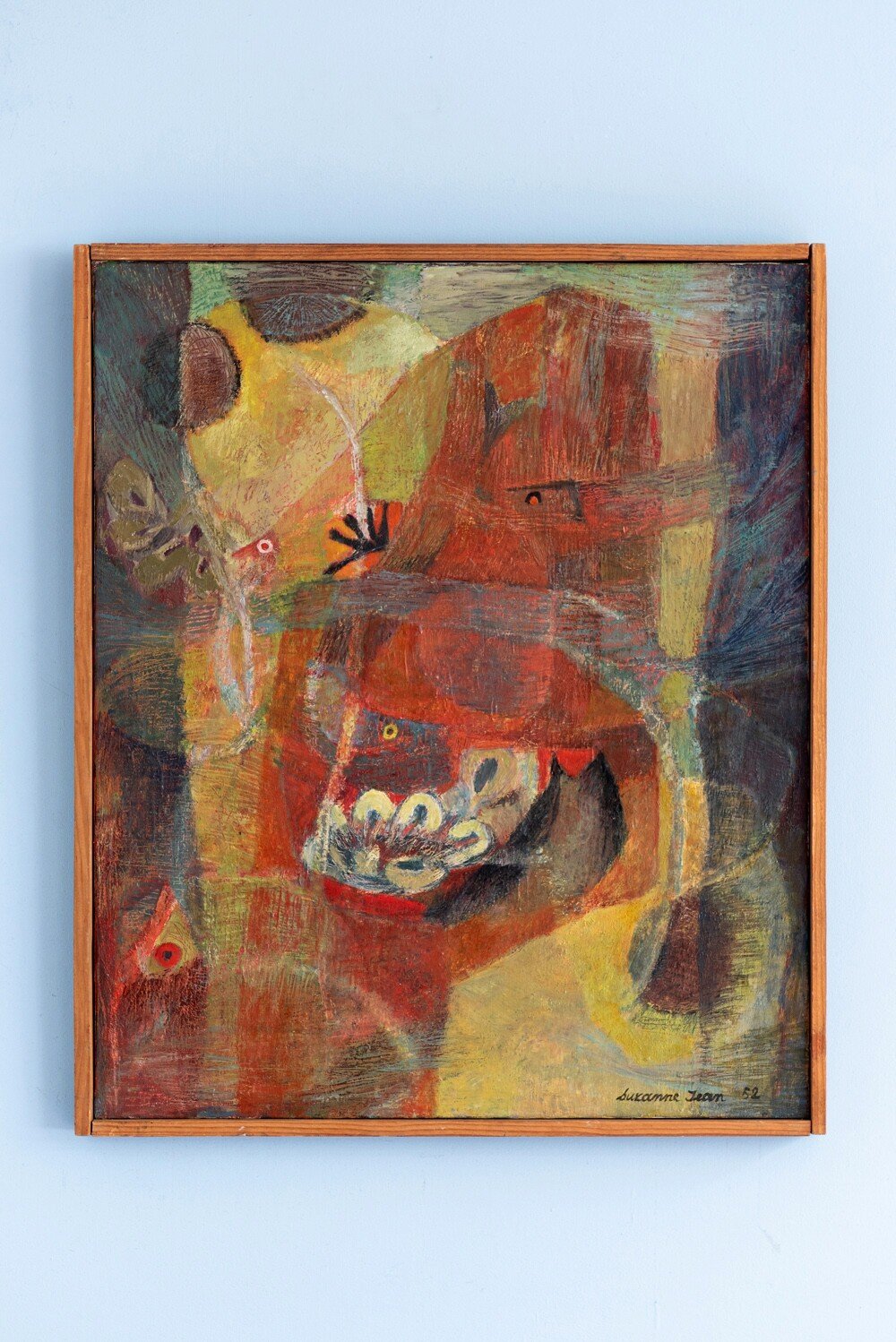
This oil painting on canvas by French artist Suzanne Jean, titled Fonds Marins (Underwater) and dated 1952, presents a dynamic abstract composition of curves and circles layered over vertical stripes, anchored by a red form reminiscent of a face. A rich palette of reds, oranges and yellows contrasts with cooler purples and blues, creating an immersive surface suggestive of the movement of ocean waves.
Hints of maritime imagery appear throughout the composition, with small rounded forms recalling fish eyes and seashells gathered at the centre, lending the painting a subtle surreal quality. Jean builds the surface through textured brushwork and overlapping patches of colour to evoke a rich and expressive landscape.
Although little is documented about Suzanne Jean’s artistic career, this work engages with the spirit of post-war French abstraction, combining geometric structure with imaginative, dreamlike references. The maritime undertones draw parallels with the poetic visual language found in the work of Leonora Carrington or Leonor Fini.
The painting is signed and dated on the front, with the artist’s signature and title on the reverse, and is presented in its original artist’s frame.


A mid-century gouache on board, c. 1950–1960, by French painter Antoine de Roux (1901-1986), depicting an interior still life centred on an inkwell and pencils, arranged alongside paper cards on a tabletop. The background is animated by an abstract composition of rectangular forms, bordered by a frieze of scalloped motifs, while the overall scene is framed by wood-grain patterns.
A bright and assured palette of red, blue, yellow and green, structured by black accents, gives the composition rhythm through geometric planes of colour and decorative pattern, balancing a sense of perspective with abstraction and colour experimentation.
Signed lower right and presented glazed under museum glass in a dark brown modernist frame. Antoine de Roux worked from the 1930s to the 1960s, focusing primarily on interior scenes and still lifes. While his earlier works retain a naturalistic, almost naïve approach to objects, his later works, such as this one, favour abstraction, while maintaining a consistent interest in interior space, colour structure and decorative presence.