
Home / Antique Jugs
French Faience & Jaspe Antique Jugs
Our collection of rare antique jugs in faience pottery includes colourful floral patterns, marbleised jaspe pottery and handmade grès du Berry. Use them to add beauty and character to a table or as a vase to hold fresh flowers.
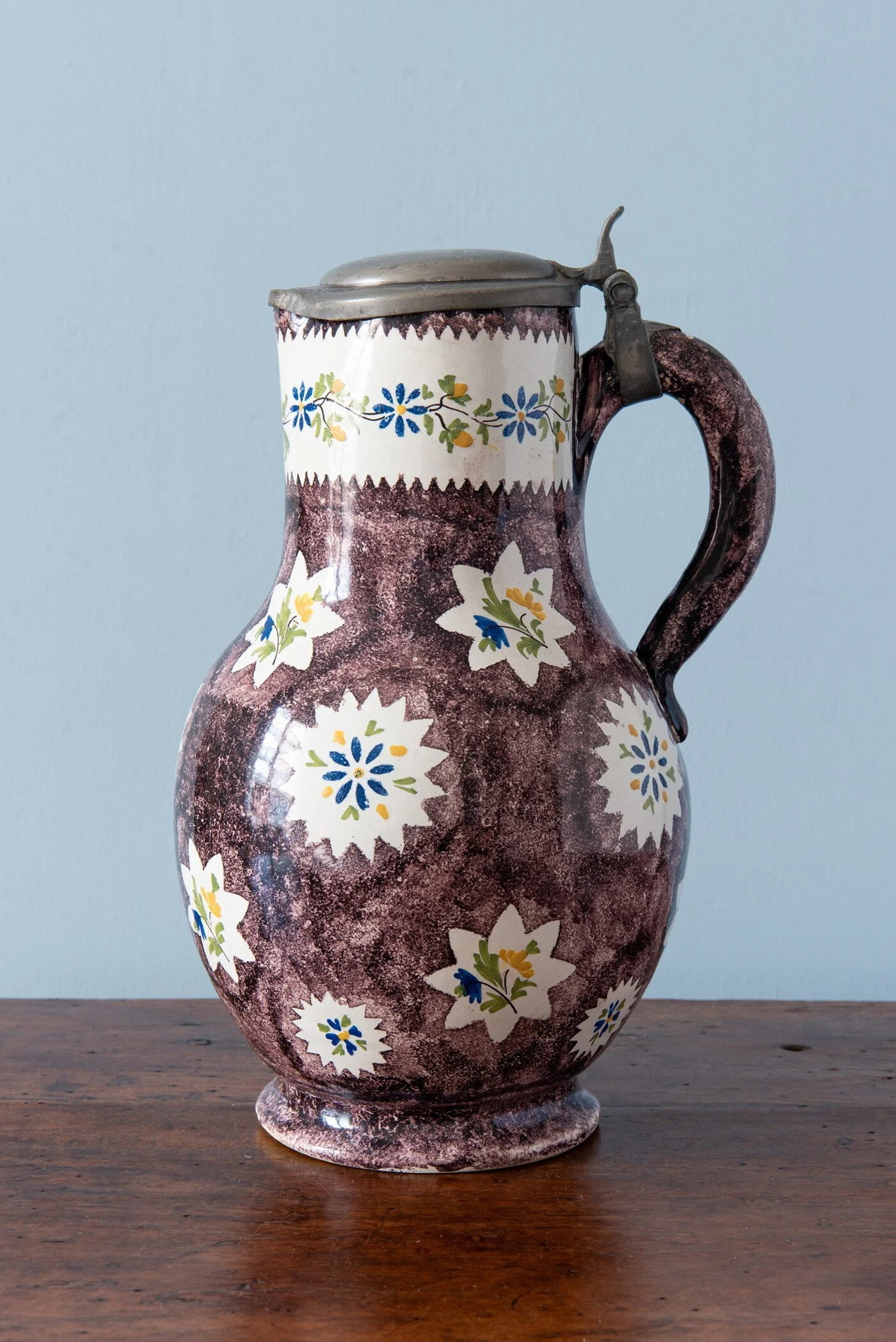
An 18th-century Belgian faïence jug from Brussels, decorated with sprays of flowers in green, blue and yellow, set within star-shaped reserves against a textured spongeware manganese ground. The contrast between the bright reserves and the deep, mottled ground lends the piece a striking sense of pattern.
Of generous round form, its slender neck is adorned with a frieze of florals contained within a saw-tooth band. A pewter lid completes the piece, adding a pleasing functional character. In excellent condition, a rare and distinctive jug, with vibrant colour typical of Brussels and rich decorative presence.
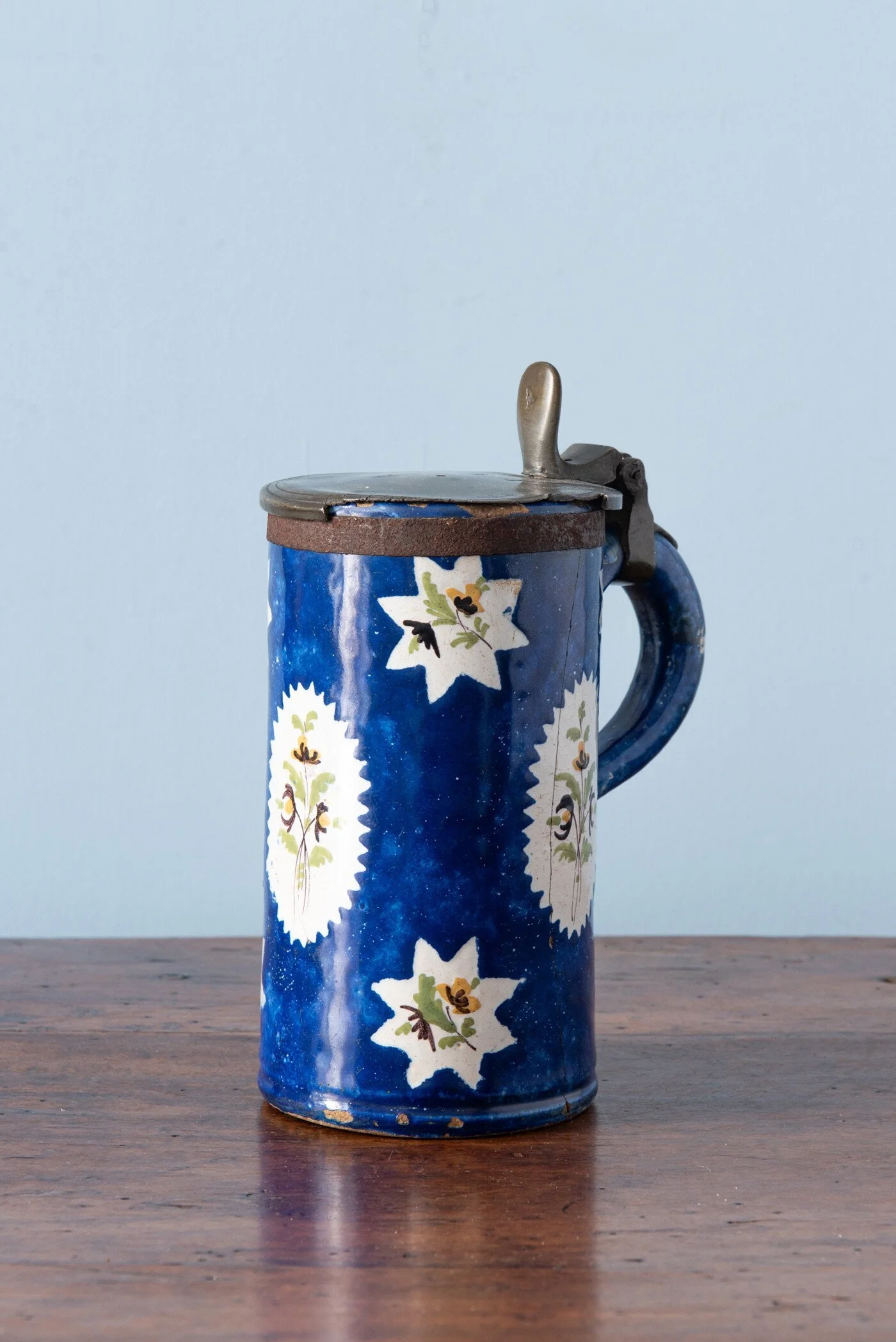
An early 19th-century Belgian faience spongeware beer stein from Brussels, decorated with a polychrome spray of flowers in star-shaped and saw-tooth reserves, scattered on a deep cobalt blue ground. Of tall, upright shape, finished by a handle in blue and a pewter lid marked with the letters L and I, adding historical interest and a pleasing functional character.
A rare beer stein with bright decorative patterns.
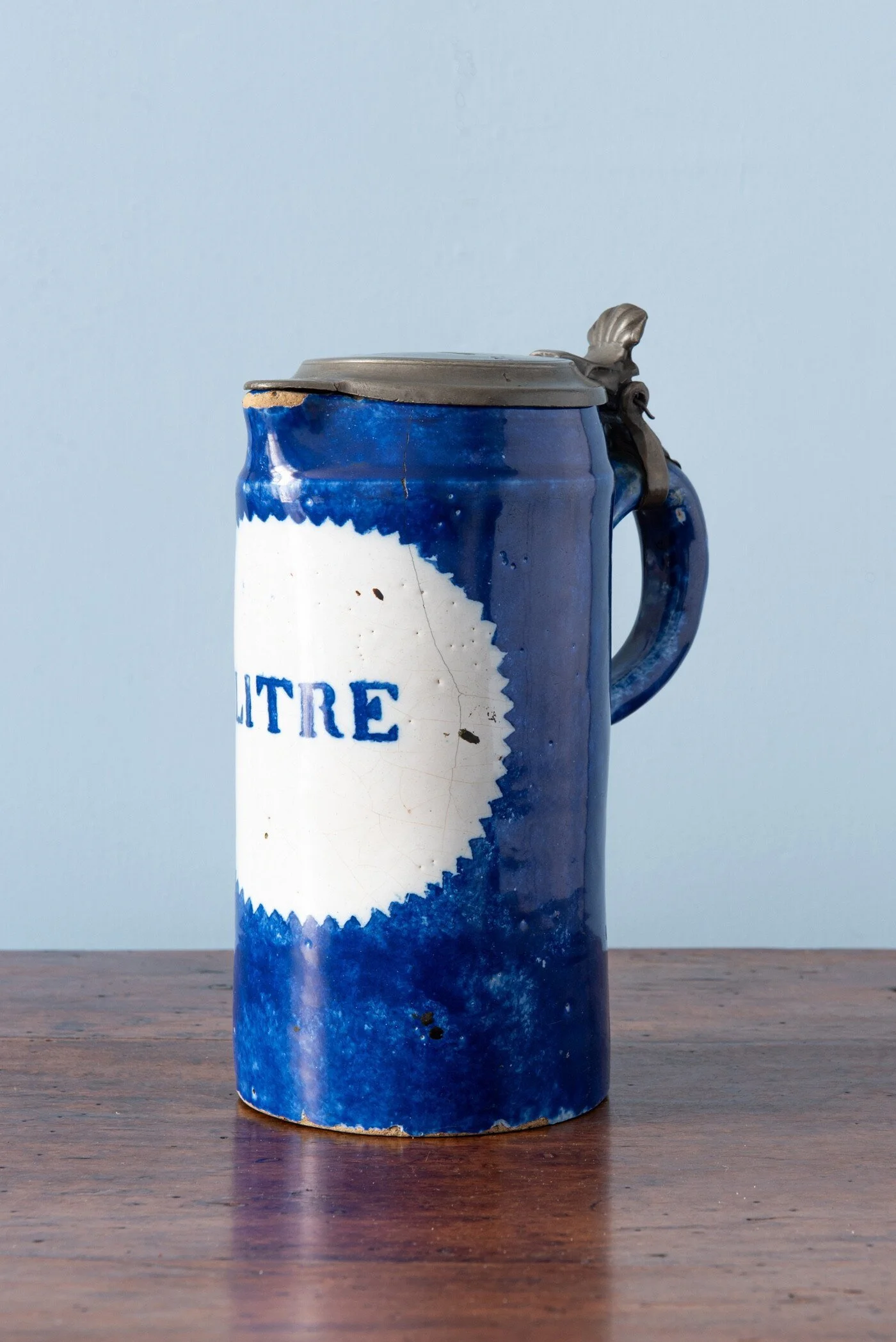
An early 19th-century Belgian faience spongeware beer stein from Brussels, decorated in a deep cobalt blue all over the body, the front featuring a stencilled saw-tooth circle marked with the word "Litre." Of tall, upright shape, finished by a handle in blue and a pewter lid adorned with a seashell thumbpiece, marked with the number 4 and four faded letters, lending historical interest and a pleasing functional character.
A vivid beer stein with bright colour.
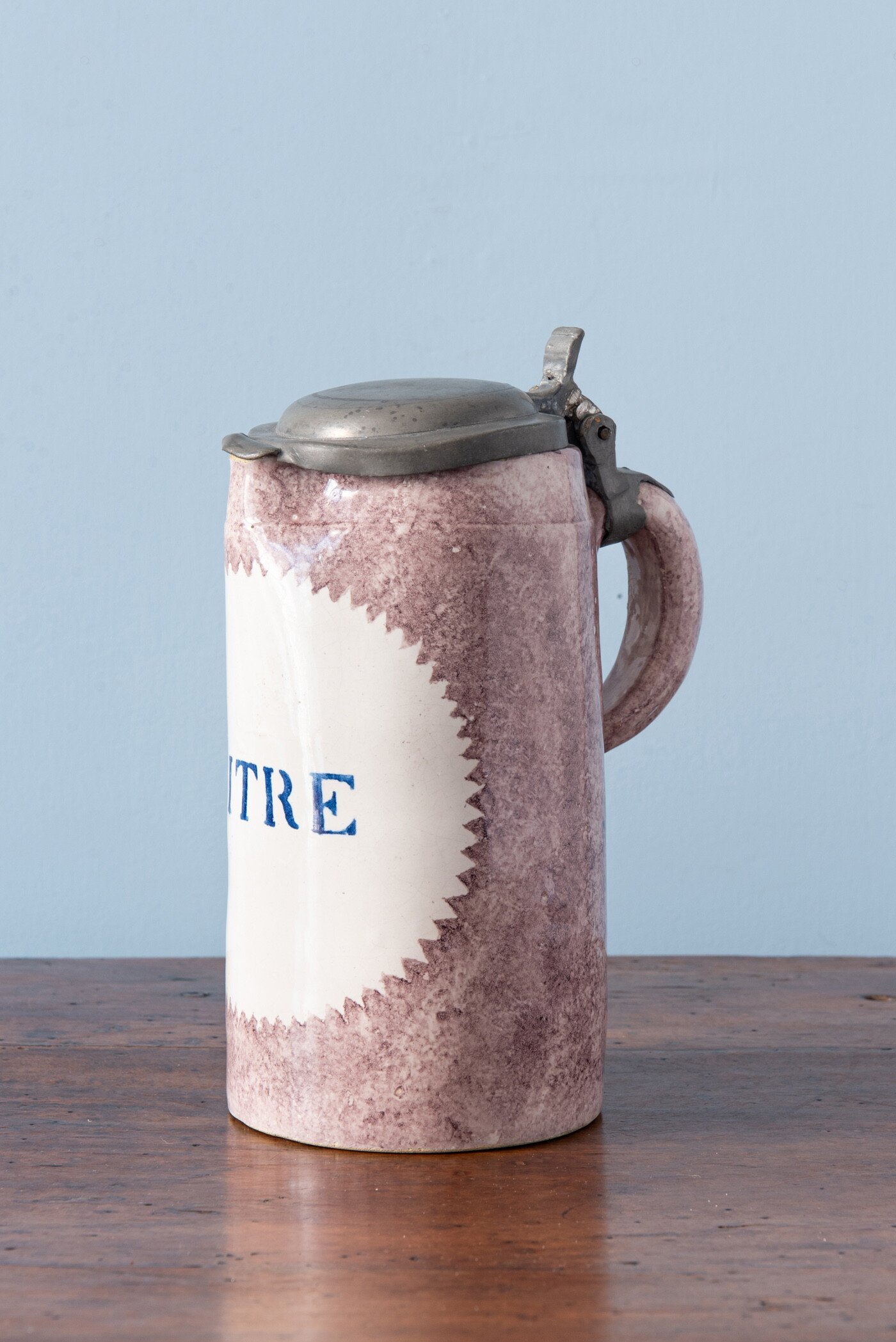
An early 19th-century Belgian faience spongeware beer stein from Brussels, decorated in vibrant manganese all over the body, the spongeware technique lending vibrancy and texture, while the front features a stencilled saw-tooth circle marked with the word "Litre." Of tall, upright shape, finished by a handle and a pewter lid, adding a pleasing functional character.
A textured beer stein with soft colour.
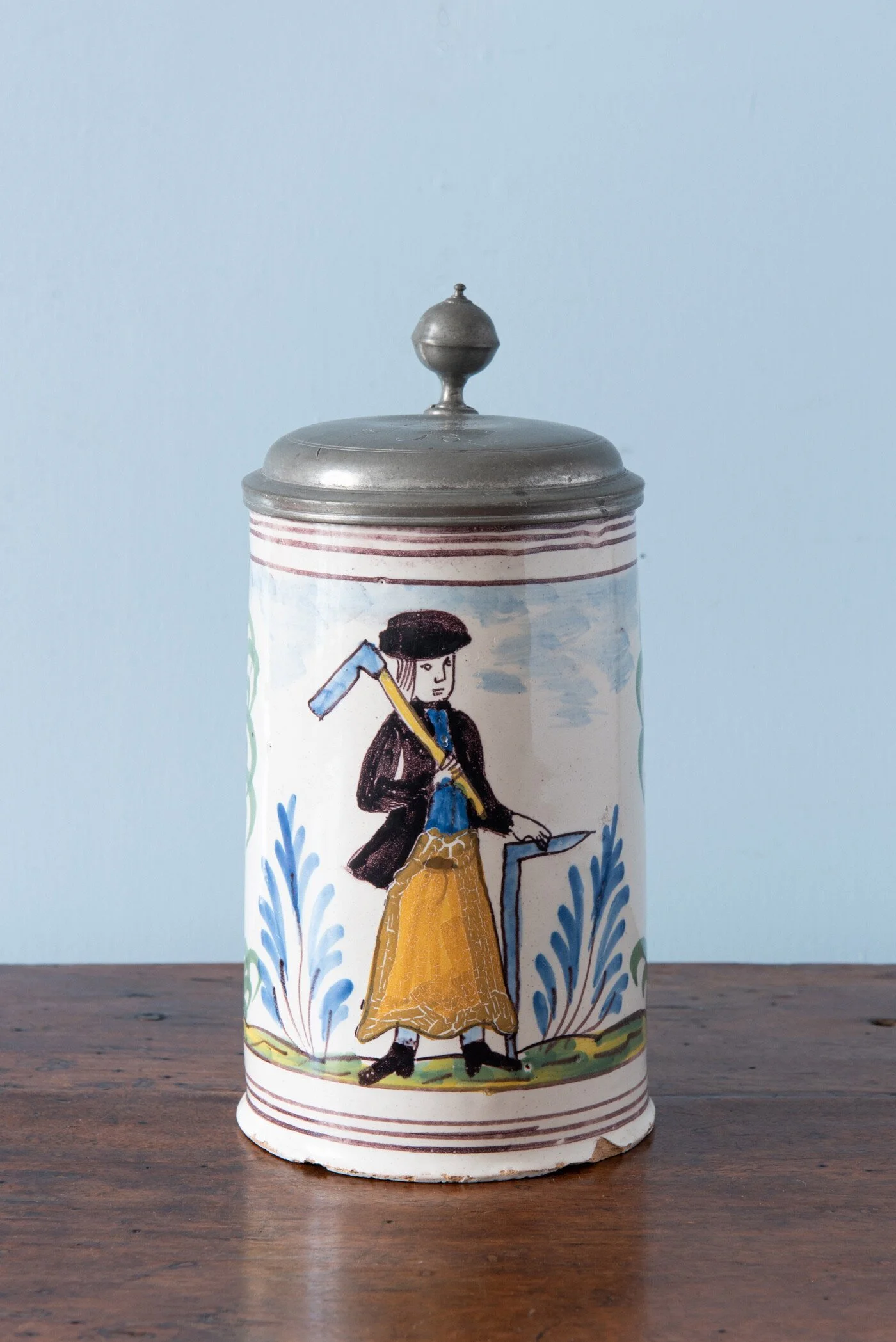
An early 19th-century German faïence beer stein, likely from Bayreuth, decorated with an occupational figure in the tradition of craft and trade imagery. A woman in a yellow skirt, black jacket and hat stands in a landscape of bushes and trees, holding a hatchet and set square — attributes that possibly identify her as a carpenter.
Of characteristic straight-sided form with a large handle, the stein is completed by a pewter lid with a finial, engraved with the initials 'GE' and 'J8'. The figure is rendered in fluid brushwork with lively, confident colour. A rare folk ceramic, brilliantly evocative of rural German working life.
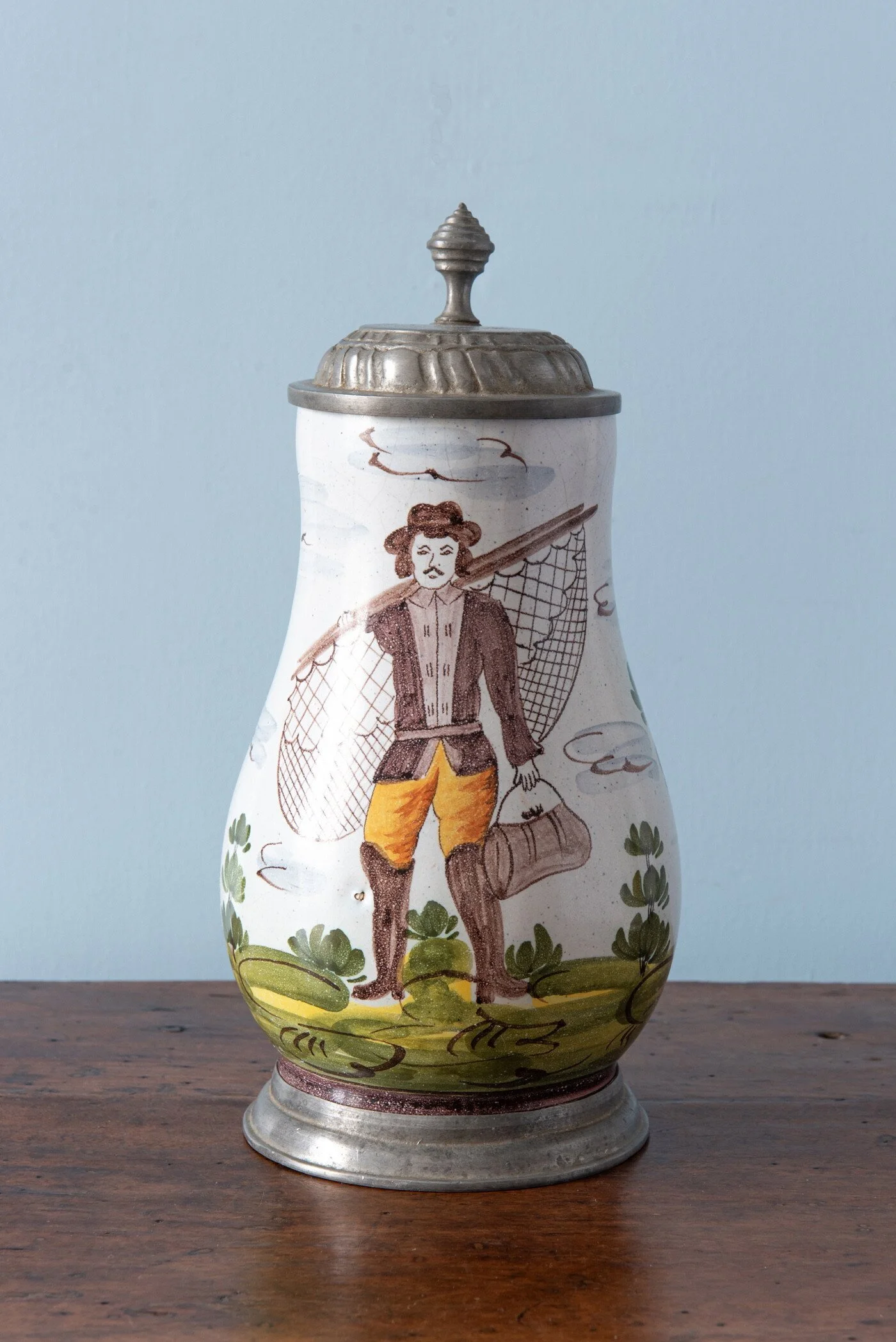
An early 19th-century German faïence Birnkrug, likely from Bayreuth, decorated with an occupational figure in the folk tradition. A fisherman stands in a landscape of green trees and bushes under light blue clouds, a net slung over his shoulders and a bag in hand. His yellow trousers contrast vividly against the manganese tones of the rest of the figure.
Of generous pear-shaped form with a large handle, this Birnkrug is fitted with a pewter base and lid, the latter finished with a finial and engraved with the initials 'ML' to the interior. A rare folk ceramic and vivid evocation of rural German working life, rendered with fluid brushwork and confident colour.

An 18th-century French faience cider jug from Rouen, decorated in classic blue and white. The jug is inscribed with the date 1726 and features vibrant geometric patterns alongside an exquisite wreath of foliage and flowers, all rendered with elegant, fluid brushstrokes.
The jug displays the characteristic cider jug form, with a rounded body, slender neck, and sturdy handle. A rare and distinctive piece, with a vibrant decoration and timeless quality.
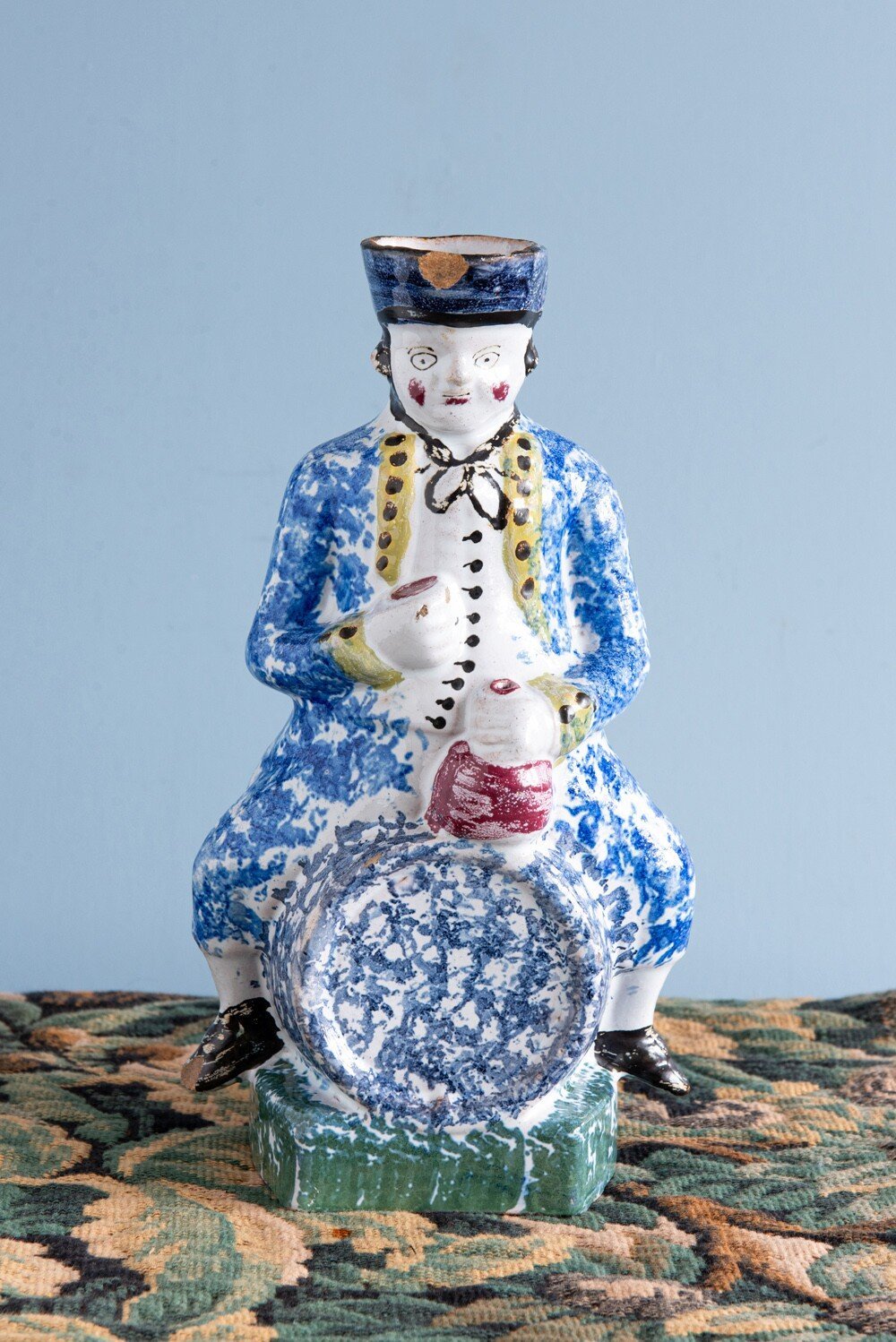
This rare 18th-century jug depicts a character sitting in a cask, holding a bottle of wine in one hand. It features captivating details, including the naive rendering of the face and lively spongeware patterns in blue and green, complemented by a buttoned yellow collar and necktie. ‘Pichets Jacquot’ were jugs featuring a jovial man drinking wine, primarily made in the 18th century, and typically showcased distinctive period attire, with the tricorn hat serving as the spout. With its vibrant colours and patterns, this rare folk faience piece makes a striking vase and charming decorative accent.
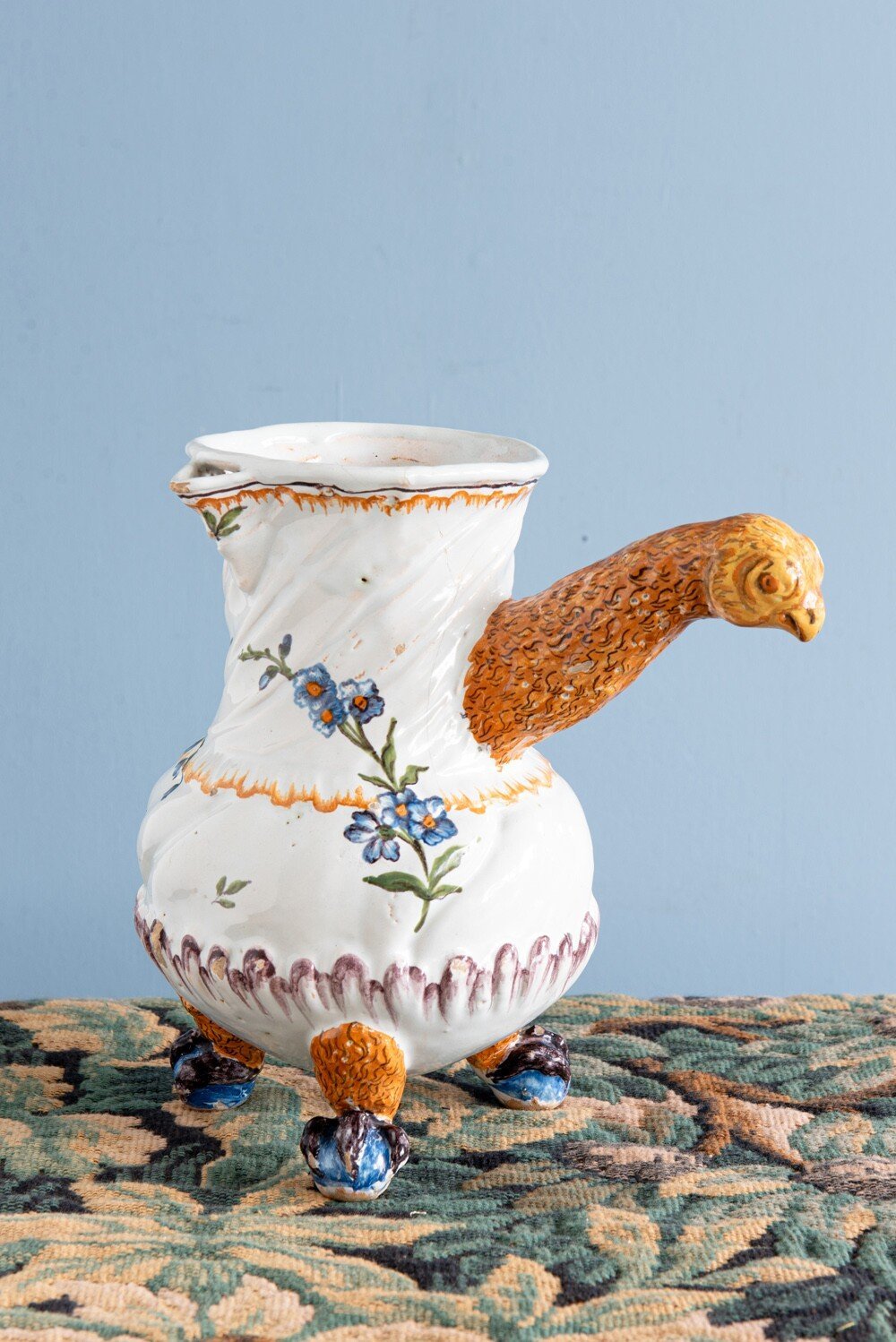
This striking late 18th-century French faience coffee pot from Meillonas features an unusual handle in the shape of an eagle’s head. Its body is decorated with a rose and other florals and stands on three feet, each showcasing eagle talons holding blue balls. Painted in a vibrant palette of ochre, green, and manganese, this rare coffee pot showcases intricate details, from the fluted body to the textured rendering of the feathers. With its captivating animal motif, this remarkable piece makes a unique decorative piece.

A handsome early 19th-century French faience jug from Saint-Omer, decorated with white dots and strokes on a dark blue background. Of a large size, its body is fluted and the handle features further strokes. Saint-Omer produced beautiful faience items on a dark blue background, and this jug is typical of the loose patterns used. This large country pottery jug is perfect to showcase summer blooms, as well as an attractive decorative accent on its own.
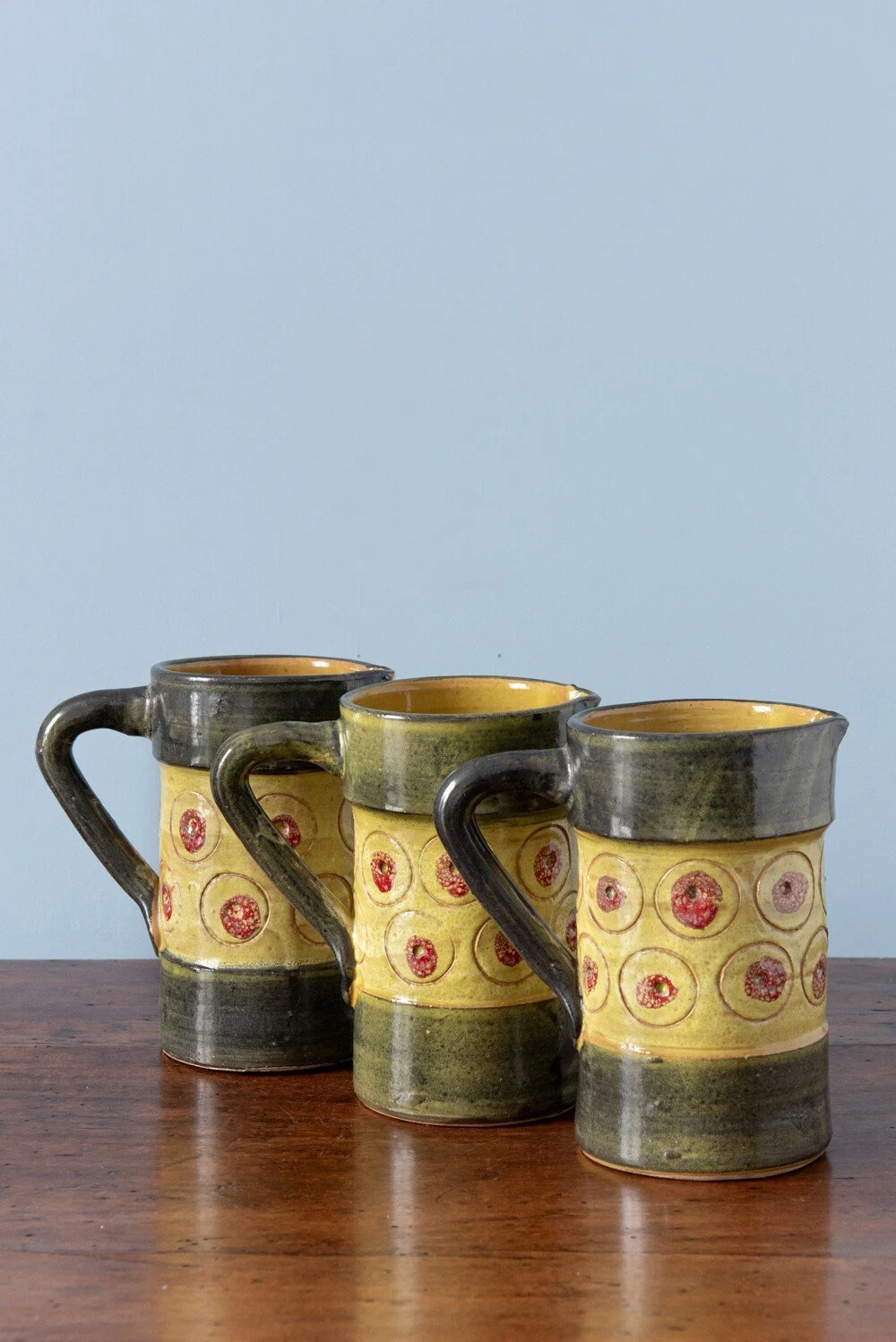
A vibrant trio of mid-century jugs from the Romacrea school in Rome, active in the 1950s–60s and renowned for its creative shapes and decorative invention. Each piece features a lively design of green and yellow bands with red circular motifs, the colours enhanced by a textured glaze. Their slender, medium-sized forms are completed with sculptural green handles. A distinctive set of modern Italian jugs, rich in colour and texture.
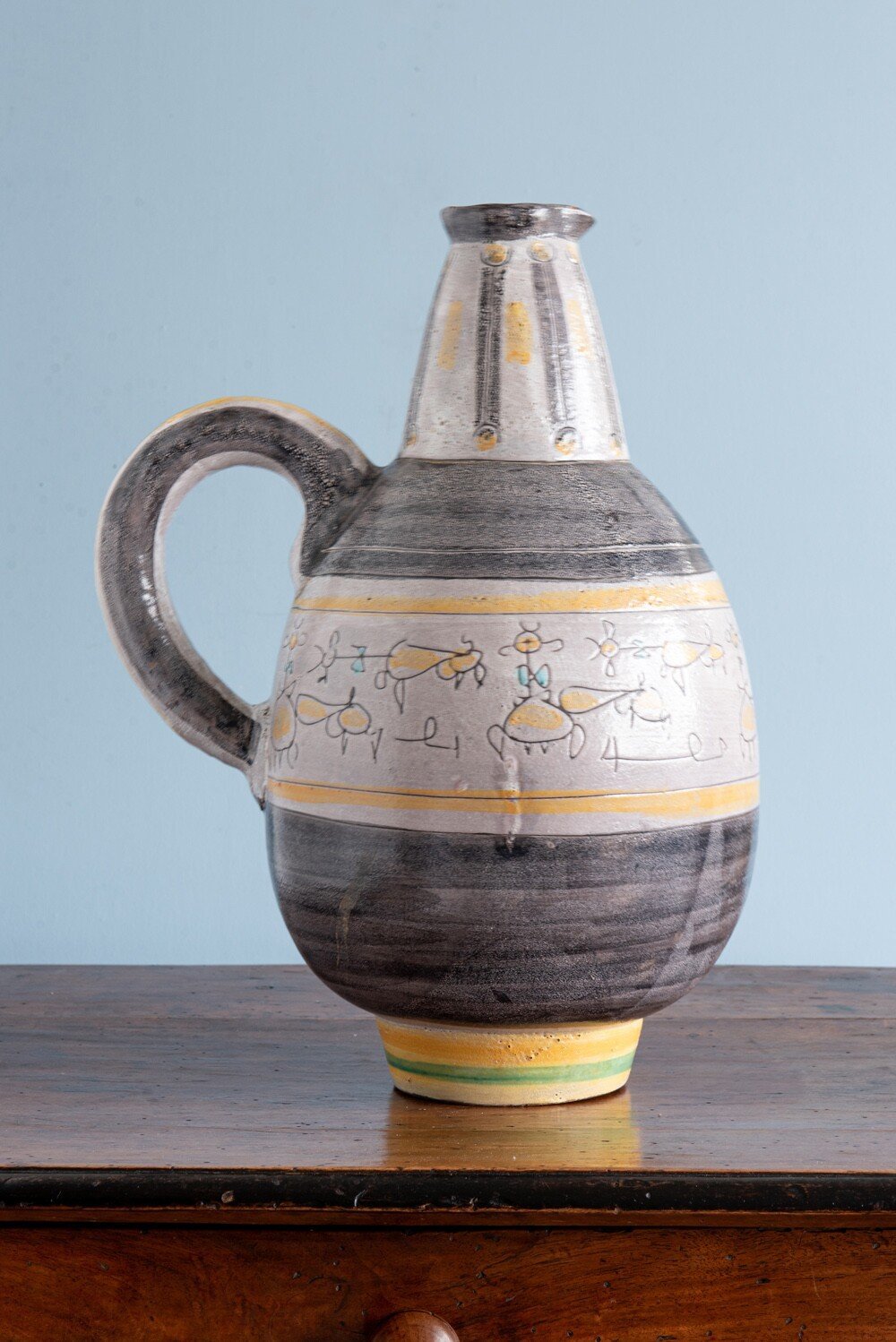
This tall midcentury French pottery jug from Vallauris features a large oval body, a long narrow neck, and a sculptural round handle. Bold, loose brushstrokes in yellow and manganese contrast with a naïve sgraffito design depicting animals. Echoing the work of Jacques Innocenti at Vallauris, this impressive jug makes a striking decorative accent.

This 19th-century French pottery jug from Provence is decorated in a gorgeous ochre glaze and bare clay on the lower part. It features a large body with two handles and a spout. Brightly coloured and highly textured, it's an ideal addition to a kitchen or a set of shelves.


A late 18th-century Brussels faience jug, of generous round form with a slender neck. It is decorated with floral motifs in manganese, blue, yellow and green, rendered in simple round shapes and strokes and elegantly scattered across the body, structured by horizontal lines at the top, middle and base. Fitted with a pewter handle, a historical repair connected to a lid marked with the roman numeral XXIV and the initials 'LD', adding historical interest. The light, painterly brushwork of the flowers contrasts with the raw materiality of the pewter, lending the jug patina and character.
A captivating jug of vivid patterns and contrasting materials.