
Home / Antique Furniture
Antique French Furniture
French country rush chairs, Art Deco oak furniture and architectural Louis XVI seating. Our collection of French antique furniture brings together considered pieces from the 17th to the early 20th century, ranging from provincial workshops to Provençal and Alpine folk traditions.
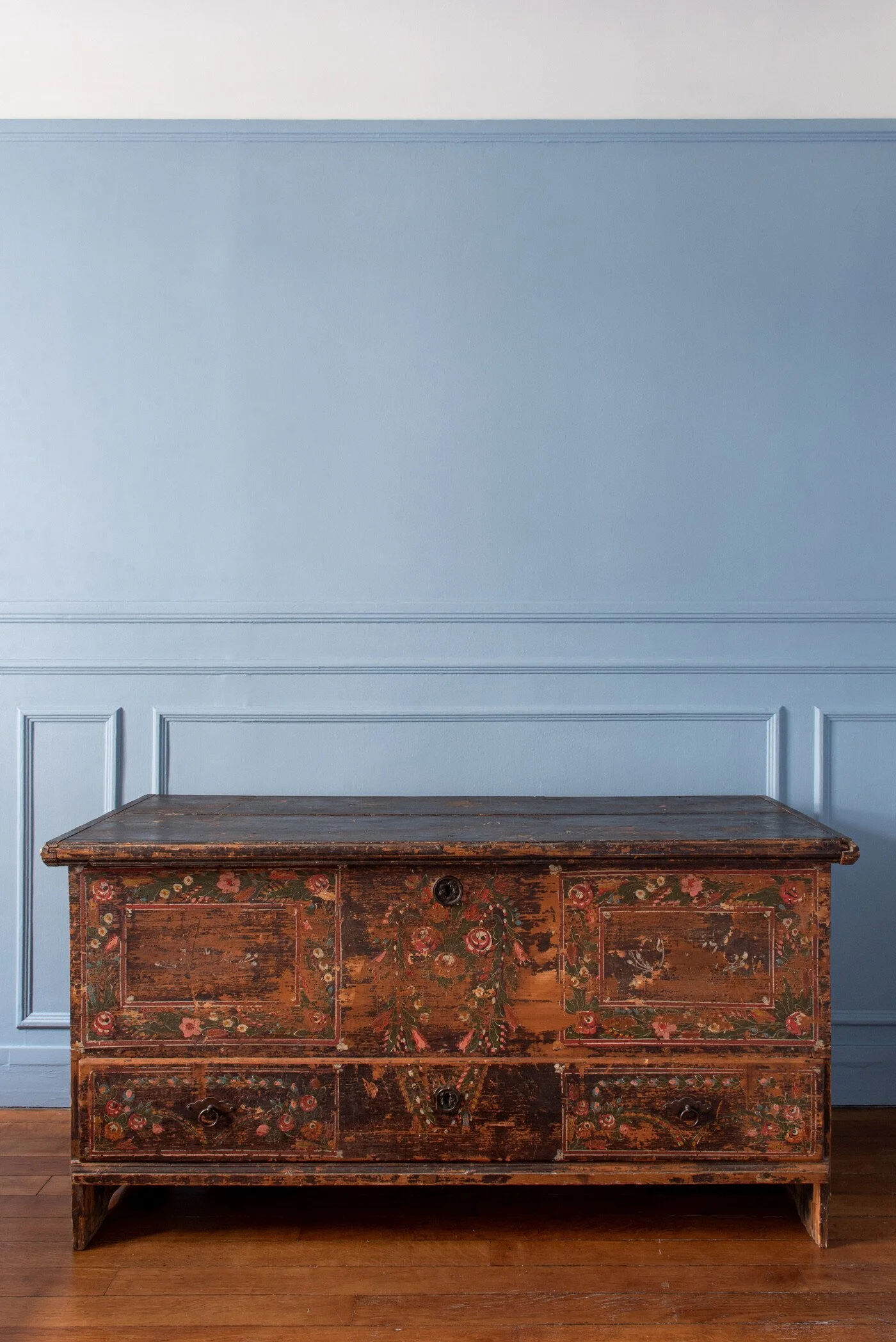
A late 18th-century Alpine folk marriage chest in hand-painted fir, c. 1780, possibly Swiss or Austrian Tyrol. The upper section opens from the top, while the lower section features a large drawer.
The front is decorated with finely painted garlands of roses, trailing foliage and scattered flowers set within architectural reserves, while a looser floral garland surrounds the original central locks. The painted decoration displays vivid red and pink roses, blue flowers and green foliage, with white highlights against a warm ochre ground. The composition depicts a variety of floral species, rendered in the confident vernacular style characteristic of rural Alpine painters of the late 18th century.
The chest stands on elegantly shaped bracket feet, adding lightness to its tall, rectangular form. Both practical and decorative, it offers generous storage while serving as a striking interior piece. A rare Alpine folk marriage chest with distinctive patina and strong vernacular character.
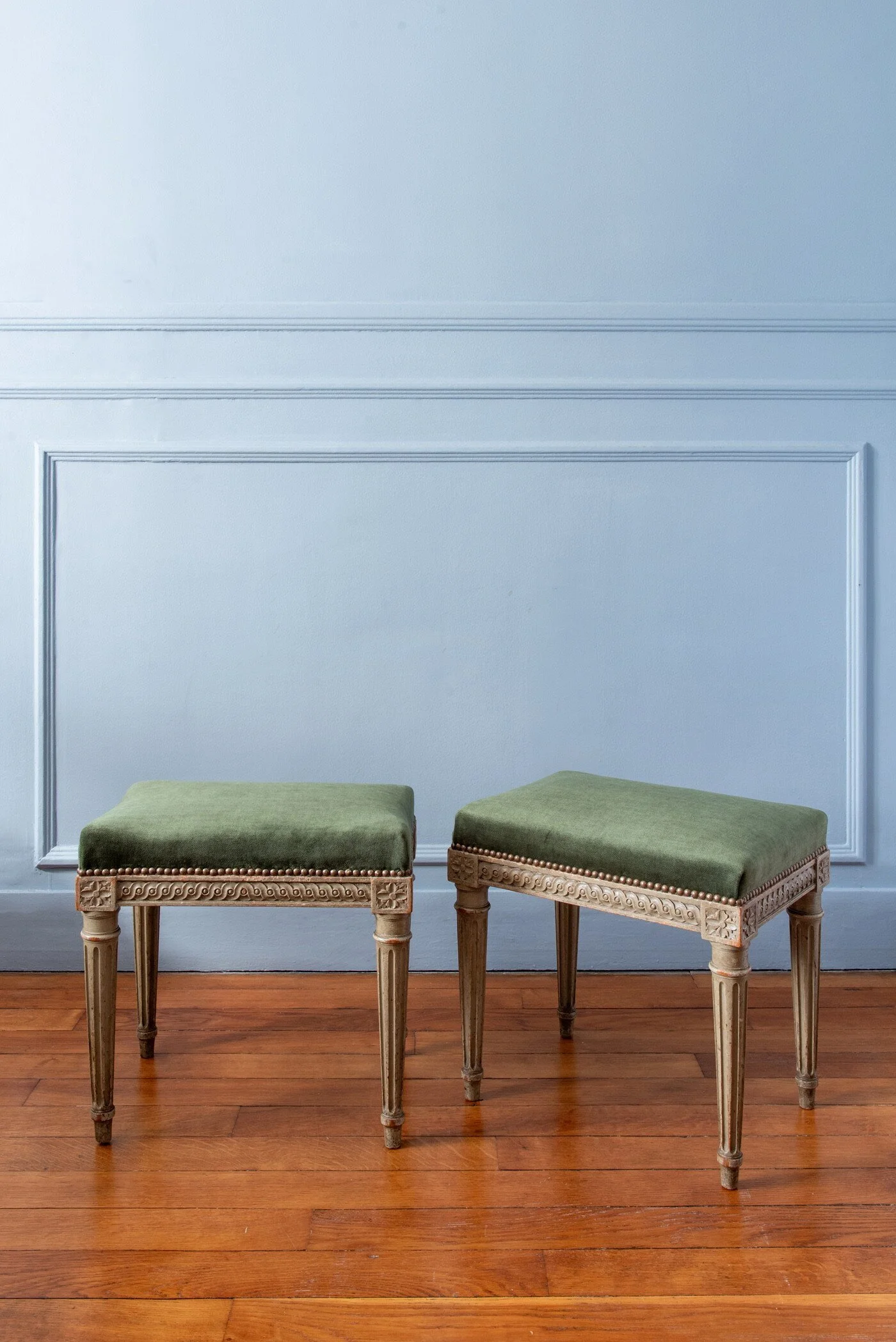
A pair of 19th-century French painted stools in the Louis XVI style, with slender fluted rounded legs. The frieze features interlaced beaded ornament along with paterae on the corners with carved flowers.
The original paint finish in a dark shade of off-white is softly patinated, and the stools have been newly upholstered in green Nobilis velvet.
A rare pair with restrained elegance and architectural presence. The exquisite carving, balanced proportions and harmonious colour make these versatile stools well suited to a living room or bedroom as occasional seating.
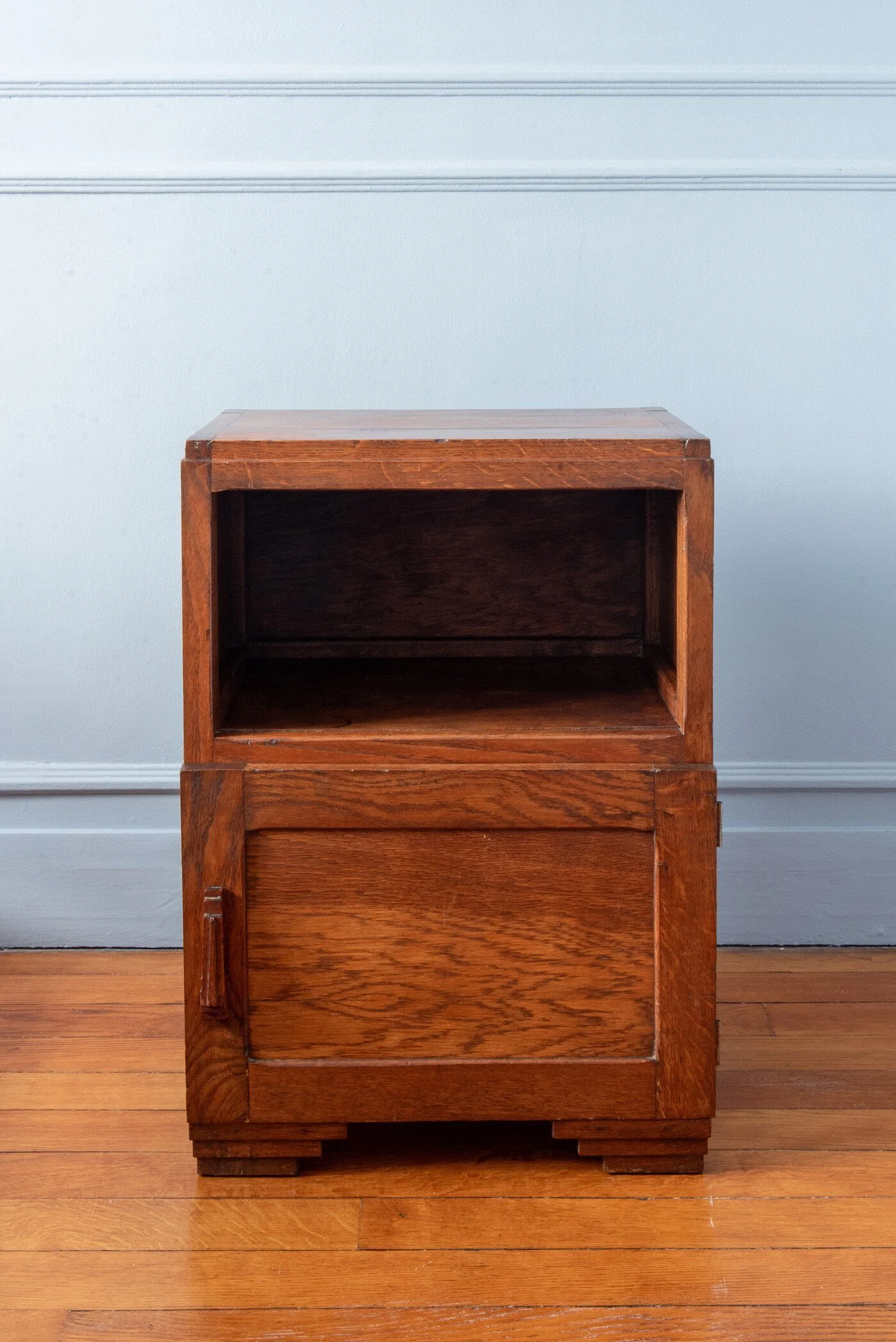
A French Art Deco bedside table in solid oak, c. 1930, offering both display and concealed storage, with an open shelf above a single cupboard door. Its form is defined by bold vertical uprights framing the facade. The top is subtly set back from the structure, introducing a refined tiered detailing effect that is echoed throughout the stepped feet and the slender geometric handle.
The warm mid-toned oak, with its pronounced natural grain, lends an organic richness to a shape that is otherwise beautifully restrained and architectural. A well-proportioned and considered bedside table, with geometric details characteristic of the Art Deco period, softened by solid oak, well-suited to a bedroom or to another room in need of an elegant storage solution.
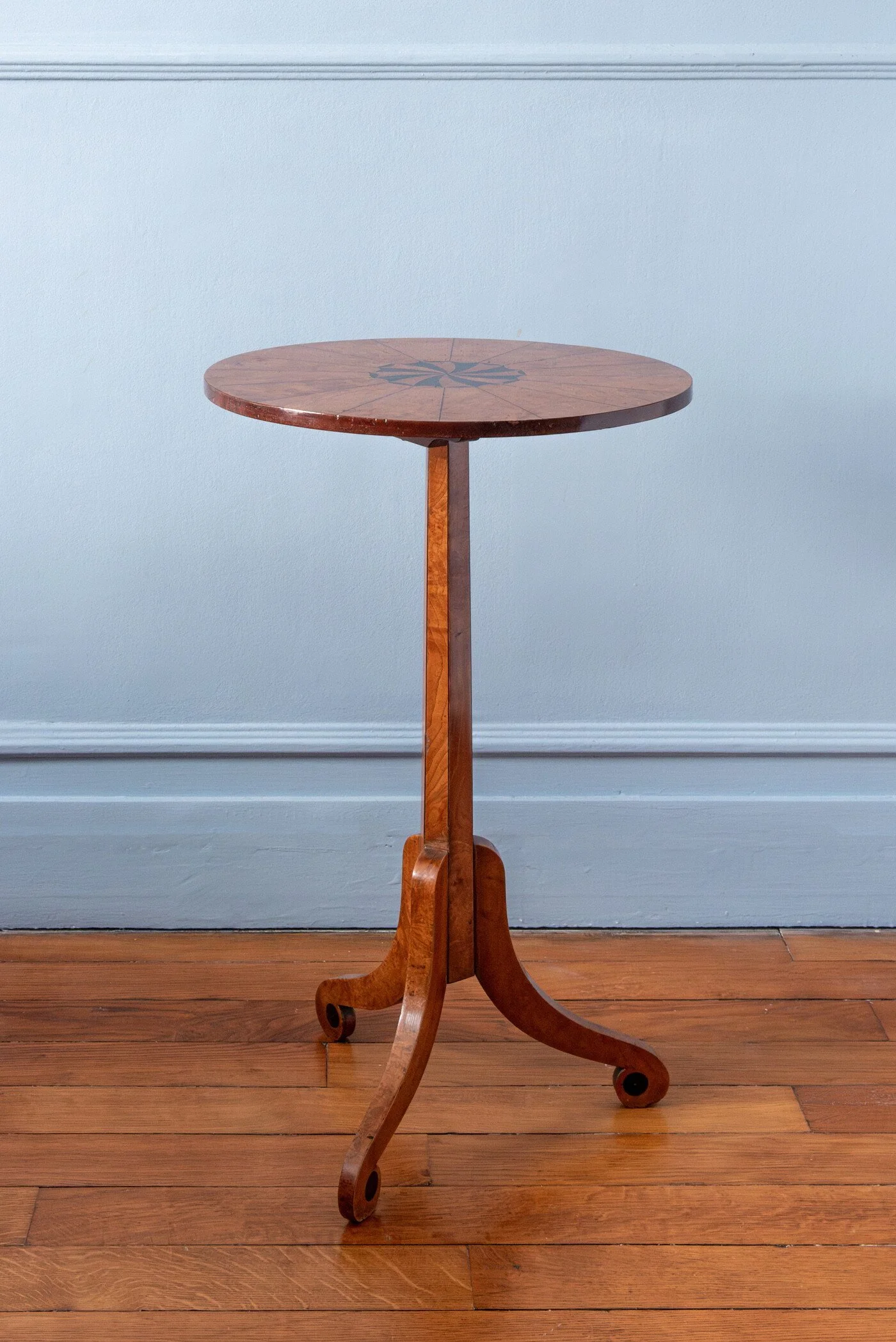
A 20th-century side table in the Biedermeier style. The circular top displays geometric marquetry with radial fruitwood veneer and an ebonised sunburst inlay at the centre, creating subtle movement through carefully selected figured wood. The edge is finished with a darker stained veneer border.
The chamfered column rises from a tripod base with three scroll feet, each centred by an ebonised circular inlay. The top tilts for practical use, combining functionality with decorative appeal.
The restrained proportions and balanced architectural lines exemplify the refinement typical of Biedermeier design, with its emphasis on fine veneers and geometric pattern. A quietly elegant, versatile side table.
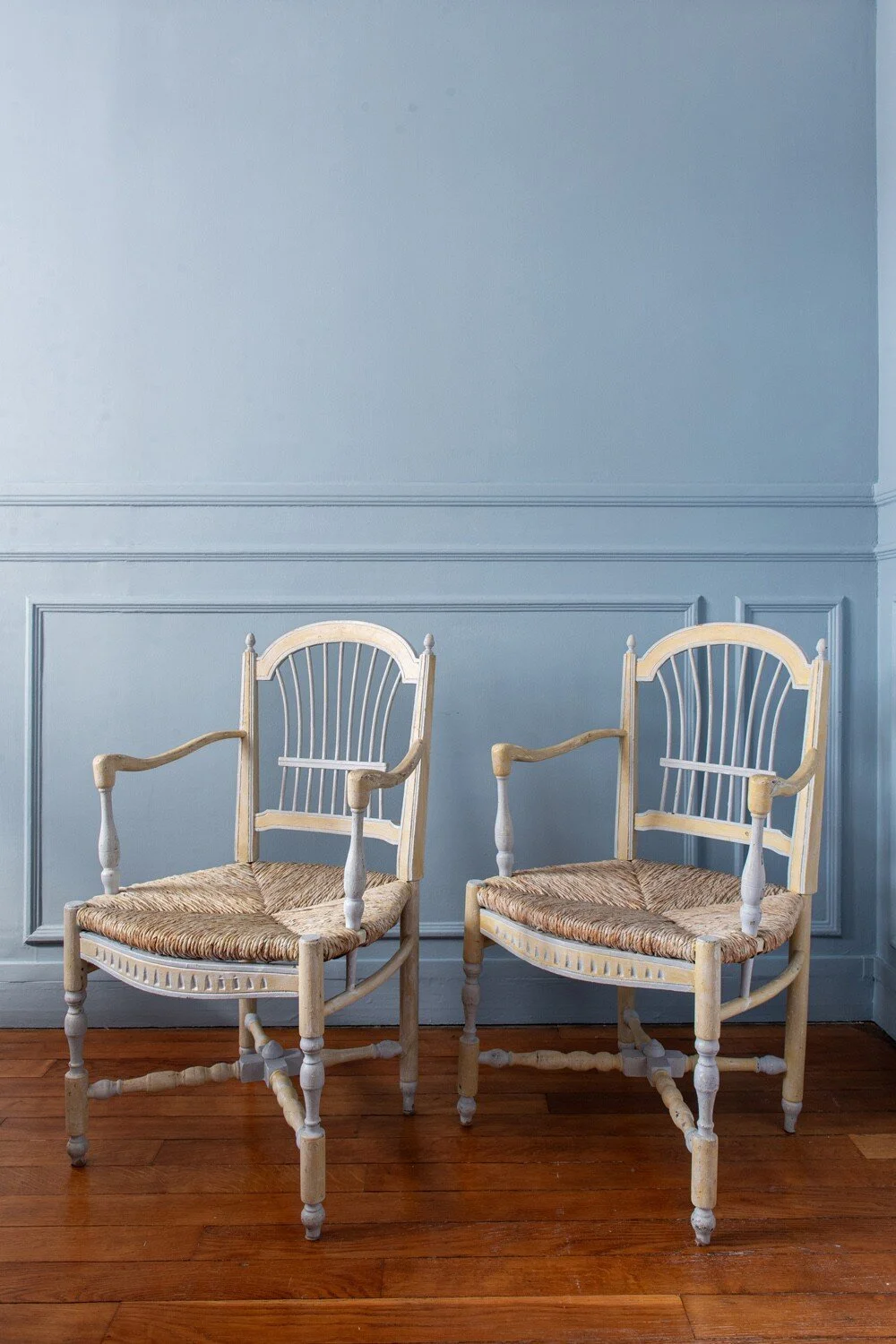
A pair of late 19th-century French rush-seat armchairs from Provence, retaining their original two-tone painted finish in soft yellow and light grey, gently worn to an authentic patina. The arched backs are carved in soft curves with shaped splats, while slightly scrolled armrests rest on turned supports. Rush seats are framed by shaped aprons, and turned legs are joined by an entretoise. With their warm colours and graceful design, this rare pair of rustic armchairs displays Provençal charm and elegant craftsmanship.
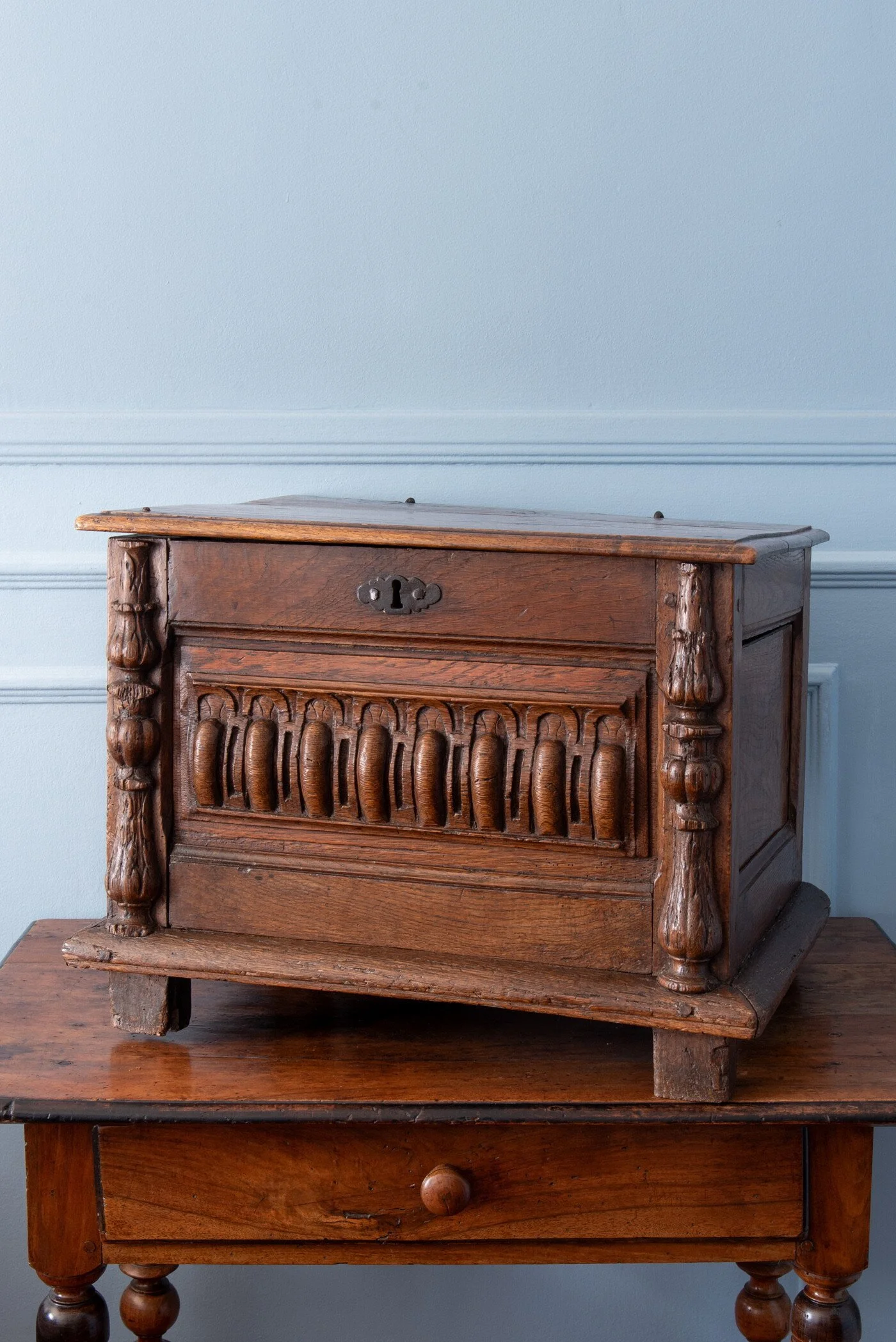
A late 16th to early 17th-century French provincial oak coffer in the Renaissance style. The front is carved with a frieze of egg-and-dart beneath blind arcading. The corner pilasters and projecting base are later additions, probably seventeenth century, decorated with baluster and foliate motifs in the Renaissance taste. The crisp, regular carving of the front is set against the free-hand quality, elegant sense of movement and textured wood of the pilasters, lending the coffer a layered and compelling history. The escutcheon is original, while the top is likely a further addition, featuring characterful loop hinges. A warm patina, consistent throughout, unifies its different elements.
A captivating coffer of small scale and layered history.
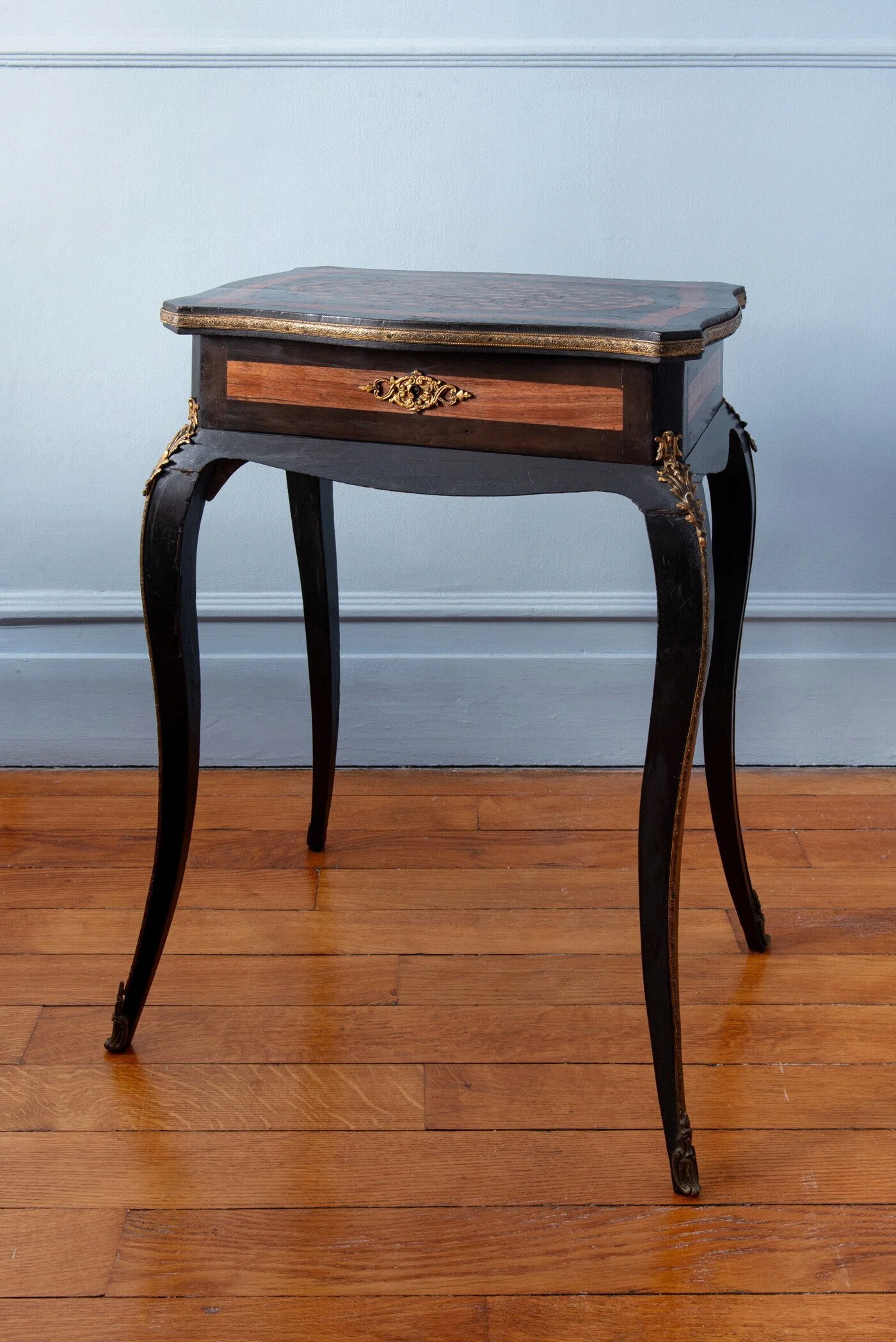
A French dressing table in the Napoleon III style, c. 1850–1870, of compact and elegant form in ebonised wood and parquetry. The shaped top features a trompe-l'oeil cube parquetry pattern in an oval reserve, the warm tones of fruitwood and rosewood creating a striking perspective effect, framed by rosewood cross-banding and finished with a gilt bronze frieze. The ebonised body features contrasting lighter wood parquetry to the sides
The serpentine apron flows into elegant cabriole legs, adorned with ormolu mounts of foliage and rocaille motifs and finished with ormolu sabots. The hinged top lifts to reveal an interior compartment fitted with a mirror plate and a floating shelf, while the front retains its original escutcheon, functioning lock and key.
An exquisite dressing table of refined craftsmanship, equally at home in a bedroom or a drawing room.
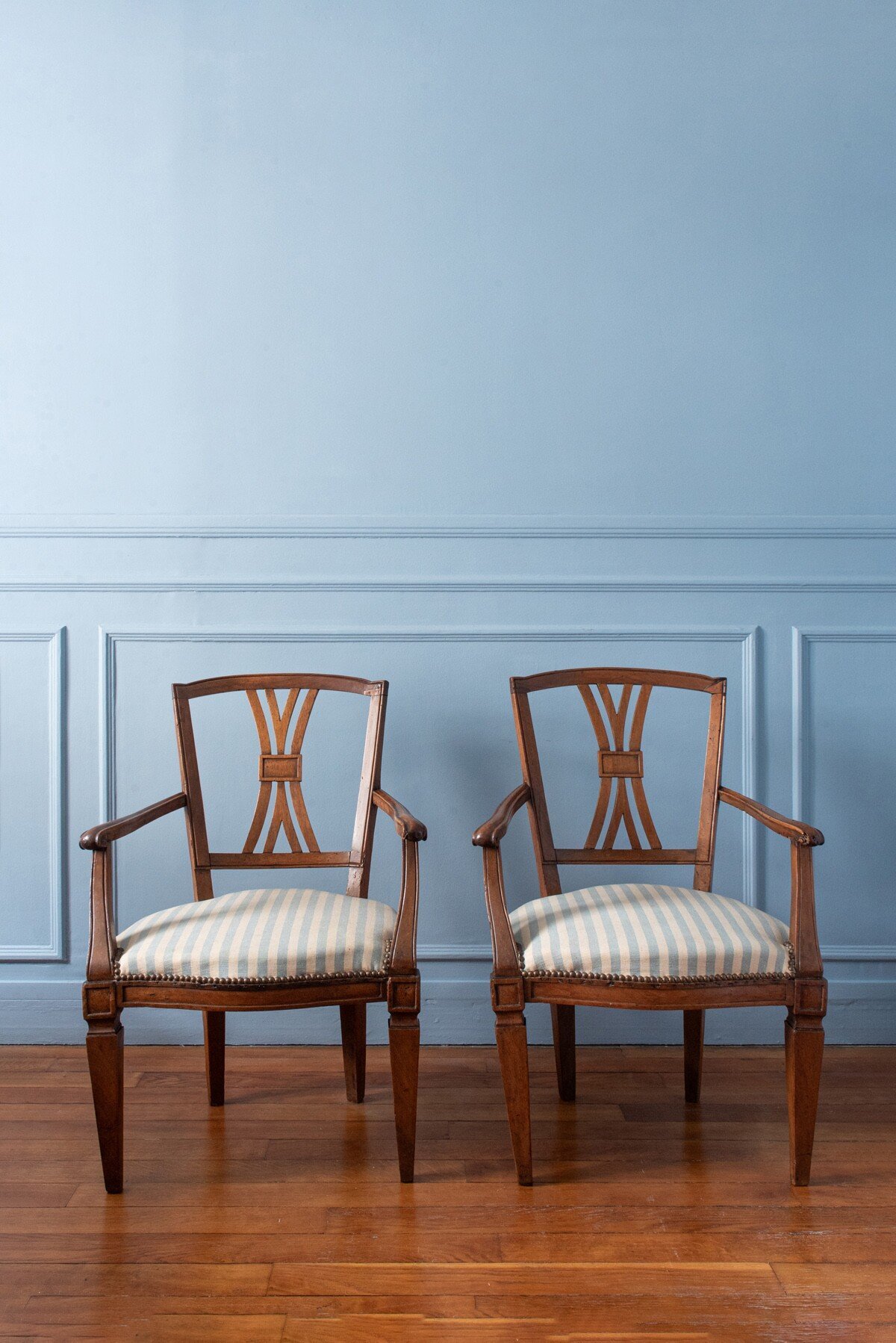
A pair of early 19th-century French provincial walnut armchairs, c. 1800-1820, in the neoclassical spirit of the Louis XVI and Directoire styles, of architectural lines and balanced proportions. Each features distinctive tapered legs and gracefully sweeping armrests finished with scrolls. The seats are upholstered in blue striped fabric, while the curved backs feature lyre-style splats held together by a rectangular motif.
The wood displays a warm, attractive patina, with a few minor repairs that enhance its authenticity and history. Simple yet elegant, these well-balanced country armchairs combine graceful lines with timeless provincial charm.
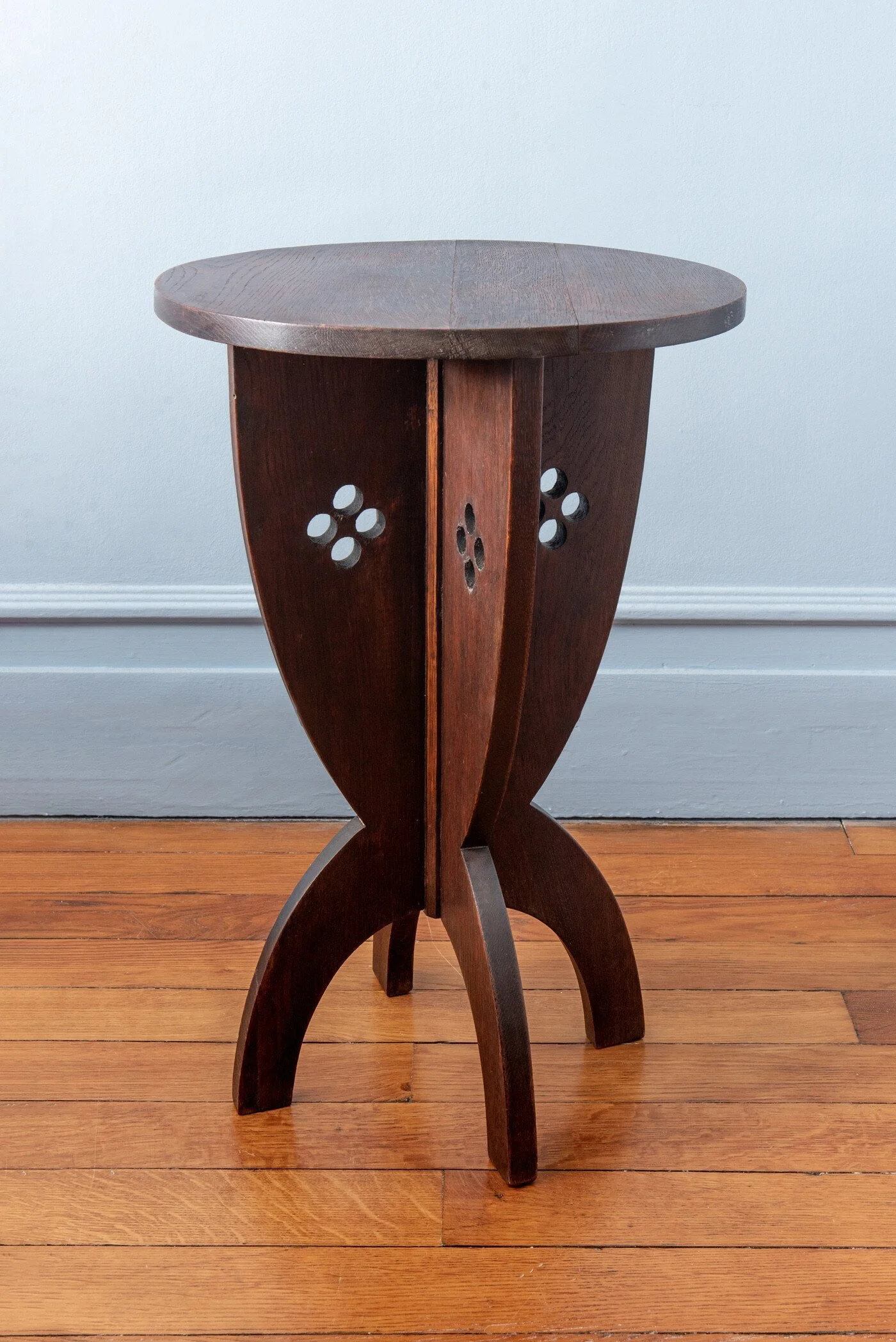
A French Arts & Crafts Modernist oak pedestal table, c. 1920-30. The circular tabletop is supported by a pedestal of four panels, each pierced with a quatrefoil motif, raised on splayed legs.
The table sits at the intersection of several design movements, giving it a captivating historical design interest. Its bold geometric, almost abstract, structure gestures towards early Modernism and Art Deco, while the pierced quatrefoil decoration draws from the Neo-Gothic vocabulary of the Arts and Crafts movement. The honest, structural quality of the construction suggests confident provincial craftsmanship.
The stained oak displays bold, visible veining and an even patina throughout, adding decorative warmth. With a generous tabletop and ideal height for use, an early modern side table with rare form and distinctive craftsmanship.


A provincial French Louis XV cabaret table in walnut, c. 1750. The top features a striking star-shaped parquetry pattern, a regional interpretation of parquet de Versailles, and is bordered by a raised surround characteristic of cabaret tables, originally intended to secure tea or coffee services.
The table includes a single drawer and a delicately scalloped waistband, resting on graceful cabriole legs terminating in stylised hoof feet, all typical of the Louis XV period. Its relatively low height suggests use as an occasional table, combining practical function with elegant proportions.
The use of solid walnut adds warmth and authenticity, creating a striking contrast with the expressive parquetry top and the flowing lines of the legs. A balanced and refined table, with graceful Louis XV forms and distinctive regional craftsmanship.