
Home / Decorative Items
French Decorative Antiques
Distinctive decorative items and characterful vintage pottery. Browse our collection of antique home décor from candlesticks to rare faience pieces, and display these gorgeous decorative antiques in your home.
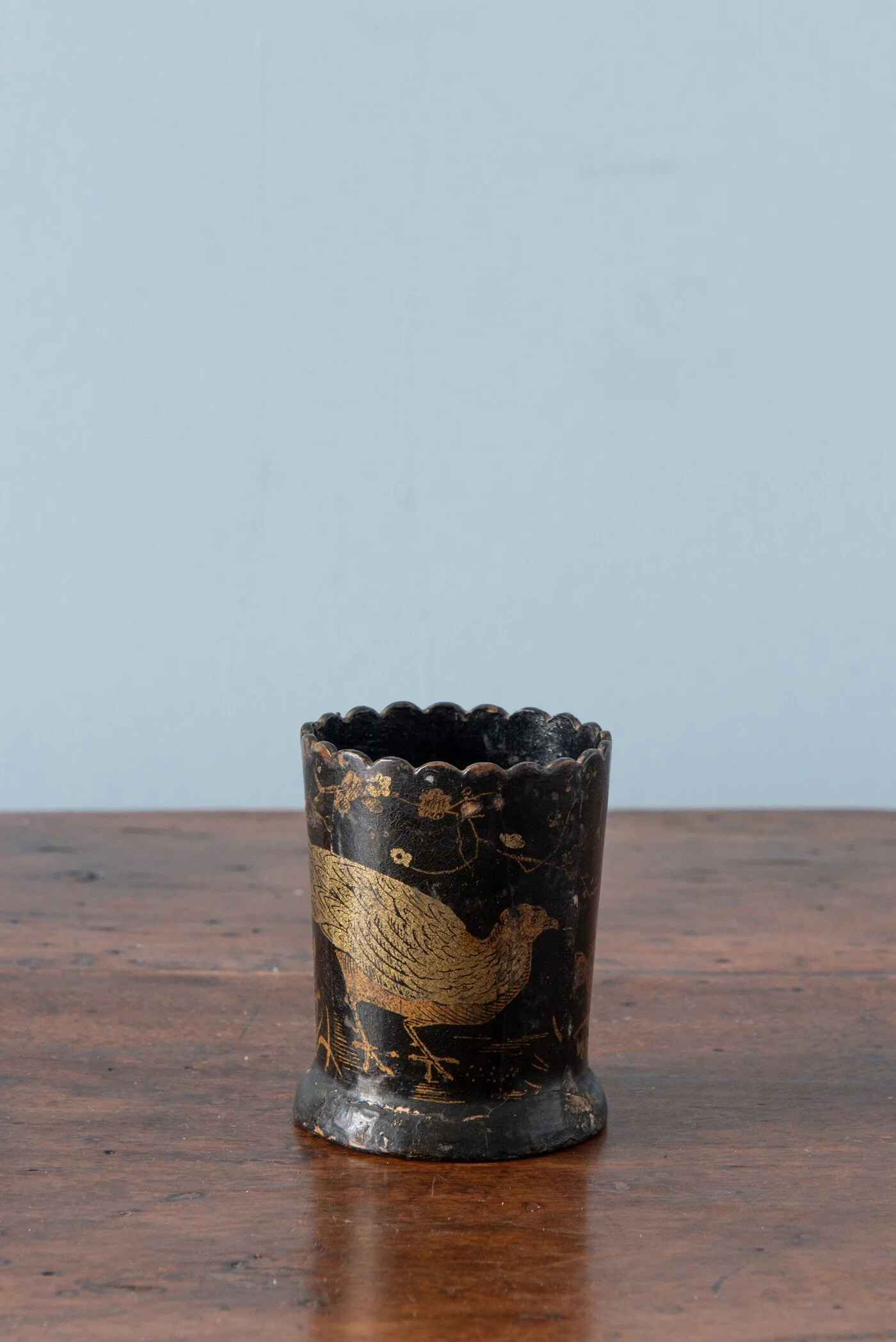
A mid-19th-century French papier-mâché pencil holder in the Napoleon III style, decorated in gold with a partridge and butterfly among grasses and flowering branches before a lake, on a black ground. With a charming petite size, the piece has a wide base and a delicately scalloped top edge. Refined details, from the partridge's feathers to the layering of grasses and shrubs, lend interest throughout, the typical Napoleon III palette of black and gold elegantly combined with the handmade texture of papier-mâché.
An elegant decorative piece with functional charm.
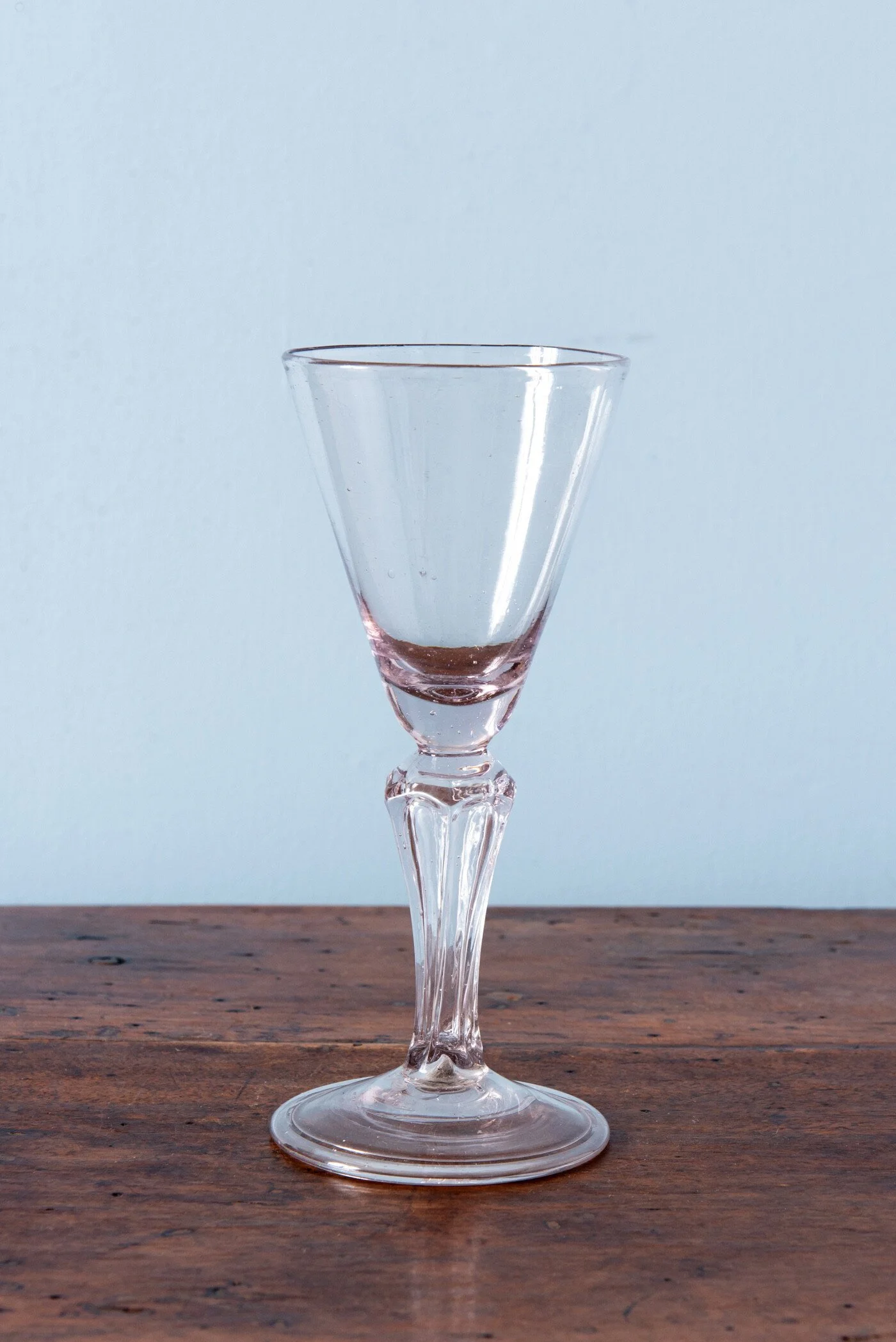
An 18th-century French wine glass, with a flared bowl, an elegant baluster stem and a wide foot. The glass is of an exquisite purple tint, remarkably light to the hand, with tiny bubbles and marks typical of glass-blowing that lend it individual character.
A rare glass of elegant colour, in excellent condition.
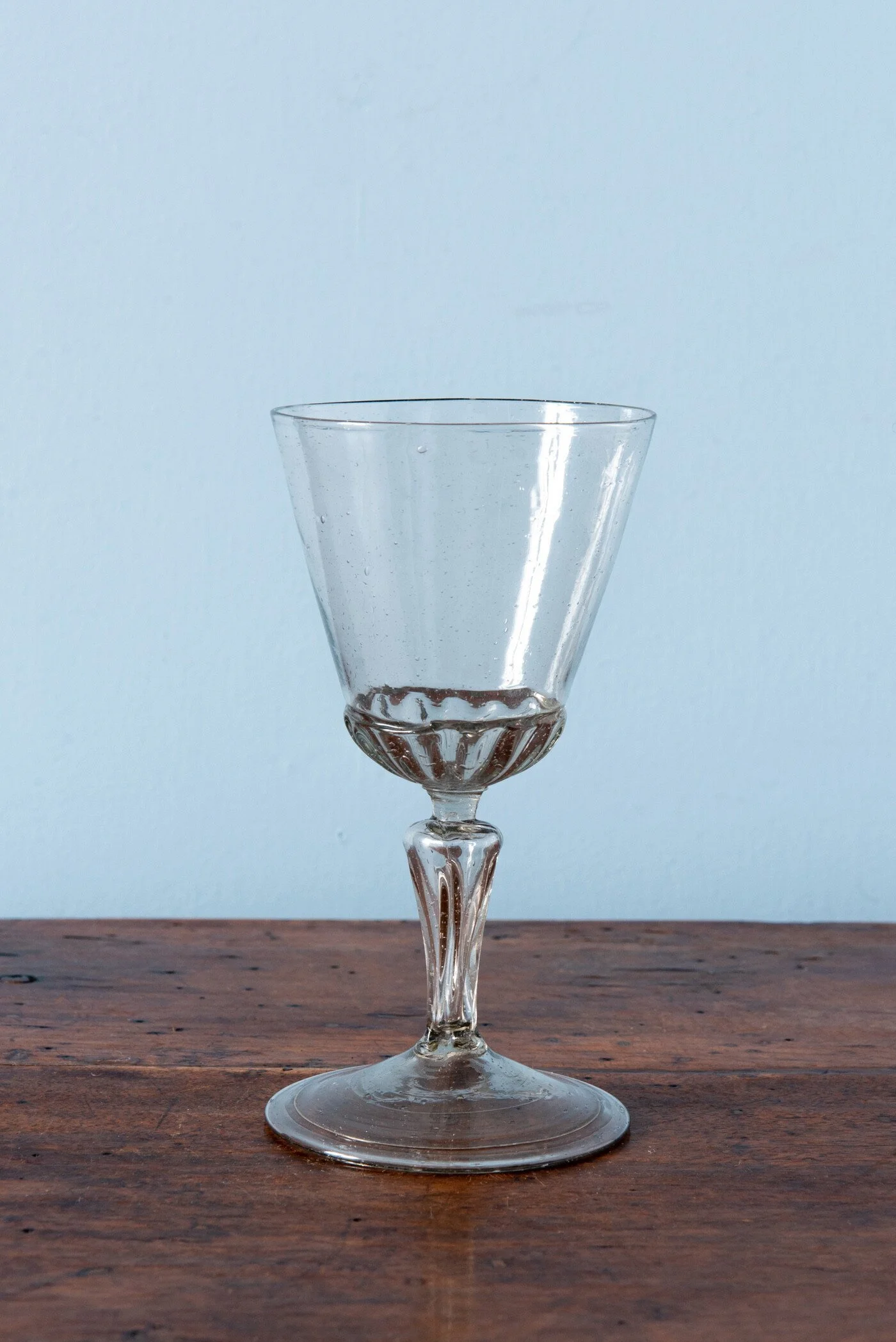
An 18th-century French wine glass, with a flared bowl gadrooned at its base, an elegant baluster stem and a wide foot. The glass is remarkably light to the hand, with a soft grey tint and tiny bubbles and marks typical of glass-blowing that lend it individual character.
A rare glass of elegant shape, in excellent condition.
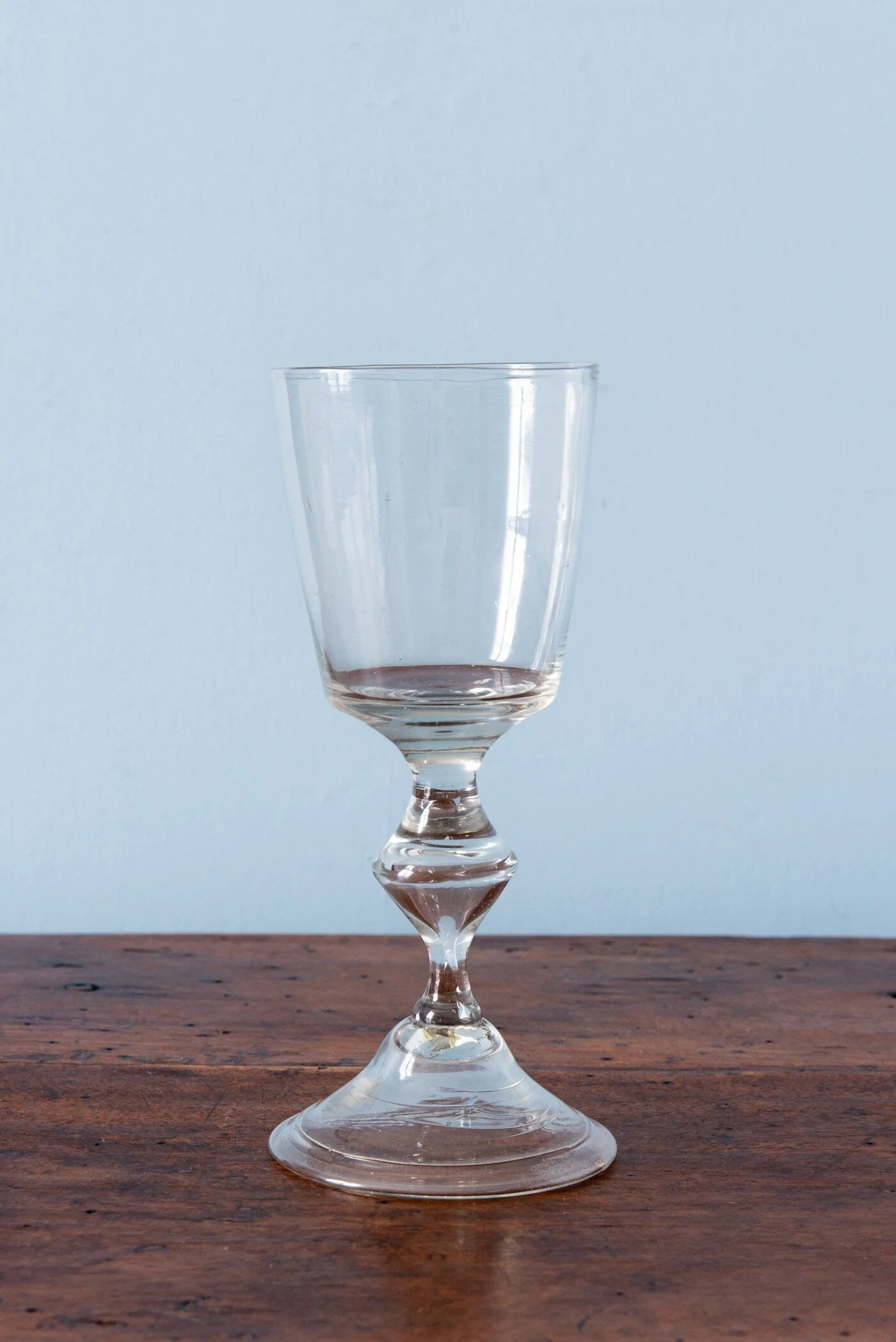
An 18th-century French Bourguignon wine glass, of tall form with a plain bowl, diamond knop to the stem and domed base, characteristic of glass-making in Burgundy. The glass is beautifully clear and remarkably light to the hand, with tiny bubbles and marks typical of glass-blowing that lend it individual character.
A rare glass with a distinctive shape, in excellent condition.

A rare and richly decorated early 19th-century French faience miniature commode, standing on curved feet and featuring bold relief moulding along the edges, evoking the look of ormolu mounts. The door, fitted with a grape-shaped brass handle, opens to reveal a shelved interior.
The surface is adorned with vibrant polychrome garlands and delicate pastoral scenes in blue and white to the top and door, while playful putti decorate each side. Marked underneath. An exquisite piece—both refined and whimsical—that would make a striking accent on a tabletop or windowsill.
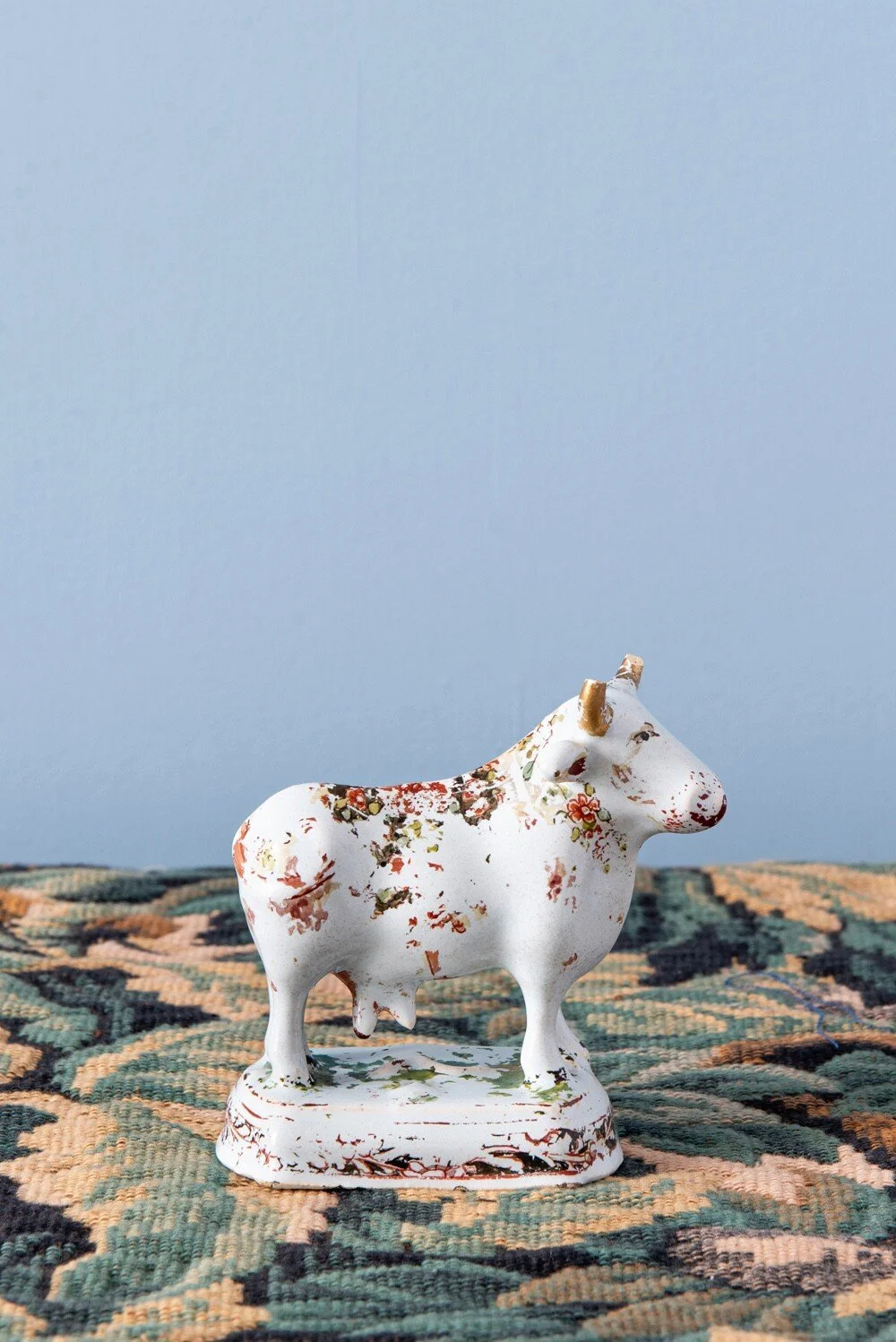
This rare 18th-century Dutch Delft cow figurine is decorated in white with garlands of red, green, and black flowers along the neck and back, accented with gilt highlights on the horns. Hints of green at the base suggest grass, adding to its charming naturalism. Finely modelled with characterful details, it is a delightful example of classic Dutch Delftware.
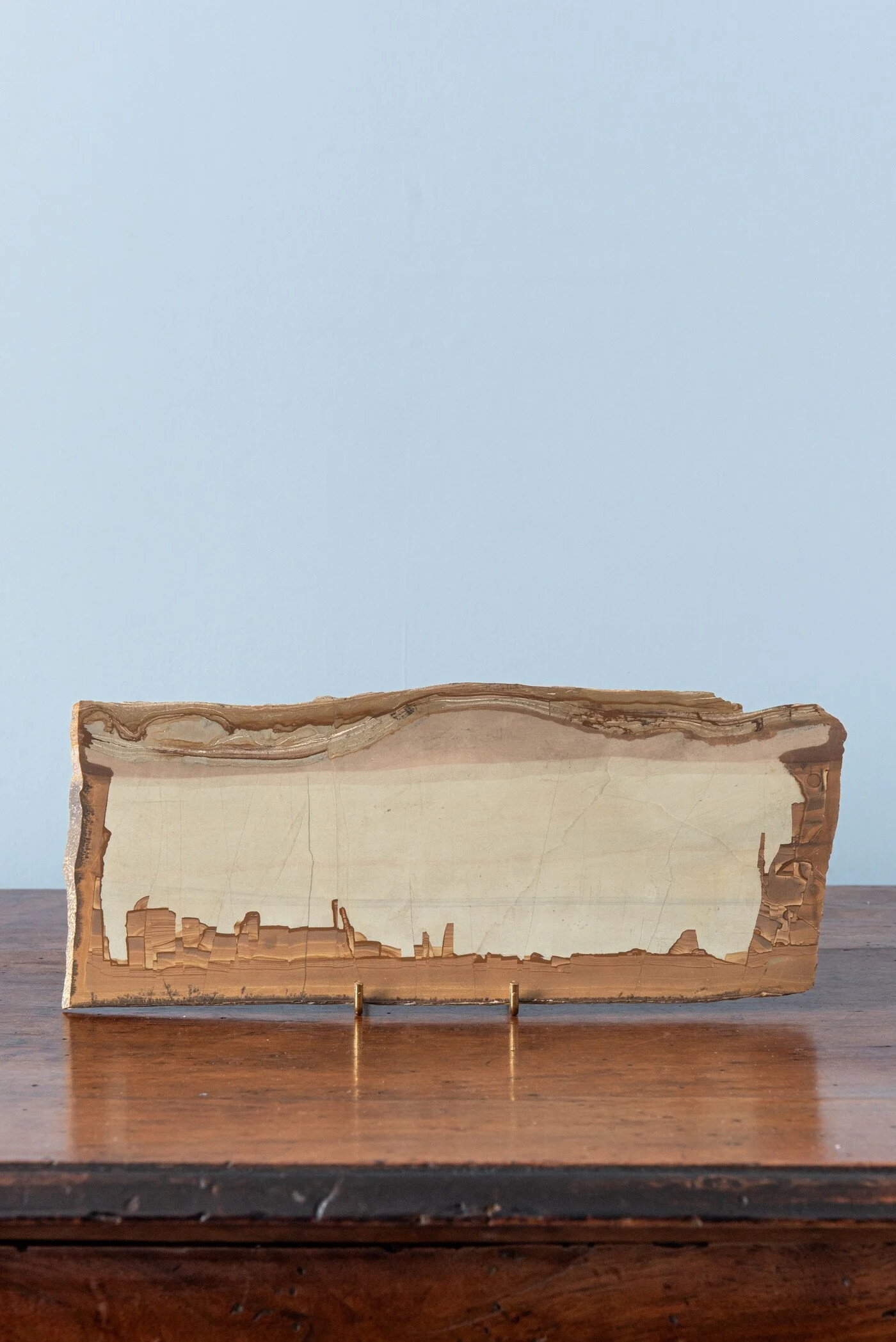
A pietra paesina, also known as Italian landscape stone or ruin marble, discovered in Tuscany near Florence. Formed from compressed limestone and clay, the stone is cut to reveal natural deposits of iron and manganese that have seeped into fine fractures over time. The surface displays warm greys, ochres and browns, animated by internal veining, fissures and geometric formations.
Long admired for its pictorial quality, pietra paesina evokes miniature landscapes—ruins, deserts or distant cityscapes—formed entirely by natural processes, and has been collected since the 16th century as both a scientific curiosity and a decorative material for cabinetry.
This example features elongated horizontal format, suggesting a broad, desert-like landscape framed by more geometric formations at the sides, with softer, wave-like patterns toward the upper edge. The surface is lightly polished, while the edges remain raw and irregular, enhancing its geological character. The lower edge is flat for easy display. Between art and geology, a rare cabinet-of-curiosities object with strong decorative presence and historical interest.

An 18th-century brass chamberstick, its candle holder resting on a wide, flat plate edged with a delicate beaded frieze. A long handle extends from the plate, providing function and elegance. The warm brass patina highlights the engaging details and textures, combining visual appeal with understated, utilitarian charm.

A midcentury French faience teapot from Quimper, decorated with flowers, a Breton character, and geometrical patterns on a yellow background. With a large size, it features a distinctive octagonal shape, with each face highlighted by lines and a different pattern. The woman with Breton attire is a traditional decor of Quimper pottery while the yellow background is particularly sought-after. Place it on a kitchen shelf as a decorative accent to make your room sing or simply use it as a distinctive teapot thanks to its excellent condition.

An 18th-century Dutch Delft tile mural, depicting a bird among grapevines, surrounded by foliage, grapes and a butterfly. Possibly part of a larger mural, the fragmentary nature of the composition adds dynamism, with the body of the bird and some of the grapes cropped by the tiles, playing with the vertical format. Characterful details and curving forms, from the large, perfectly round grapes to the detailed leaves and butterfly, add movement to the rectangular composition. Painted in an elegant camaïeu of manganese, the transparency of the brushwork adding relief to the scene.
A characterful mural, mounted in a stained wood frame, in excellent condition.