A pietra paesina, also known as Italian landscape stone or ruin marble, discovered in Tuscany near Florence. Formed from compressed limestone and clay, the stone is cut to reveal natural deposits of iron and manganese that have seeped into fine fractures over time. The surface displays warm greys, ochres and browns, animated by internal veining, fissures and geometric formations.
Long admired for its pictorial quality, pietra paesina evokes miniature landscapes—ruins, deserts or distant cityscapes—formed entirely by natural processes, and has been collected since the 16th century as both a scientific curiosity and a decorative material for cabinetry.
This example features elongated horizontal format, suggesting a broad, desert-like landscape framed by more geometric formations at the sides, with softer, wave-like patterns toward the upper edge. The surface is lightly polished, while the edges remain raw and irregular, enhancing its geological character. The lower edge is flat for easy display. Between art and geology, a rare cabinet-of-curiosities object with strong decorative presence and historical interest.
A pietra paesina, also known as Italian landscape stone or ruin marble, discovered in Tuscany near Florence. Formed from compressed limestone and clay, the stone is cut to reveal natural deposits of iron and manganese that have seeped into fine fractures over time. The surface displays warm greys, ochres and browns, animated by internal veining, fissures and geometric formations.
Long admired for its pictorial quality, pietra paesina evokes miniature landscapes—ruins, deserts or distant cityscapes—formed entirely by natural processes, and has been collected since the 16th century as both a scientific curiosity and a decorative material for cabinetry.
This example features elongated horizontal format, suggesting a broad, desert-like landscape framed by more geometric formations at the sides, with softer, wave-like patterns toward the upper edge. The surface is lightly polished, while the edges remain raw and irregular, enhancing its geological character. The lower edge is flat for easy display. Between art and geology, a rare cabinet-of-curiosities object with strong decorative presence and historical interest.

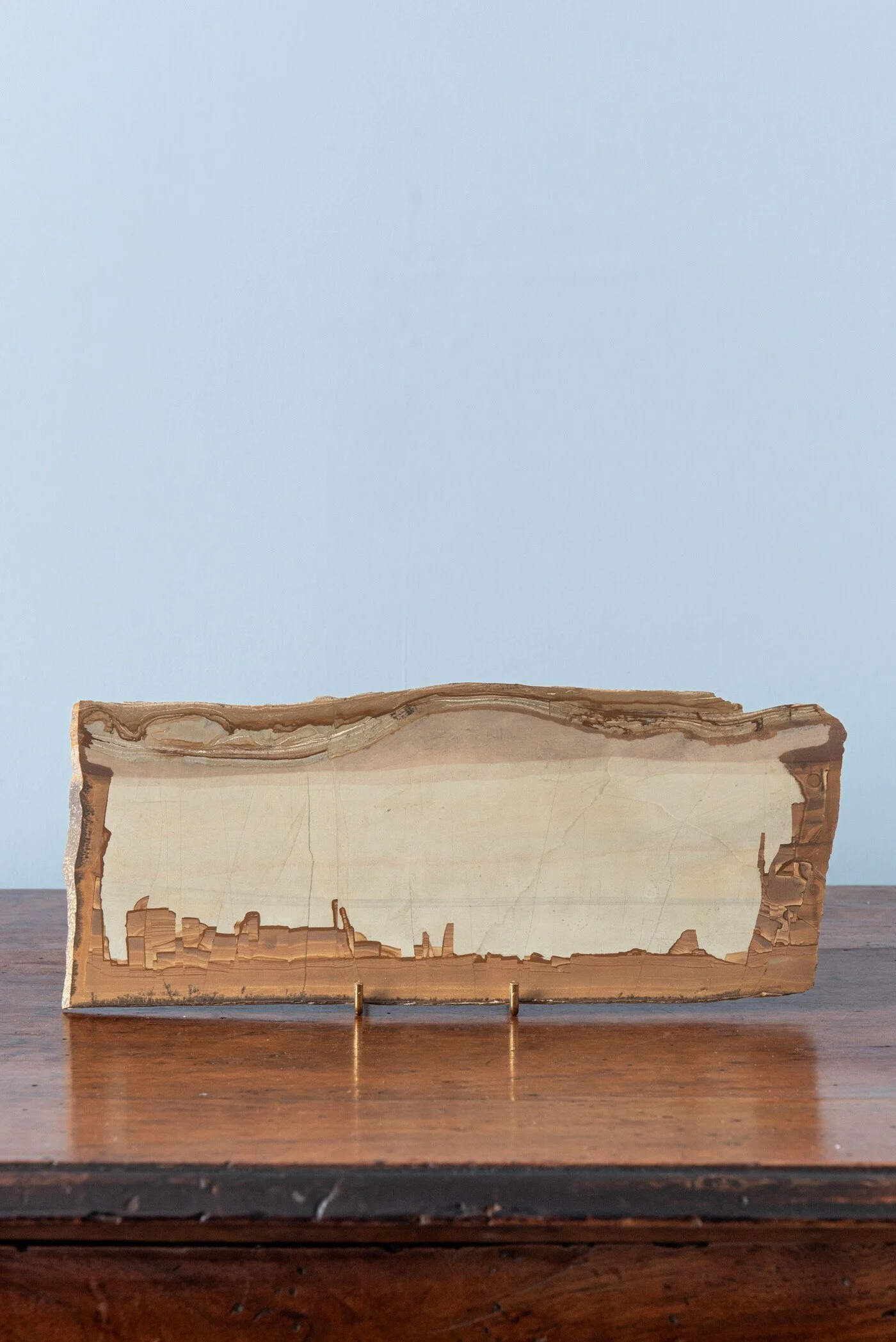 Image 1 of 7
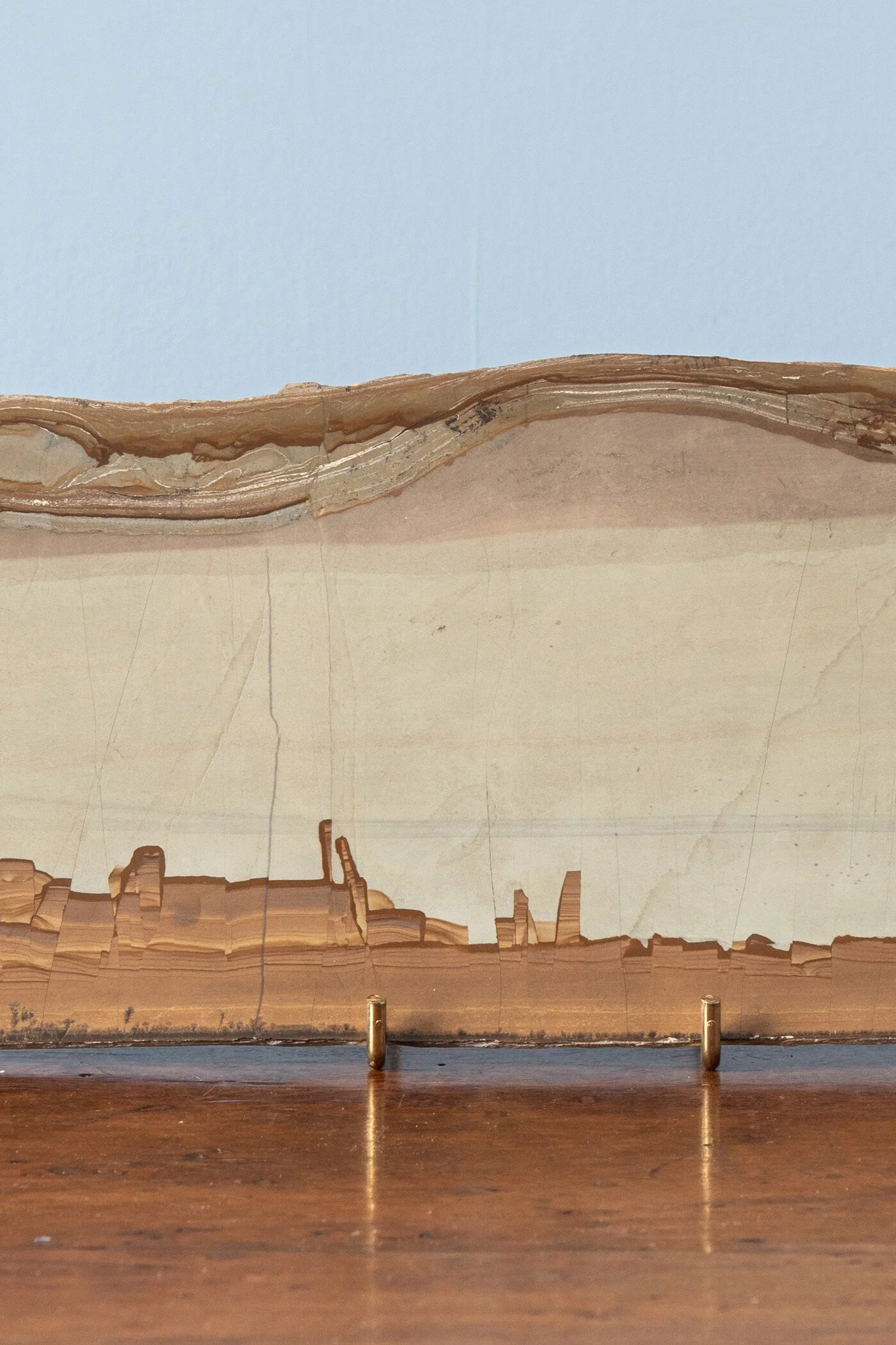 Image 2 of 7
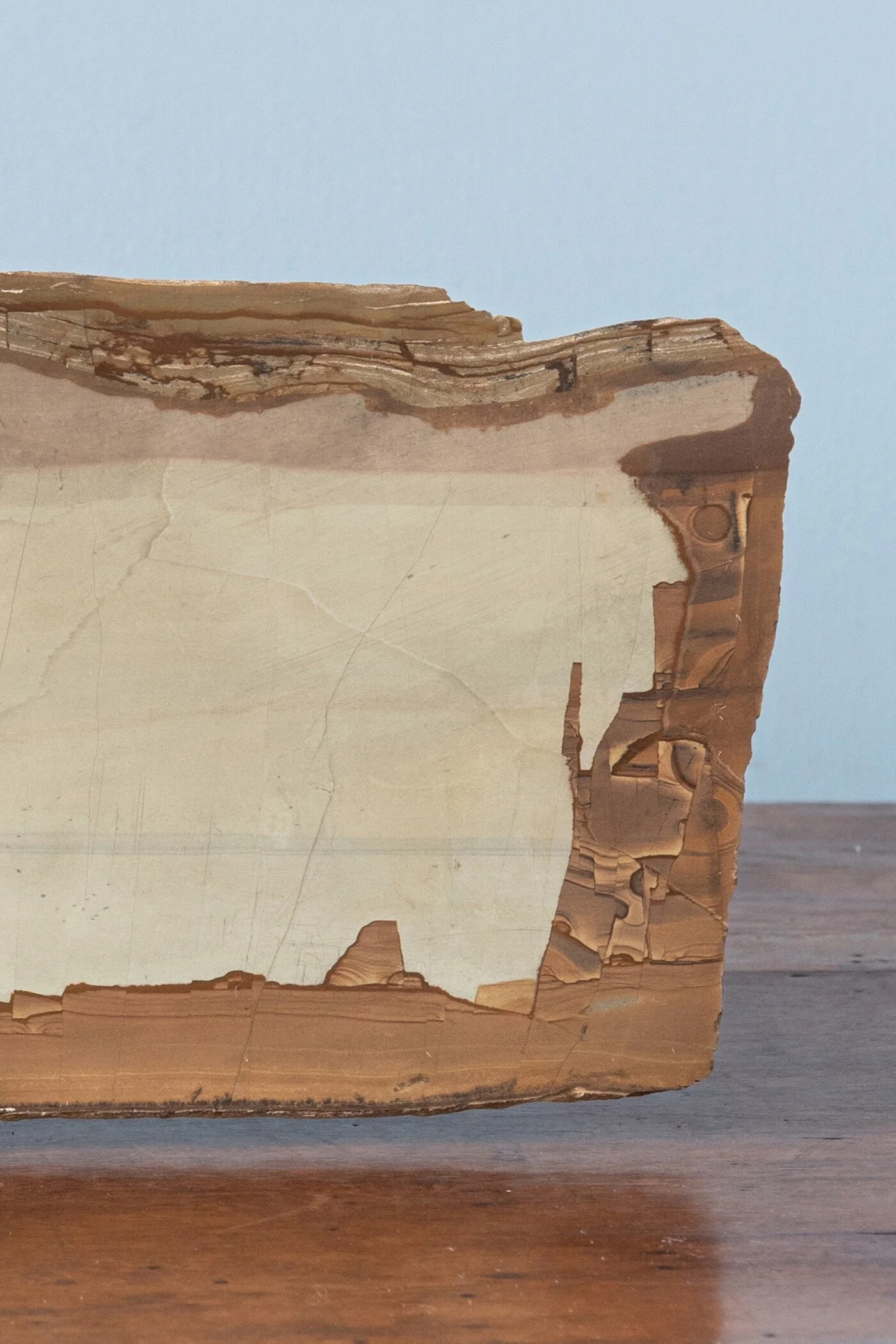 Image 3 of 7
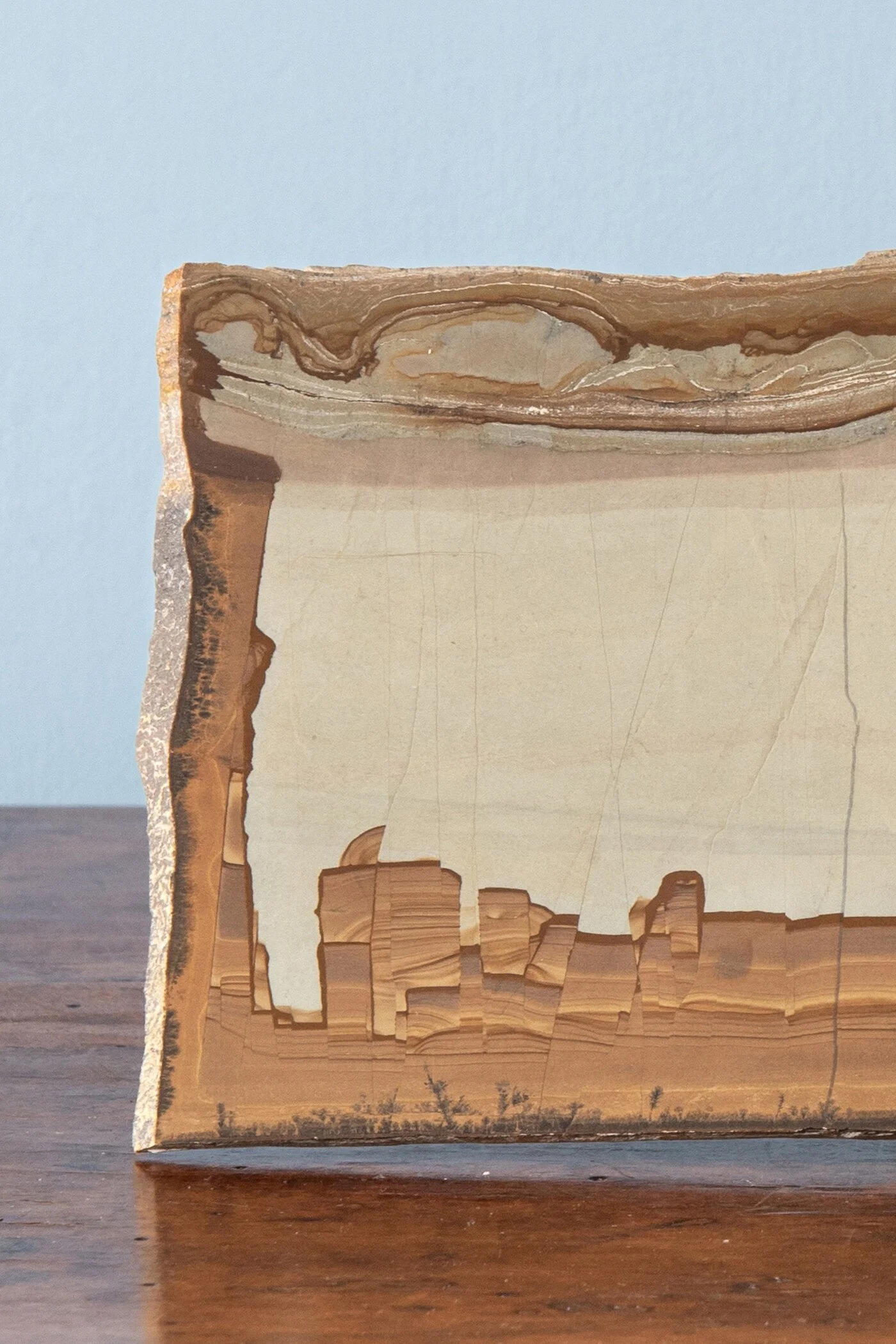 Image 4 of 7
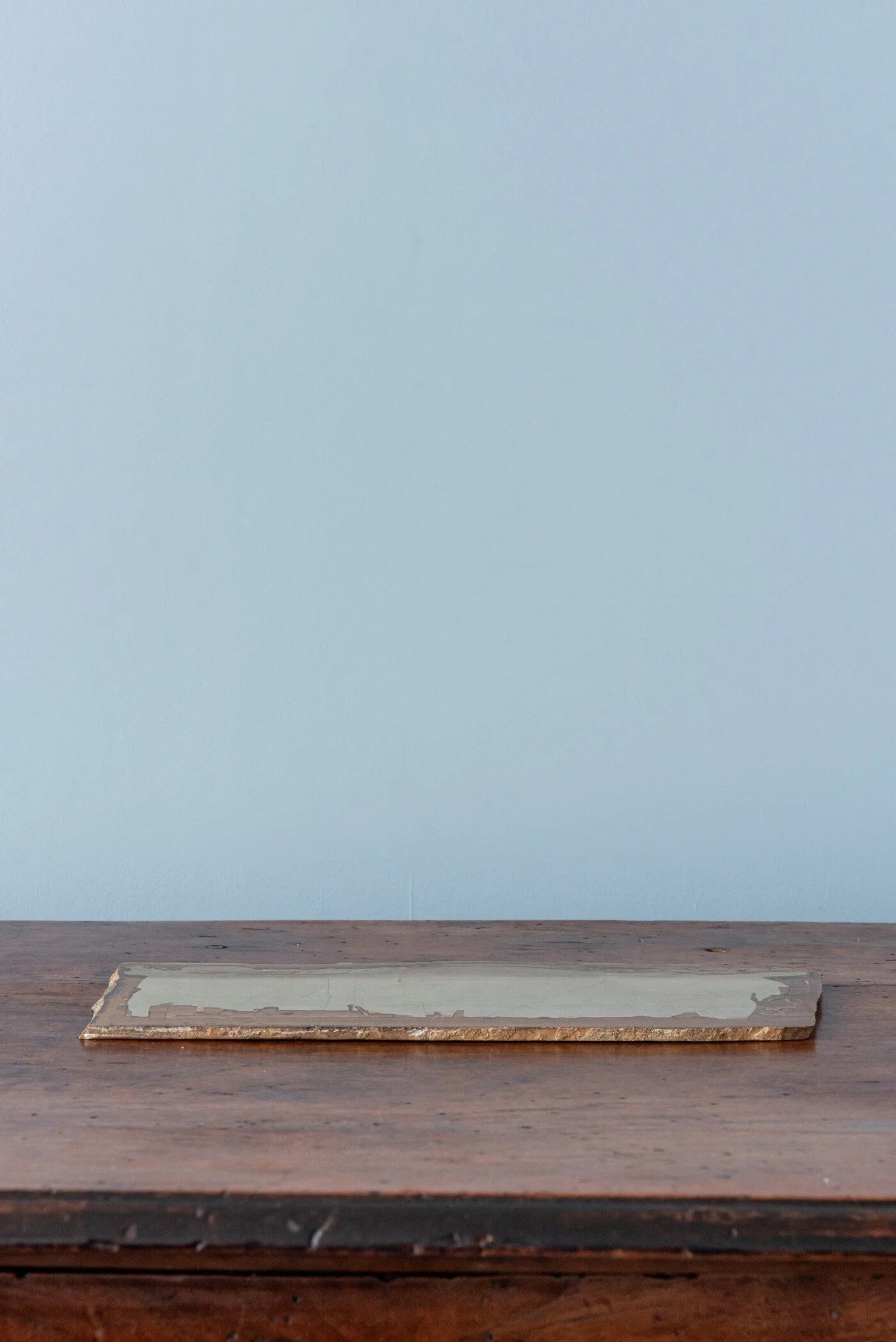 Image 5 of 7
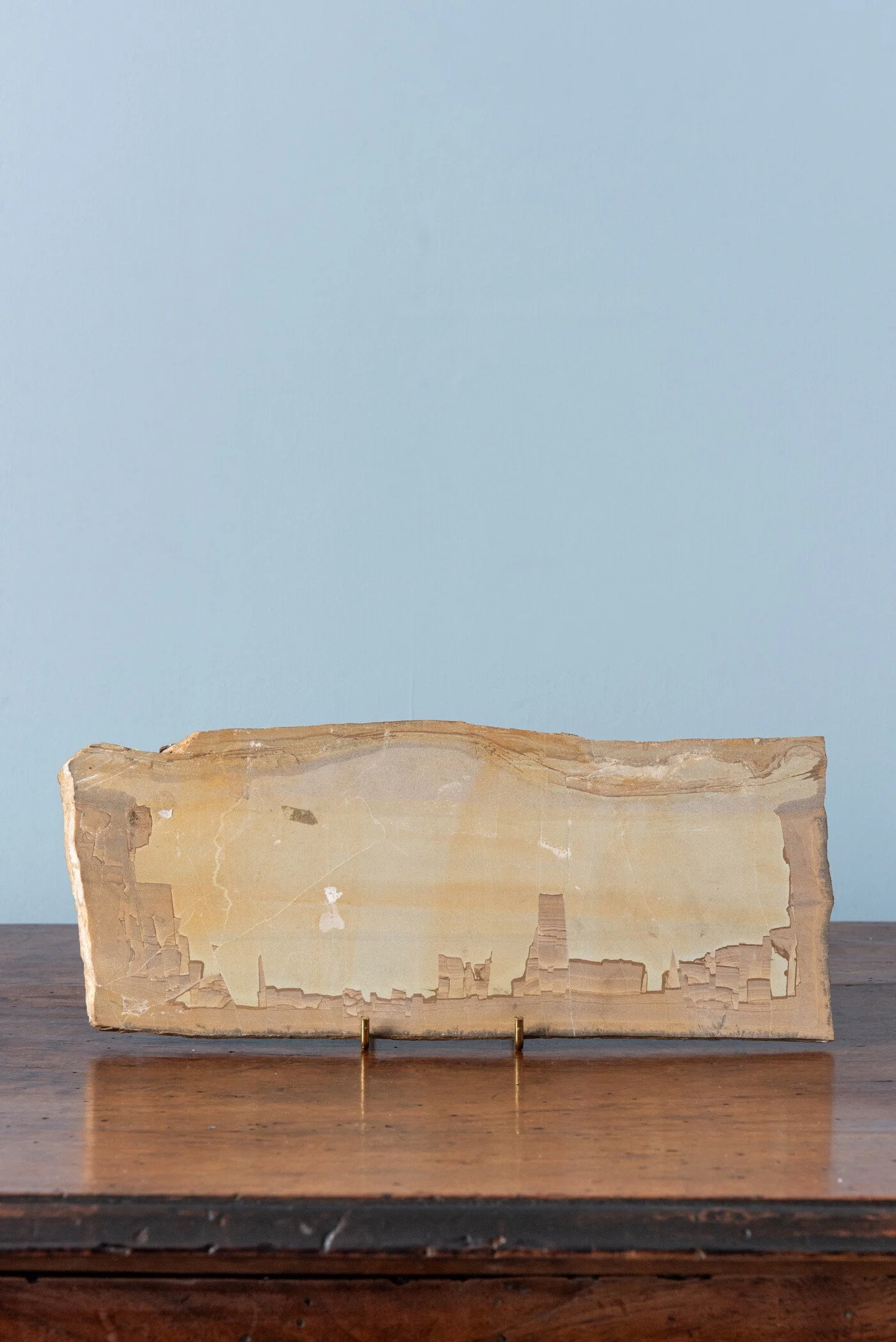 Image 6 of 7
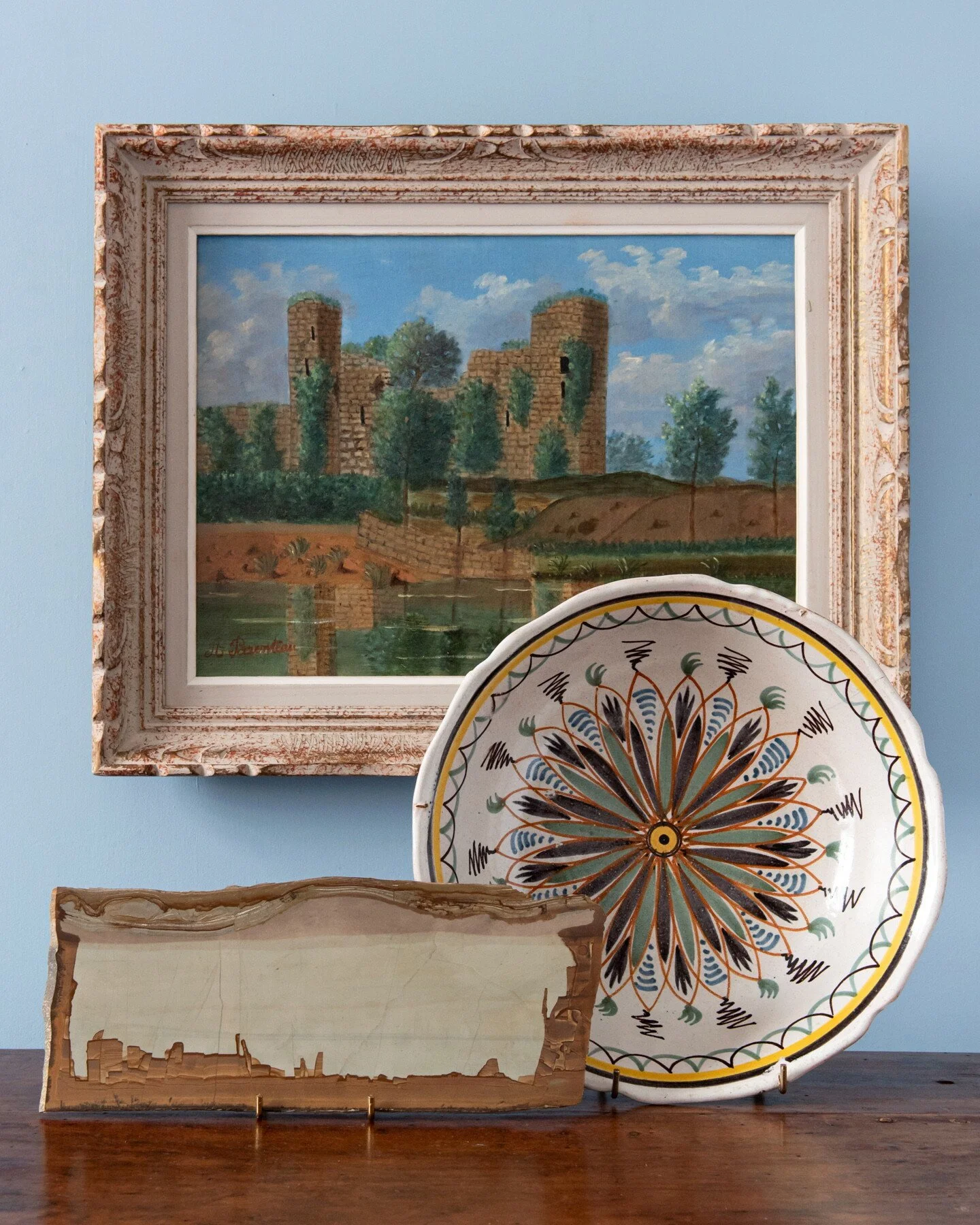 Image 7 of 7