
Home / Christmas
Christmas
This festive season, explore exceptional antique gifts and decorate with joyous art and pottery. We gather the finest of Rustique, specially curated for Christmas.

An 18th-century French faience cider jug from Rouen, decorated in classic blue and white. The jug is inscribed with the date 1726 and features vibrant geometric patterns alongside an exquisite wreath of foliage and flowers, all rendered with elegant, fluid brushstrokes.
The jug displays the characteristic cider jug form, with a rounded body, slender neck, and sturdy handle. A rare and distinctive piece, with a vibrant decoration and timeless quality.
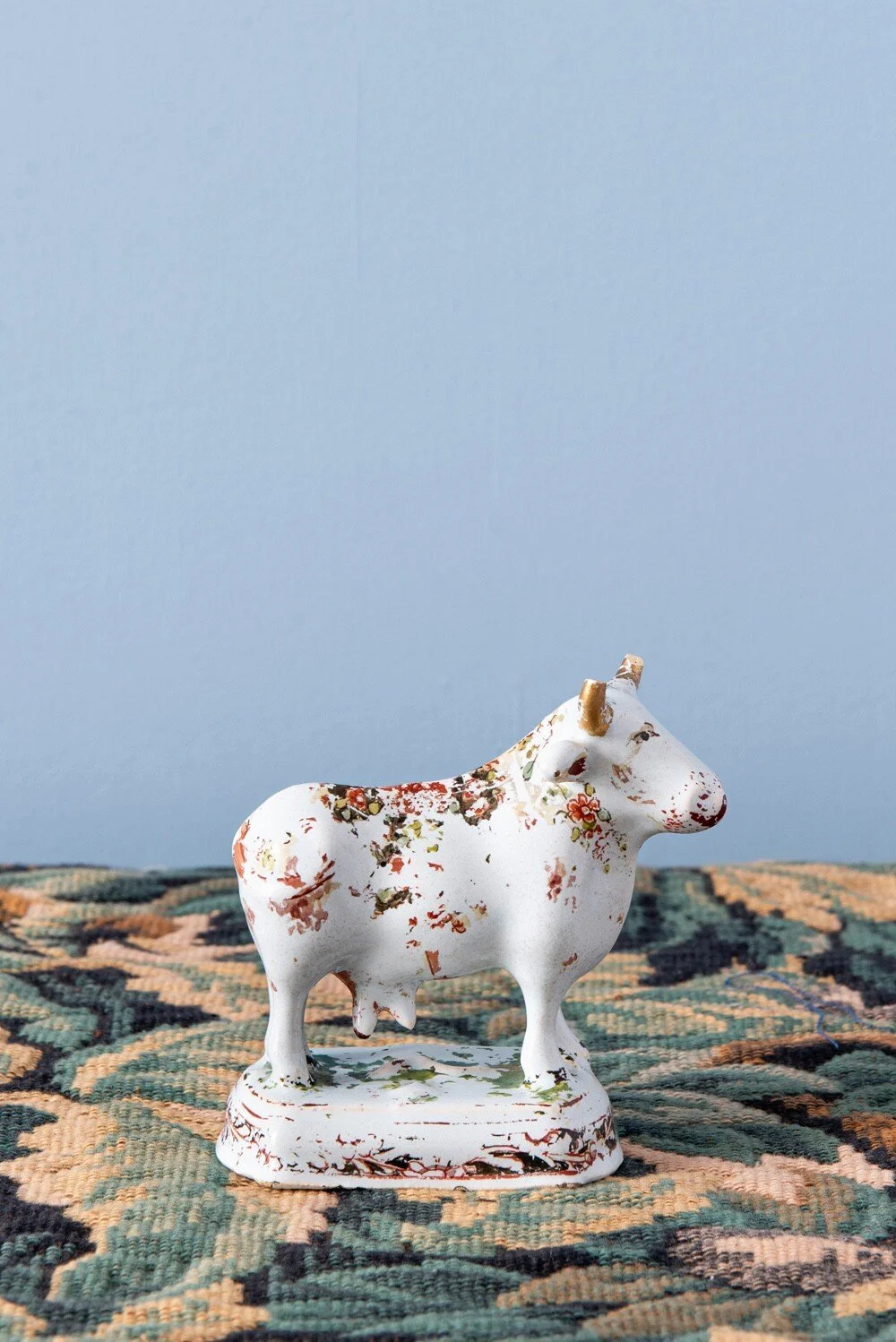
This rare 18th-century Dutch Delft cow figurine is decorated in white with garlands of red, green, and black flowers along the neck and back, accented with gilt highlights on the horns. Hints of green at the base suggest grass, adding to its charming naturalism. Finely modelled with characterful details, it is a delightful example of classic Dutch Delftware.
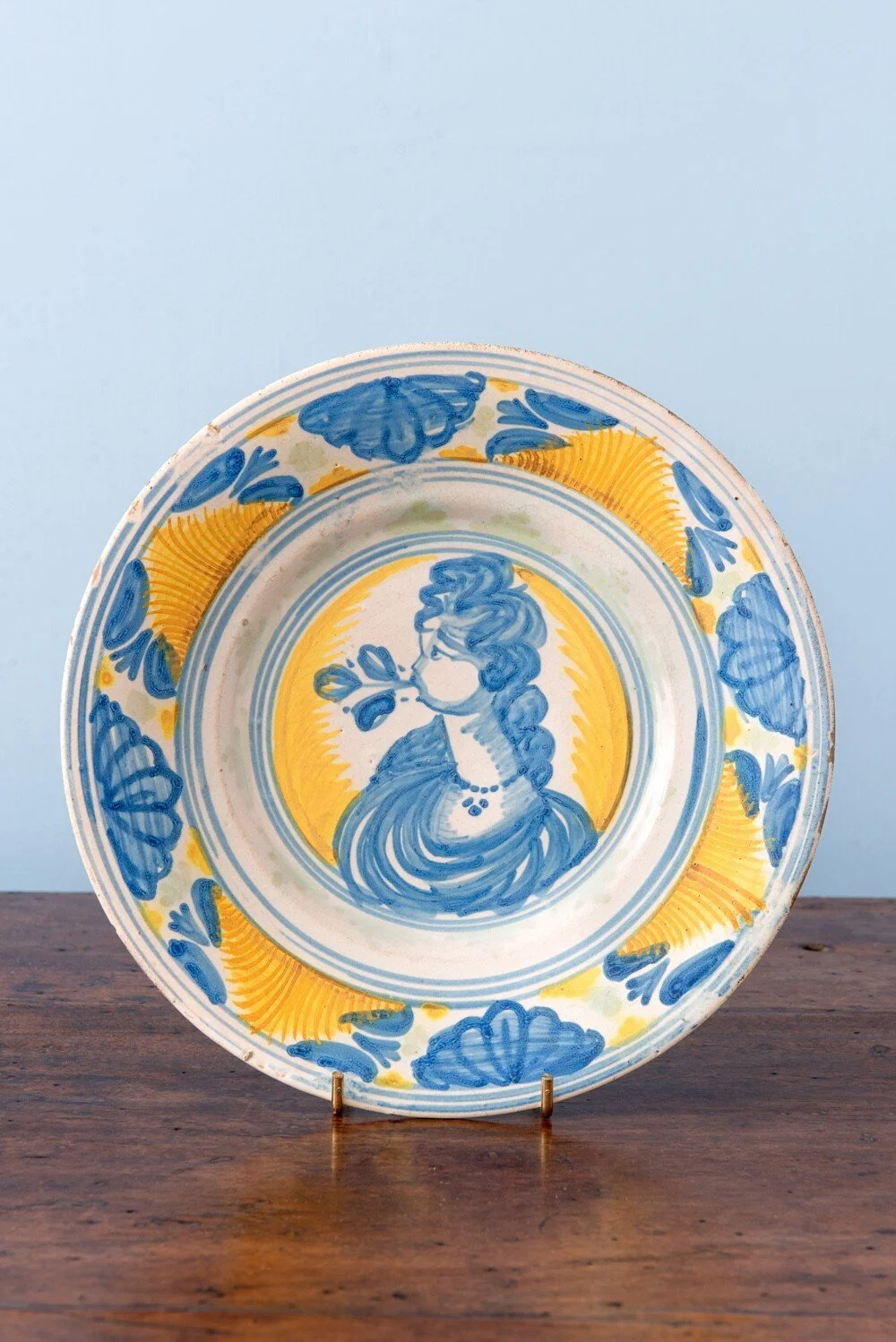
A rare 17th-century Sicilian maiolica plate, c. 1680-1700, likely from Caltagirone or Palermo, painted in a vibrant palette of cobalt blue and yellow on an off-white ground
The central design depicts the bust of a lady in profile, richly dressed with long hair and jewellery, exhaling a delicate stream of flowers or perfume. This allegorical figure is set in a circular reserve defined by blue lines, while the lip features a refined frieze of radiating fans and shell ornaments. Painterly blue brushwork alternates with thin yellow lines to create a dynamic contrast of patterns, softened by touches of light green around the centre and along the frieze.
The playful figure is characteristic of the distinctive portraiture found in Sicilian ceramic production of the 17th-century, in which vases, albarelli and plates frequently feature whimsical portraits with unusual features in free, almost folk-like brushwork. Even within this tradition, this particular motif is notably rare, and compelling brushwork and refined details in the hair, dress and jewellery set is further apart. The frieze patterns recalls the scrollwork of Tuscany and Marche, interpreted with an emphasis on colour over line typical of Southern Italy.
Unrestored and in excellent condition, a rare and captivating plate, exemplifying the charm and spirit of Sicilian maiolica.
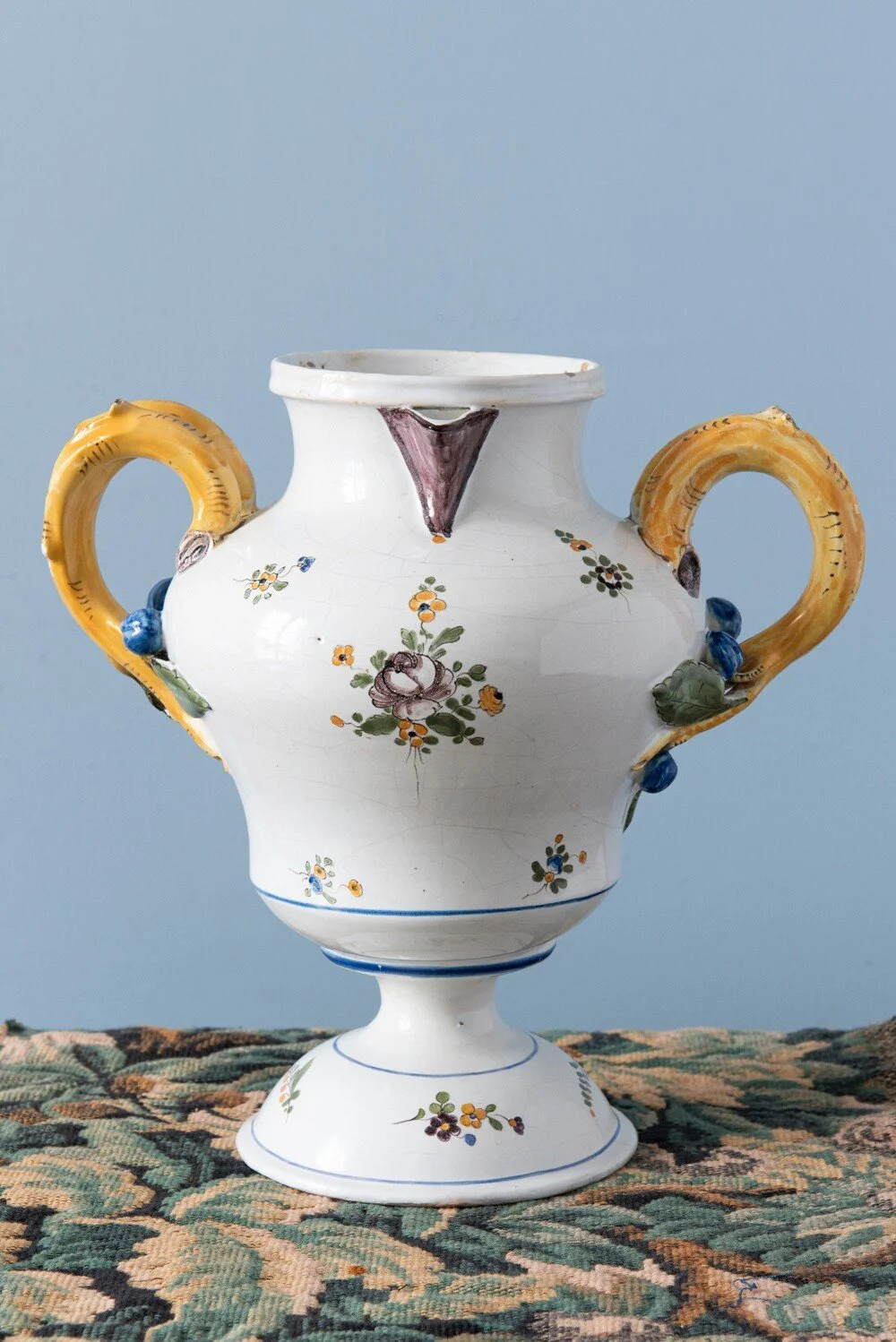
An 18th-century French faience polychrome vase. Its elegant baluster form with a piedouche is adorned with delicate sprays of flowers and foliage, enclosed within fine blue line borders. Two striking handles, modelled as yellow branches with green leaves and blue fruits, frame the vase, their naturalistic detailing particularly captivating. With a generous size, this statement piece combines sculptural presence with elegant floral motifs.
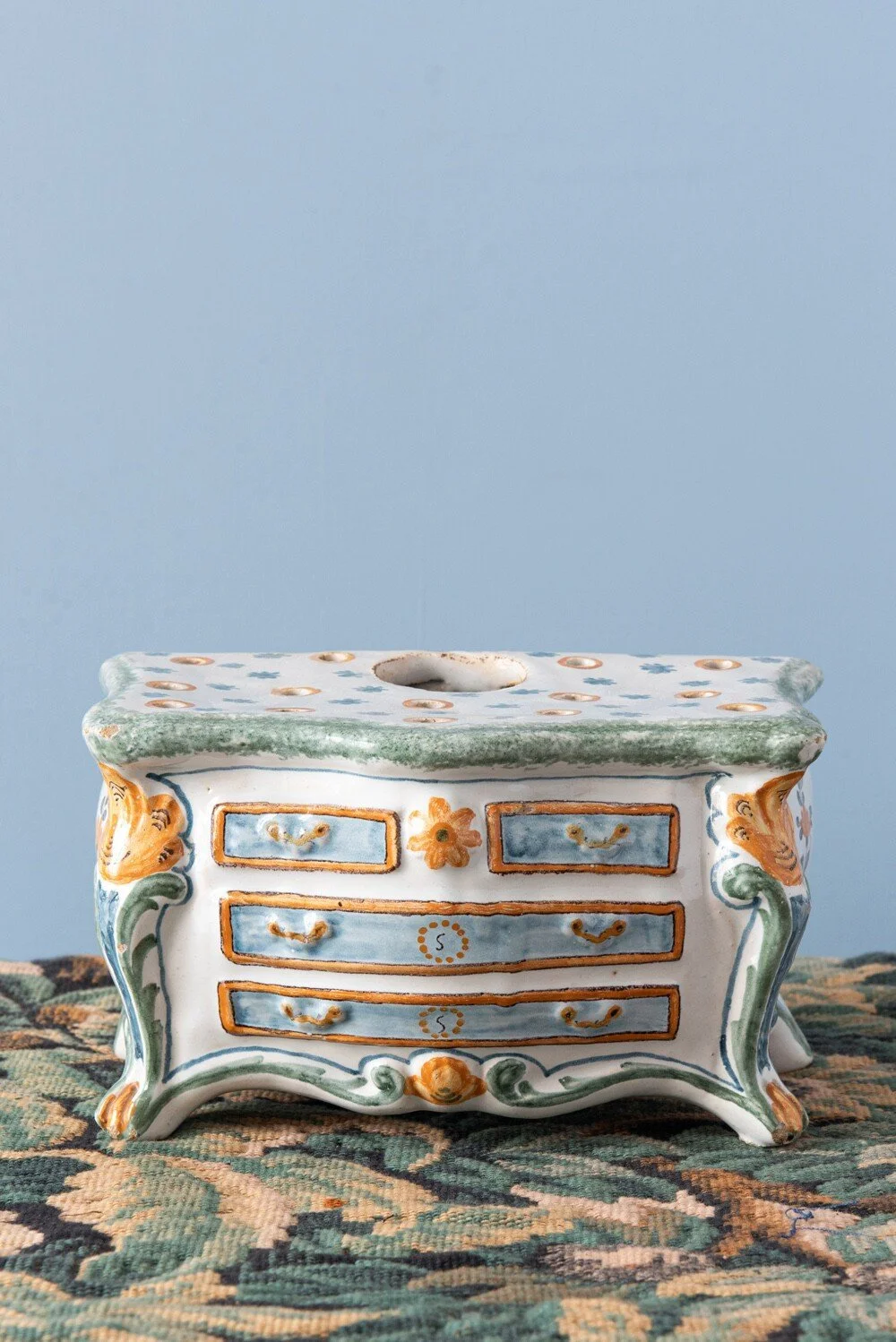
A rare 18th-century French faience bough pot from Nevers, modelled in the playful form of a commode. Complete with drawers, handles, and gilt-bronze accents, its rounded body is painted in a refined palette of celadon and blue, contrasting with vivid orange details. An imaginative mix of florals, scrolls, and stars enlivens the surface, with sprays of flowers on each side and the top scattered with orange stars. Designed with one large opening and fourteen smaller ones, this remarkable piece is ideal for elaborate floral displays and serves as a striking decorative object year-round
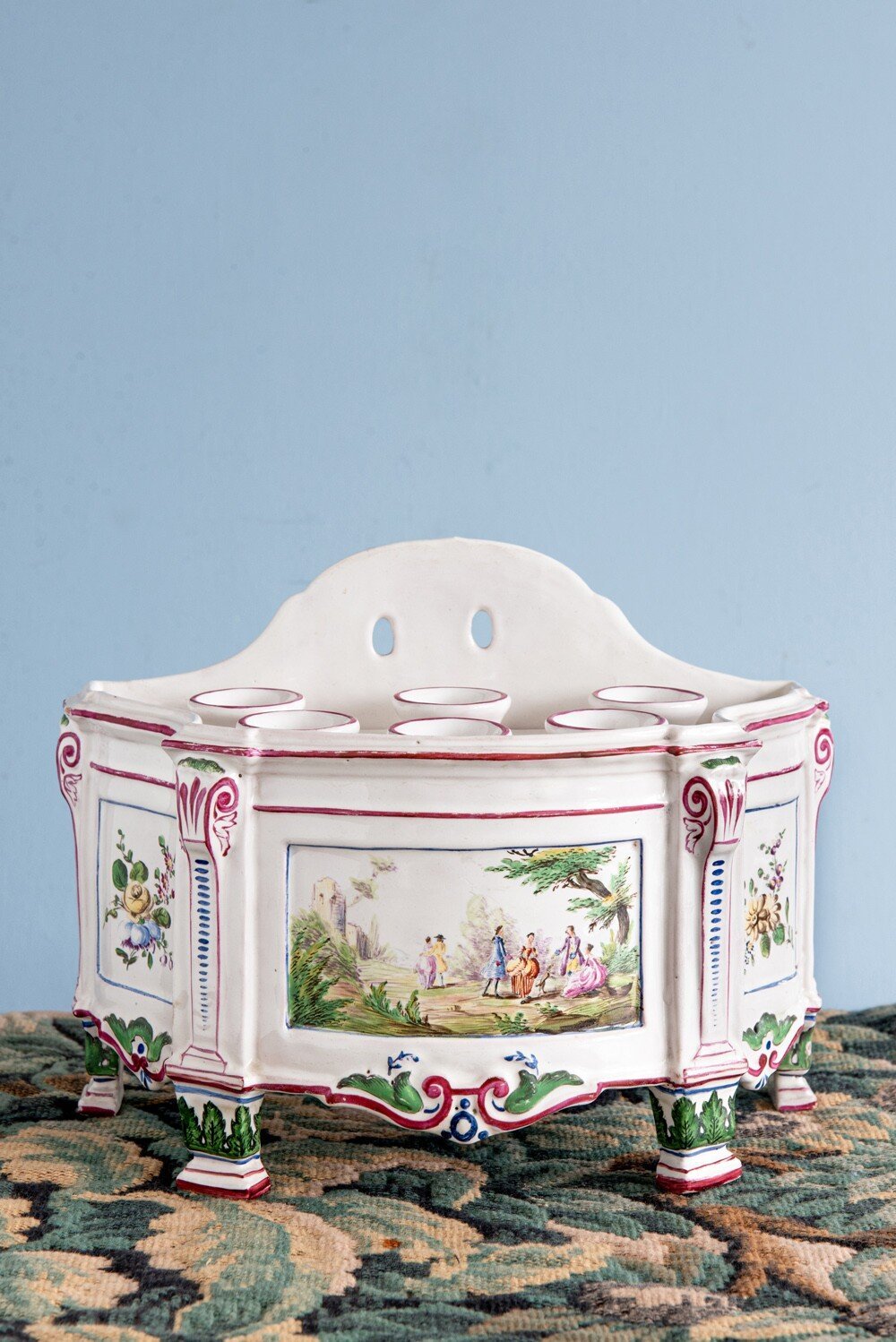
This rare 19th-century French faience bough pot from Samson features an elegant serpentine shape with bold relief ornamentation. It is decorated in pink and green, with an exquisite polychrome pastoral scene painted in a reserve, depicting figures in 18th-century attire set among trees and a ruin, along with sprays of flowers on both sides. The large body can hold water, and the top lifts off, with six openings to hold stems of flowers. This exquisite bough pot is ideal for displaying fresh flowers and serves as a stunning decorative piece year-round.
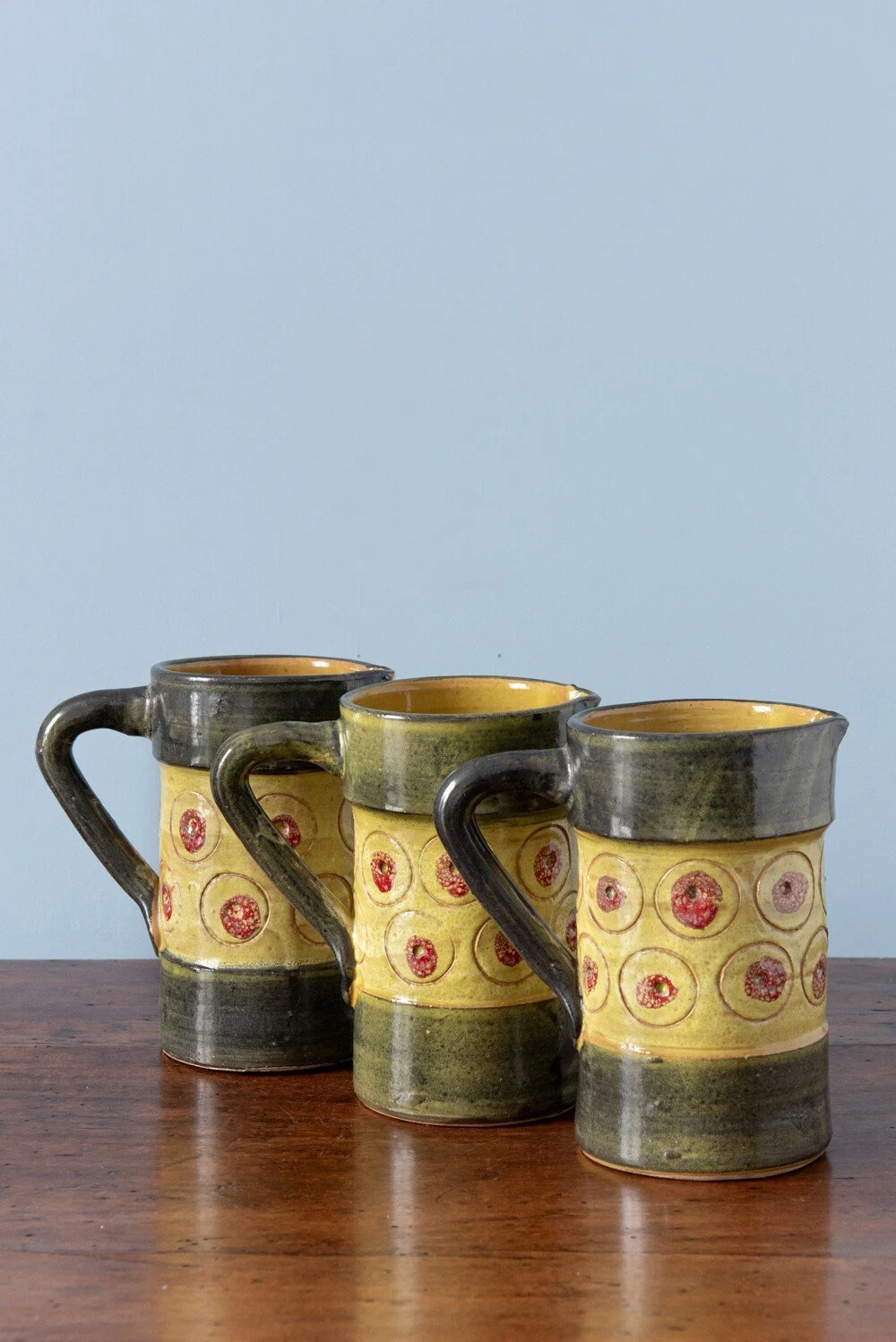
A vibrant trio of mid-century jugs from the Romacrea school in Rome, active in the 1950s–60s and renowned for its creative shapes and decorative invention. Each piece features a lively design of green and yellow bands with red circular motifs, the colours enhanced by a textured glaze. Their slender, medium-sized forms are completed with sculptural green handles. A distinctive set of modern Italian jugs, rich in colour and texture.

A small, elegant late 17th-century French faience tray from Nevers, delicately painted in blue and white with manganese outlines. The oval surface presents a refined chinoiserie scene, with a seated figure beside a lakeside landscape with a bridge and trees, surrounded by a striking array of natural motifs. Thin manganese lines contrast beautifully with fluid blue brushstrokes, producing a painterly effect.
Raised on a foot, the underside is also decorated with blue brushwork. With its modest size and oval form, this tray was likely part of a ceramic dressing set. Unrestored and in excellent condition, this exquisite Nevers faience piece combines rare charm and elegant decoration.

A rare and richly decorated early 19th-century French faience miniature commode, standing on curved feet and featuring bold relief moulding along the edges, evoking the look of ormolu mounts. The door, fitted with a grape-shaped brass handle, opens to reveal a shelved interior.
The surface is adorned with vibrant polychrome garlands and delicate pastoral scenes in blue and white to the top and door, while playful putti decorate each side. Marked underneath. An exquisite piece—both refined and whimsical—that would make a striking accent on a tabletop or windowsill.
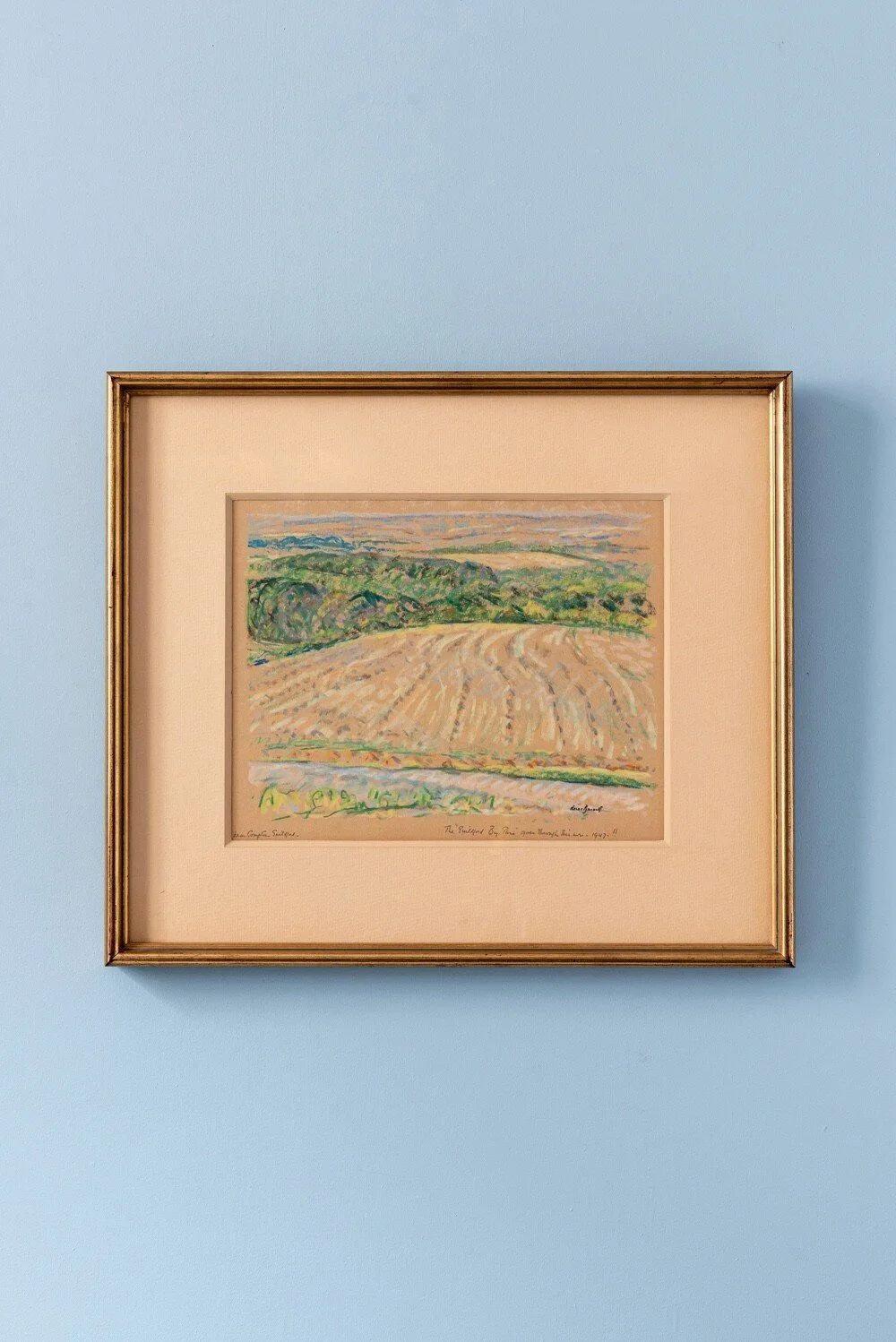
This early 20th-century pastel on paper by Walter Durac Barnett (1876–1961) depicts a rolling country landscape with a field in the foreground and woodland beyond. Executed on hay-coloured paper, it features a warm palette of greens, blues, and yellows that captures the atmosphere of a summer day. The varied shades of green convey the vibrancy of the foliage, while sinuous pastel strokes emphasise the outline of the hills and the gentle movement of the trees.
With a distinctive composition, the open field draws the eye toward the woods and distant hills, creating a sense of depth and calm. Located lower left, signed lower right, and presented glazed under a cream mount within a gilded wood frame. A serene and uplifting pastoral study with bright colour.


This 18th-century Dutch Delft dish features a large, shallow shape decorated with a vibrant polychrome basket overflowing with flowers. The lip features friezes of florals and stripes, creating a richly patterned effect. A joyous dish, with energetic brushwork combined with vivid colours.